

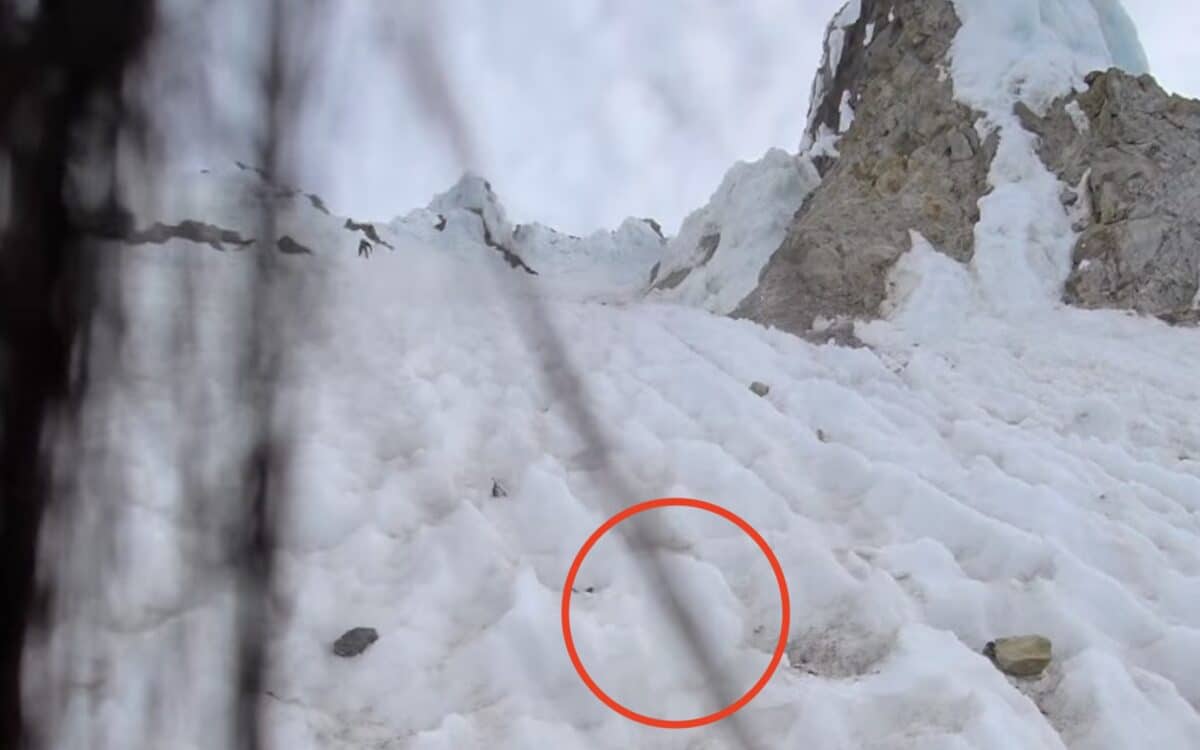
Mount Hood, the tallest mountain in Oregon, is truly quite massive. It’s so big, in fact, that several major ski resorts and ski areas operate separate from each other on the mountain slopes, including Timberline Lodge, Mt. Hood Meadows, and more. Those hoping to reach the summit of the mountain won’t be able to do so on a chairlift though. Climbing to the top is a serious challenge that comes with serious danger and should only be attempted by experienced mountaineers, as demonstrated in the below video by Raymond Leung from earlier this month.
Risks of Climbing Mount Hood
Raymond was climbing up Old Chute, one of the most popular routes up the mountain, when this ice block came tumbling down and hit his shoulder. According to his calculations the block was traveling around 35mph and 60 pounds. He was very fortunate that A) it only hit his shoulder and B) it didn’t knock him off balance and send him falling down the mountain. This is a great reminder to always wear a climbing helmet in areas with known rockfalls or icefalls (climbing helmets are specifically designed to take overhead impacts, so don’t try to replace one with a bike or ski helmet).
Icefalls and rockfalls are particularly common on south side summit routes including Old Chute. Particularly warm days, especially following a stormy period, are common times to see icefalls, and they stay possible until the ice melts through the summer. At some point in the summer Mt. Hood National Forest stops recommending summit climbs due to frequent rockfall.
Icefall and rockfall are just one of several risks that come with summiting the mountain. Climbers encounter avalanches (most common in the winter though possible year-round), glacial features and fumarole holes, long sliding falls, climber congestion, and rapidly changing weather, all of which can quickly make a summit attempt incredibly dangerous or deadly.
If you’re interested in summiting Mount Hood for yourself, know that permits are required for everyone traveling above 9,500 feet elevation. The National Forest no longer recommends climbing the mountain in the 2026 season, so start planning for 2027 rather than hoping to get to the top in the coming months. You can learn more about the required permits and get one for yourself here.