
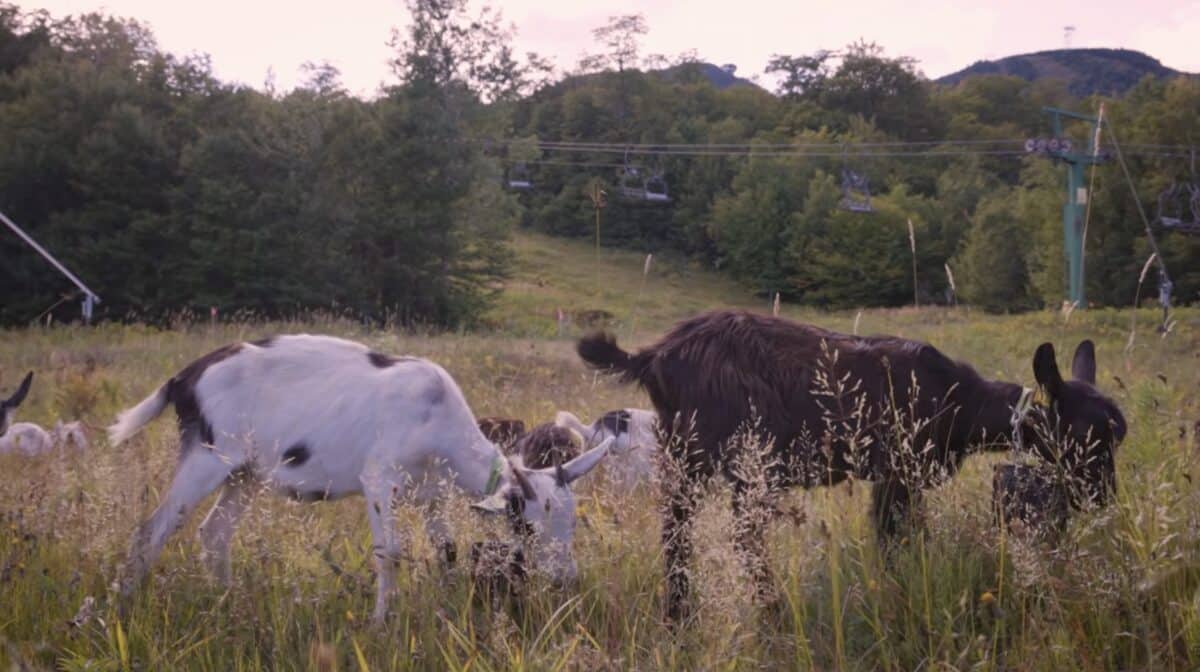
Jay Peak Resort in Vermont has brought back its popular Chew Crew for another summer of trail maintenance after the innovative program earned national recognition and proved to be an effective alternative to traditional vegetation management.
The herd of Vermont raised goats and sheep returned to the mountain last week, beginning another season of natural grazing across ski and Nordic trails. The project started last fall and has now become a larger part of the resort’s annual preparation for winter, with the animals helping limit gas powered equipment while also bringing further visitors to the mountain.
Award Winning Environmental Stewardship
Earlier this year, Jay Peak received the 2026 National Ski Areas Association Golden Eagle Award for the project. The award recognizes innovative environmental stewardship within the ski industry and highlighted the resort’s combination of sustainable land management, support for local agriculture, and a new approach to maintaining ski terrain.
Throughout the coming weeks the herd will rotate through designated sections of the mountain about every two days. Each animal wears a GPS enabled radio collar connected to a cellular geofencing system that keeps the herd within assigned grazing areas. A livestock guardian dog also stays with the animals overnight.
Replacing Equipment With Grazing Animals
Jay Peak typically maintains around 340 acres of ski trails and glades each fall using gas powered trimmers. Goats offer a unique advantage because they readily consume poison ivy, sumac, and other invasive vegetation that can be difficult to remove with machinery.
“Last year’s pilot showed us this could be more than just a fun idea. The animals did exactly what we hoped they would, and they reached places that are difficult and time-consuming for crews to maintain with equipment. It’s a practical way to reduce our environmental impact while supporting a local Vermont farm.” – Andy Stenger, Director of Mountain and Base Area Operations.
The program also became an unexpected attraction with guests frequently asking where the goats were grazing and families making special hikes up the mountain to watch the animals at work.
Measurable Environmental Benefits
The first season produced measurable results despite covering only about 15 acres over five weeks. Jay Peak estimates the project eliminated roughly 240 hours of gas powered trimming and reduced carbon emissions by about 288 pounds of carbon dioxide.
Managed grazing can also improve soil health through natural fertilization, reduce erosion, and encourage native wildflowers and pollinators to return. Those benefits extend beyond simply clearing vegetation and may improve mountain ecosystems over time.
The resort partnered with Cloud Brook Farm and the Agritech Institute for Small Farms, keeping vegetation management spending within Vermont while supporting local agriculture.

Growing Interest Beyond Jay Peak
The success of the Chew Crew has attracted attention outside the resort with businesses across Vermont and New Hampshire exploring similar grazing programs for vegetation management.
Visitors will also have another opportunity to see the animals later this year when they appear at Jay Peak’s 17th Annual Bean and Brew Festival on October 17th. Guests attending the event will be able to meet and interact with what have become some of the resort’s most recognizable seasonal workers.
With environmental benefits, reduced equipment use, and growing public interest, Jay Peak’s goat powered trail maintenance program is becoming a model that other ski resorts could, and maybe should, follow.