

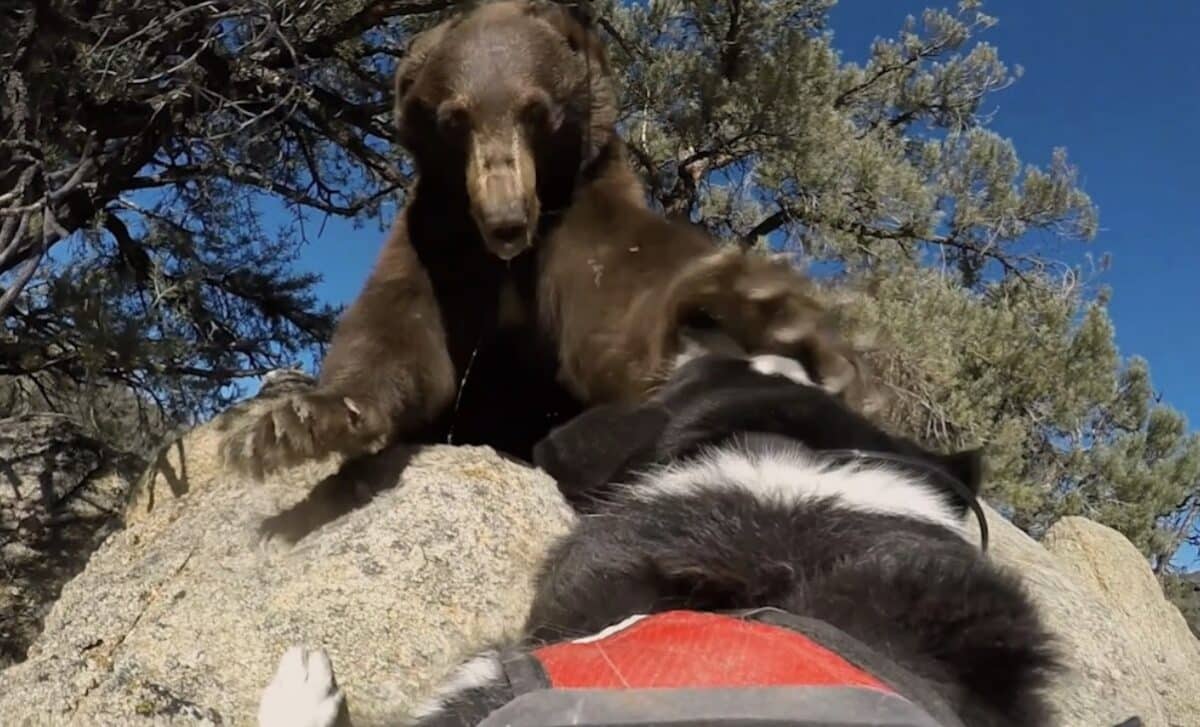
CARSON CITY, Nev. — The Nevada Department of Wildlife is relying on a specialized pack of working dogs to tackle growing human-bear conflicts, employing a dog breed that was specially bred to hunt bears and moose for non-lethal hazing to keep black bears away from sprawling suburban and urban areas.
“When bears become too comfortable in neighborhoods or around people, NDOW biologists use specially trained Karelian Bear Dogs to chase, bark at and haze the bears away from developed areas. The goal? Give bears a negative experience around humans and barking dogs so they maintain their natural fear of people and return to foraging in the wild.” -Nevada Department of Wildlife
The agency shared a video its Karelian Bear Dog (KBD) Program in action this week and their job is wild. The medium-sized, black-and-white dogs were originally bred in Finland for hunting but these working dogs in Nevada are deployed during bear releases to haze problem bears immediately after they are captured, teaching the animals to associate human settlements with uncomfortable experiences so they stay in the wild.
Beyond release-day hazing, NDOW uses the dogs to flush bears from urban dens, hazing wildlife in public settings, locate orphaned or injured bears, and assist in wildlife research. By teaching bears to avoid human-populated areas, the program actively reduces dangerous encounters and prevents bears from having to be euthanized.
Nevada established its KBD program back in 2001 with its first dog, a Karelian named Stryker, making it one of the first state agencies in North America to adopt the approach. A handful of wildlife management agencies across the United States currently maintain active Karelian bear dog programs.
Historically used by Finnish and Russian peasants as watchdogs and tough big-game hunters, Karelian bear dogs are known for working cooperatively to track and corner large game a skill set that modern wildlife managers have repurposed to protect both local communities and the state’s black bear population.
