

Yellowstone National Park, the first national park in the world, is home to an incredible predator-prey complex of large mammals. The park’s most famous animals are undoubtedly the thousands of bison, but the 150-200 grizzly bears that call Yellowstone their home are a close second.
With millions of visitors making their way to the National Park every year, the work of Yellowstone’s rangers to reduce bear-human encounters is absolutely vital. Primarily that work includes securing attractants like food and trash while educating visitors on proper bear safety, but some more hands-on work is occasionally required.
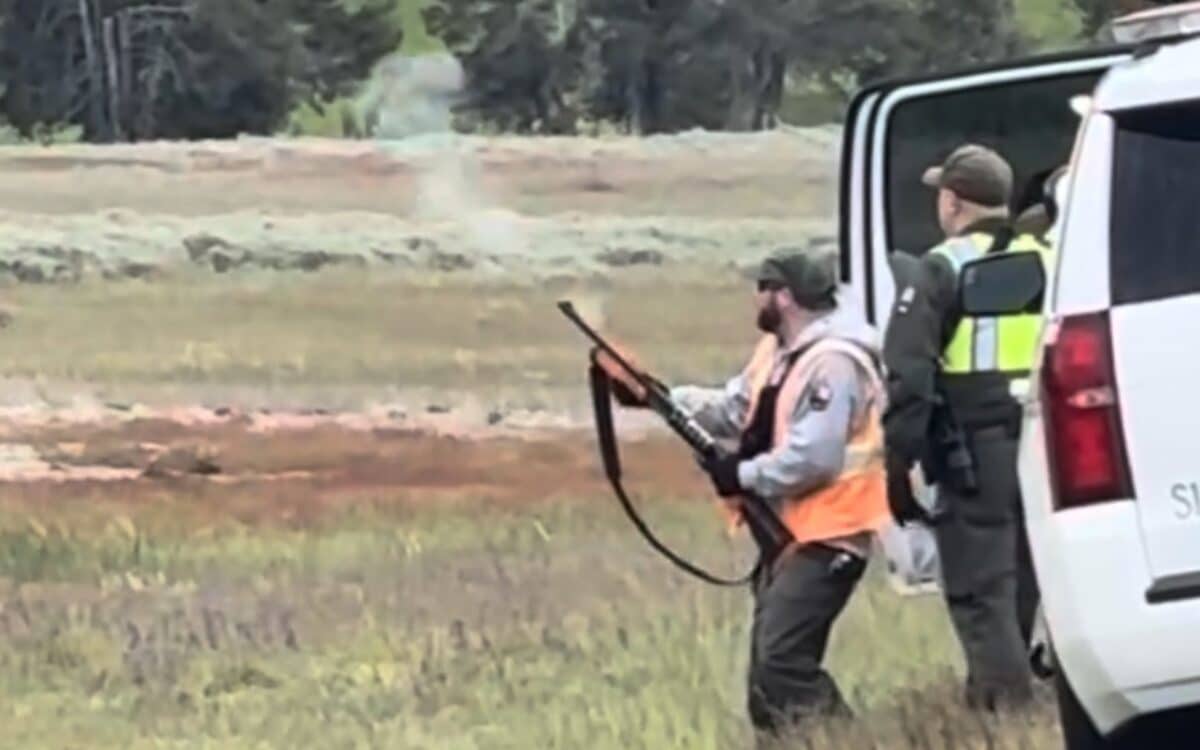
In this footage filmed by April of Yellowstone Concierge earlier this week, we can see some of that more hands on work. Foraging bears occasionally show up close to park roadways, creating traffic jams and potentially causing traffic accidents. Park staff often manage these situations by directing traffic and watching to ensure visitors maintain a safe viewing distance. When large mammal carcasses are left near roadways though, rangers will work to remove remove the dead animal and scare the bear away rather than letting it go on with its business..
Bears are hazed out of developed areas to promote human safety. In this case, the park ranger used a shotgun likely firing blanks or cracker shells to scare the grizzly away, allowing the crew to remove the carcass. If the carcass was left there, there’s a good chance a tourist would get too close to the bear as it fed given the dead animal’s close proximity to the road. Bear safety is vital in Yellowstone National Park, and the number one rule is staying at least 100 yards, or 300 feet, from all bears at all times. Read more on bear safety below.
Yellowstone National Park Bear Safety:
- Give bears space. Keep at least 100 yards (93 meters) from bears at all times and never approach a bear to take a photo.
- Carry bear spray and know how to use it. We recommend each person carry one can of bear spray in a readily accessible location like a quick-draw holster (not stowed away in your backpack).
- Hike in groups and make noise. Since 1970, 91% of the people injured by bears in Yellowstone were hiking alone or with only one hiking partner. Only 9% of the people injured by bears were in groups of three or more people. While hiking on a trail, periodically yell “Hey bear!” to alert bears of your presence. Learn more about backcountry safety.
- Respect closures. Do not travel in areas closed for bear management.
- Never feed bears. Bears that become dependent on human food may become aggressive toward people and will be killed.
- Stay with your stuff. Do not leave packs or bags containing food unattended, even for a few minutes, as bears learn new food sources quickly.
- If a bear approaches or touches your car, honk your horn and drive away. We want to discourage this behavior for the bears’ safety and yours.
- Help us spread the word! Share posters from our “A Bear Doesn’t Care” campaign.
