

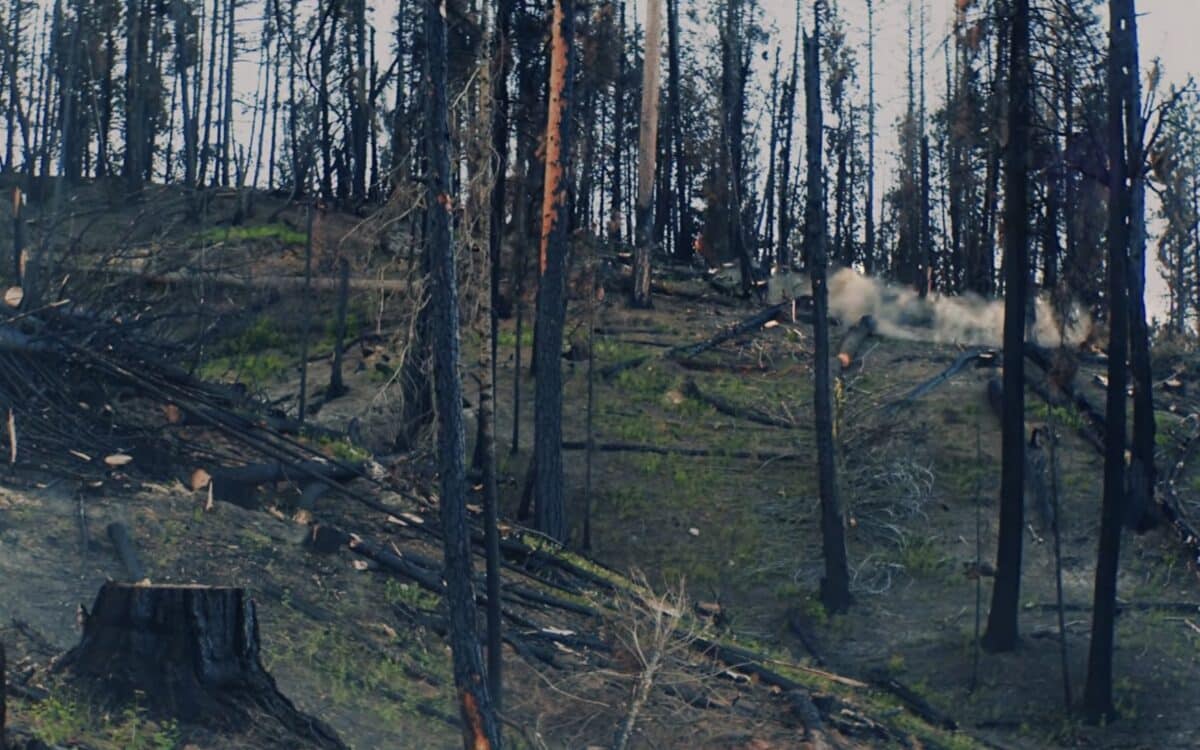
The U.S. Forest Service is working to clear hundreds of thousands of dead and dying trees from the Boise National Forest in Idaho, where a 2024 wildfire burned more than 240,000 acres across four ranger districts.
The Forest Service battled roughly 65 fires during the 2024 season, with large blazes spreading across the forest and creating one of the most complex fire seasons in recent memory. While the flames are long extinguished, the danger isn’t necessarily gone. Thousands of dead trees are still standing and could fall without warning, putting hikers, campers and motorists at risk, particularly on dead end forest roads where escape options are limited.
To address the threat crews are conducting what the agency calls post fire timber recovery, selectively marking and removing hazard trees rather than clearing the forest wholesale. Professional sawyers fell the marked trees, and heavy equipment including grapple skidders and stroke boom delimbers haul, strip and size the logs before they’re loaded onto trucks bound for local mills.
Forest Service representatives noted that burned timber typically retains commercial value for only about 18 months after a fire, after which it becomes essentially useless as lumber.
The salvaged wood is helping support nearby mill towns including Emmett and Cascade, while also funding follow up restoration work like reforestation and reseeding. The project relies heavily on partnerships through Idaho’s Good Neighbor Authority, a model now used in more than 30 states that allows federal, state, tribal and private partners to coordinate forest recovery efforts.