

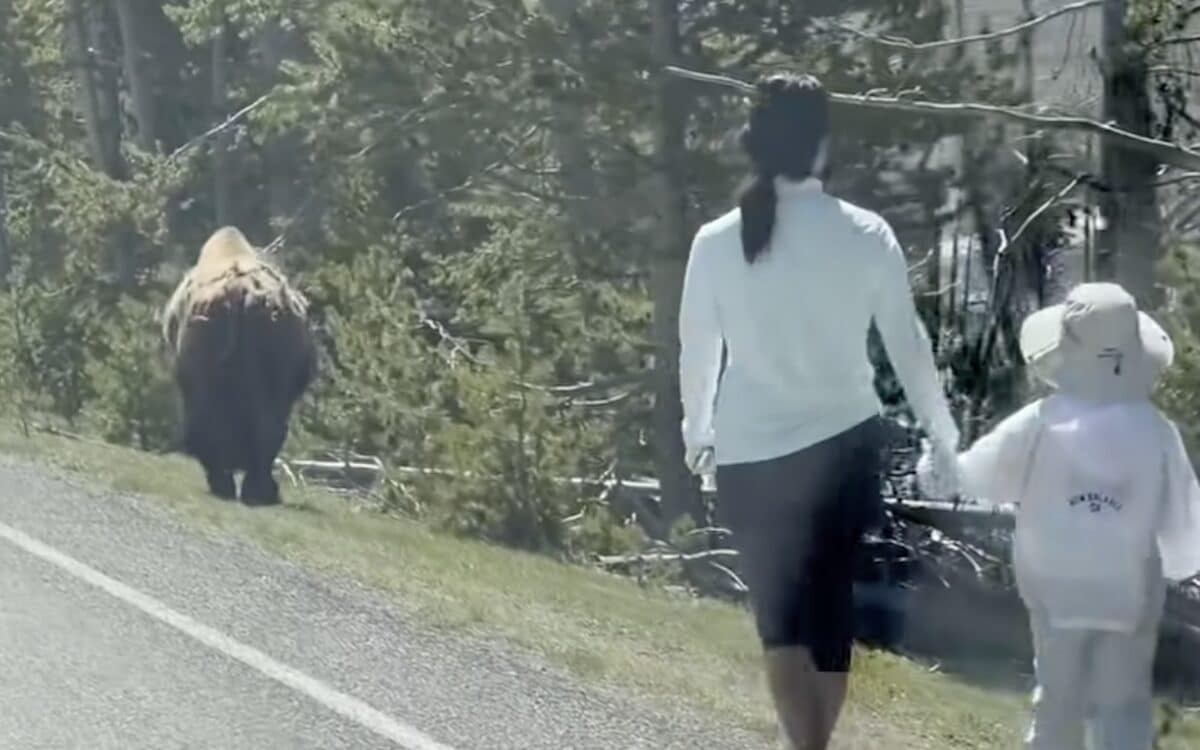
Yellowstone National Park attracts millions of visitors every summer and while most people respect both the park’s nature and wildlife, there always seems to be a handful of tourists that can’t help but act irresponsibly. This woman and, presumably, her child are great examples of poor behavior around Yellowstone’s iconic animals.
Yellowstone hosts the largest bison population on public land in the United States, with around 5,300 animals living throughout the park. They’re found year-round in the Hayden and Lamar valleys, though they’ll migrate up to 70 miles between their summer and winter ranges.
Despite being the largest land mammal in North America (males can weigh up to 2,000 pounds), bison are remarkably agile and quick. They may appear docile, but they can run at speeds up to 30mph and tend to be very unpredictable and aggressive. In fact despite the iconic large predators living throughout Yellowstone, bison are responsible for more injuries than any other animal in the National Park.
With their speed and potential aggressiveness, it’s vital that people give bison plenty of space at all times. Following closely behind the animals, as we see the people in the video shared by Marcela of Ruby Hour Photo Art below do, is both incredibly dangerous and against park rules.
Approaching wildlife or remaining near wildlife is strictly prohibited in Yellowstone National Park. Bison and all other animals require at least 25 yards, or 75 feet, of space at all times (bears, wolves, and mountain lions require 100 yards). That’s the length of about two standard busses, far more than what these people give the animal. Obviously the child doesn’t know any better, so it’s up to the woman in the video to keep herself and her child much further away from wildlife than this. Read more on Yellowstone National Park safety below.
Yellowstone National Park Wildlife Safety:
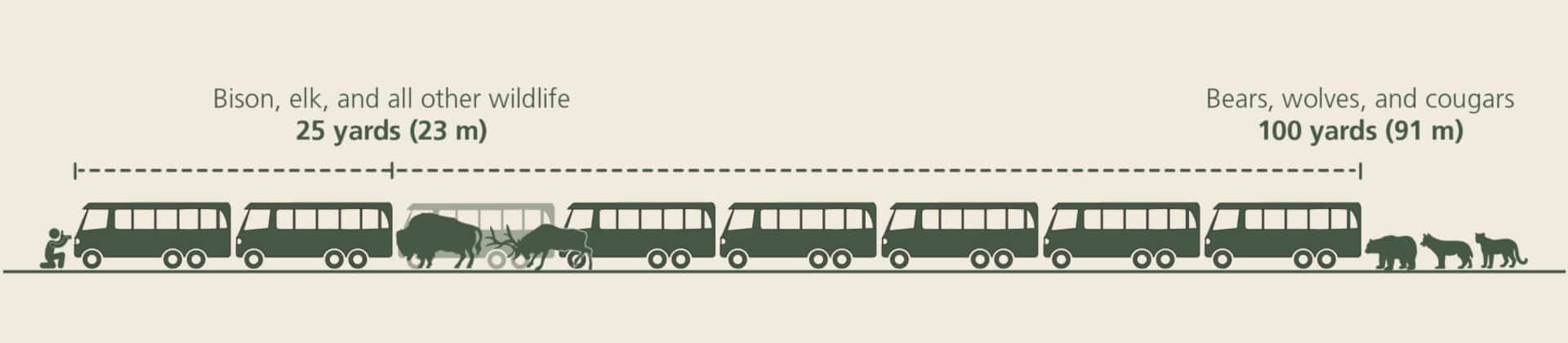
Bison have injured more people in Yellowstone than any other animal. Bison are unpredictable and can run three times faster than humans. Always stay at least 25 yards (23 m) away from bison.
- Give bison space when they are near a campsite, trail, boardwalk, parking lot, or in a developed area. If need be, turn around and go the other way to avoid interacting with a wild animal in close proximity.
- Approaching bison threatens them, and they may respond by bluff charging, head bobbing, pawing, bellowing, or snorting. These are warning signs that you are too close and that a charge is imminent.
- Do not stand your ground. Immediately walk or run away from the animal. Spray bear spray as you are moving away if the animal follows you.
