

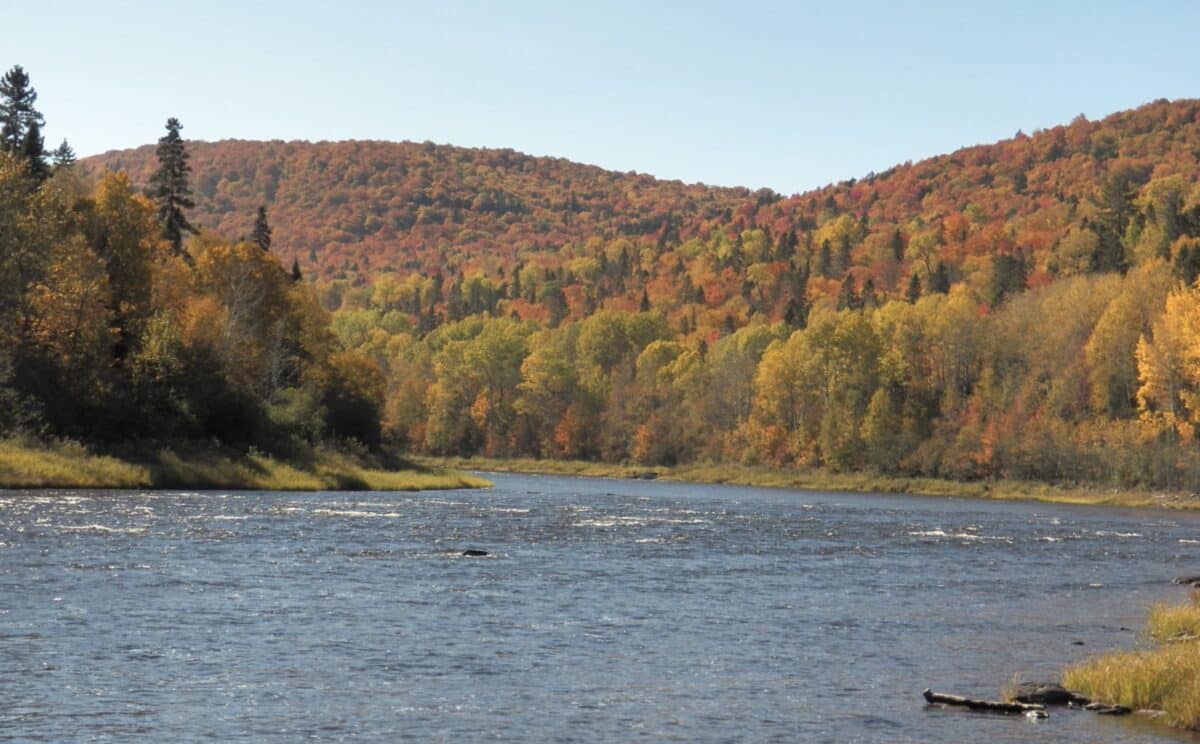
America’s rivers were in crisis by the 1960s. Dams, diversions, and development were altering waterways at an accelerating pace, and in response, Congress worked to pass the Wild and Scenic Rivers Act in 1968. The legislation created the National Wild and Scenic Rivers System, designed to protect rivers with outstandingly remarkable values in a free-flowing condition for the benefit of present and future generations.
The Act works to safeguard the special character of rivers while also recognizing the potential for their appropriate use and development. It encourages river management that crosses political boundaries and promotes public participation in developing goals for river protection.
The program classifies designated rivers into three categories. Wild Rivers are free of impoundments and generally accessible only by trail, with primitive watersheds and unpolluted waters. Scenic Rivers are free of impoundments with largely undeveloped shorelines but accessible in places by roads. Lastly, recreational Rivers are readily accessible by road or rail and may have some development or past impoundment along their corridors.
National Wild and Scenic designation effectively vetoes the licensing of new hydropower projects on or directly affecting a designated river. It also provides strong protection against bank and channel alterations, shields riverfront public lands from oil, gas, and mineral development, and creates a federal reserved water right to protect flow-dependent values.
The National Park Service is one of four federal land-managing agencies with Wild and Scenic River management responsibilities. It works alongside the Bureau of Land Management, the U.S. Fish and Wildlife Service, and the U.S. Forest Service through the Interagency Wild and Scenic Rivers Coordinating Council to improve coordination across the system.
The NPS Wild and Scenic Rivers Program supports affiliated rivers within park units, rivers managed in partnership with local agencies, and rivers administered by state agencies where the NPS holds a regulatory role. The program’s long-term mandate aims keep these rivers flowing free for the generations that follow.