A hiker and the hiker’s dogs were attacked by a moose Monday evening on the Lovell Gulch Trail near Woodland Park according to Colorado Parks and Wildlife.
Colorado Parks and Wildlife officers and Teller County Search and Rescue responded to the scene after the attack was reported at approximately 6:45pm on June 22nd. One of the hiker’s dog went missing immediately after the attack prompting a search by the officials on the ground. The dog was found at around 8:30pm.
The hiker was evaluated for injuries and released at the scene. None of the dogs showed visible signs of injury.
“Wildlife officers are on-scene alongside Teller County Search and Rescue following a moose attack on a hiker and the individual’s dogs on Lovell Gulch Trail near Woodland Park at approximately 6:45 pm today. The hiker was evaluated and released by EMTs.” -Colorado Parks and Wildlife
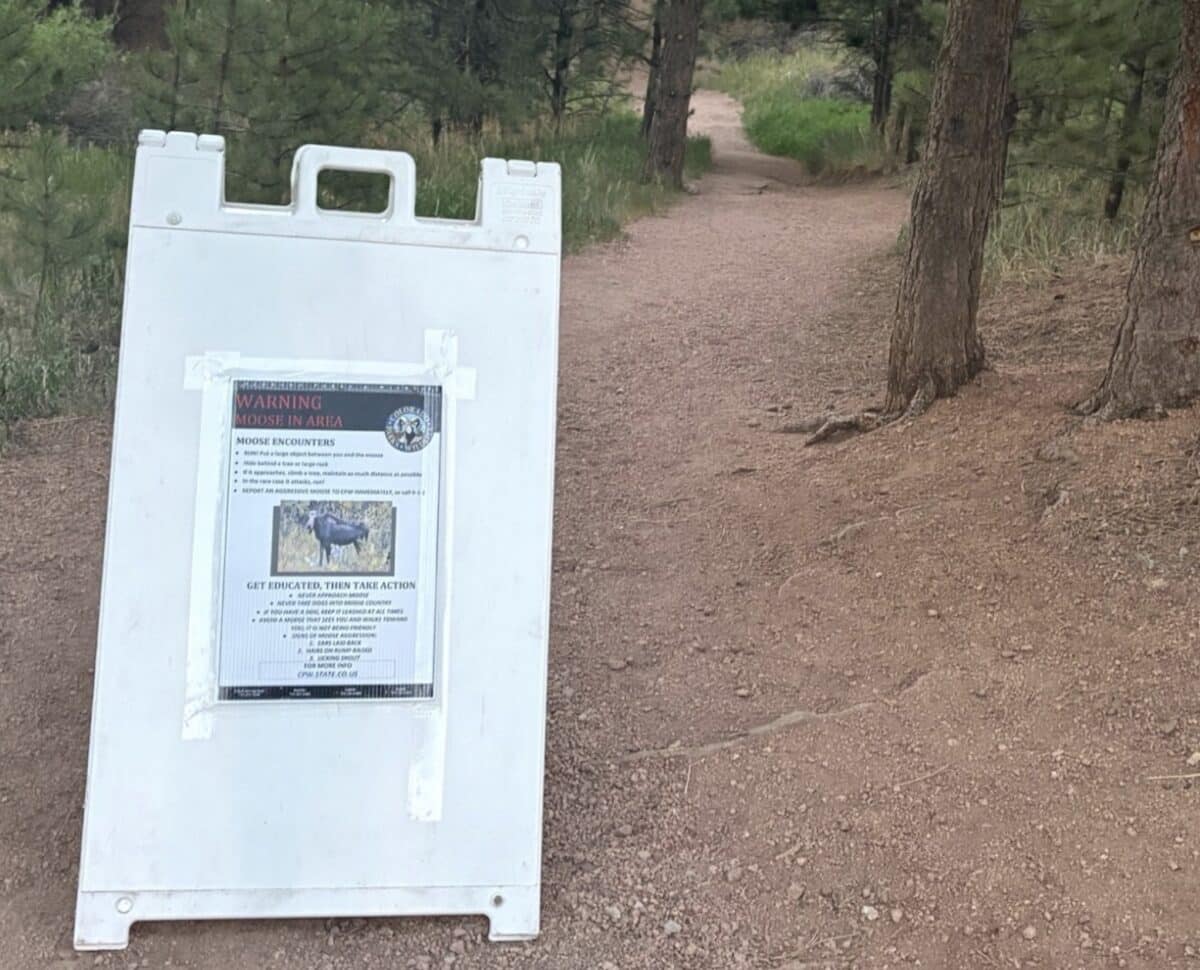
In response to the attack warning signs were posted along the Lovell Gulch Trail (5.48 miles roundtrip) to let hikers know there is an aggressive moose in the area. Wildlife officials is not pursuing the moose.
Colorado Parks and Wildlife advises hikers should proceed with caution in moose habitat, especially when accompanied by dogs. Moose are well known for becoming aggressive around dogs which they can perceive to threat akin to wolves. Dog walkers in moose country should keep their dogs leashed and provide a wide berth around moose.
Living with Colorado Moose
Moose have very few natural enemies in the wild and, as a result, do not fear humans as much as most other species. Moose tolerate humans longer and at closer distances. They are extremely curious and often will approach humans or houses. For these reasons, it is extremely important to understand moose behavior when living in or visiting the areas they inhabit.
While moose encounters with people are quite common, moose cause few problems. However, moose can and will “tree” people who have approached them too closely, kill or injure pets or livestock, and chase people or dogs away from territories they are defending. Caution and common sense go a long way in preventing problems with moose.
Moose Need Space
Moose may look more friendly than dangerous to wildlife watchers not used to living with this species, but like all wildlife, moose need their space. These animals move more quickly than most would think (up to 35 miles per hour) and must be given command and respect when observed in the wild.
Signs of Aggression
- Laid back ears
- Raised hairs on the neck
- Lowered head
- Swaying back and forth
- Licking of the snout
- Cocking of the head
- Rolling eyes and ears back
- If a moose reacts to your presence, you are too close.
What do I do if a moose displays signs of aggression?
If a moose displays aggressive behavior or begins to charge, run as fast as you can and try to put a large object between you such as a boulder, car or tree. Avoid animals that are behaving belligerently or abnormally. Moose that exhibit dangerous behavior towards people should be reported to Colorado Parks and Wildlife.