

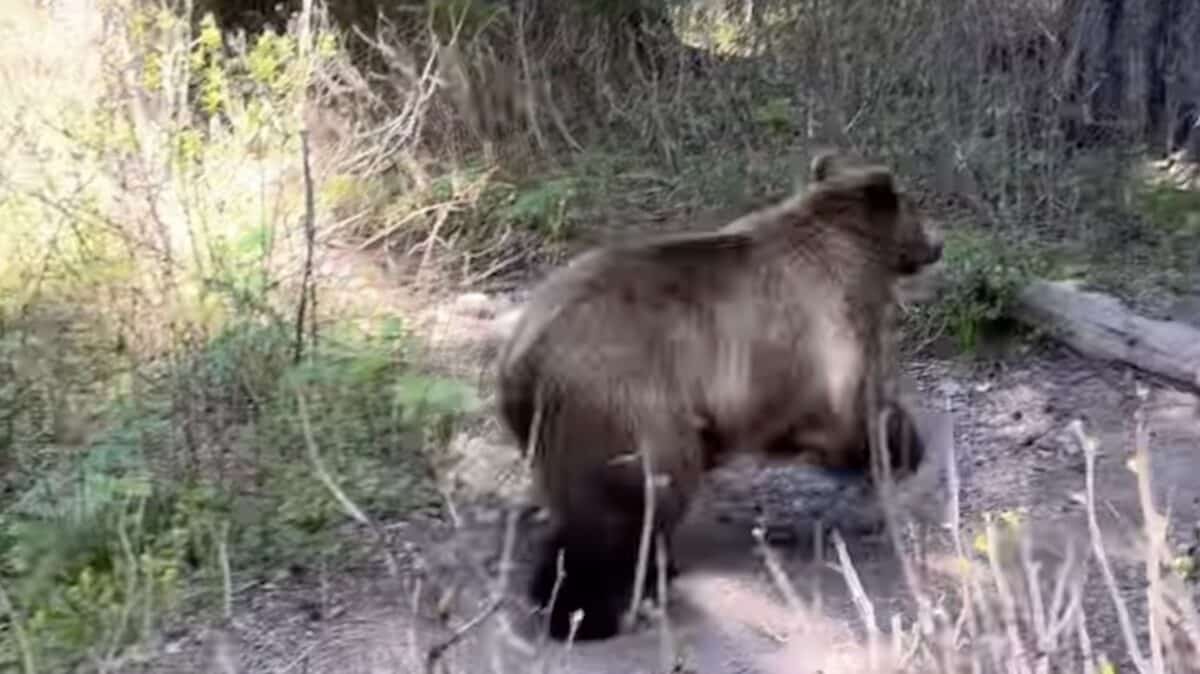
Montana’s Glacier National Park offers a stunning showcase of melting glaciers, alpine meadows, carved valleys, and spectacular lakes, with more than 700 miles of trails winding their way through the park’s incredible landscapes. If the beautiful views aren’t enough Glacier is also packed full of some impressive wildlife, including 6 species of amphibians, 276 species of birds, and 71 species of mammals.
Of the many mammals throughout the park, the grizzly bear is by far the most well known. Both black bears and grizzly bears live in the area, but around 300 grizzlies call the park their home. After hibernating all winter long, these animals emerge from their dens in late March or early April ready to start putting back on the pounds.
No matter the time of year, it’s vital that all guests to Glacier National Park come with an understanding bear safety. For one that means making sure you’re bear spray and know how to use it, but that also means knowing how to actually behave in the event of a bear encounter. This video from the park captured just a few days ago by Mason Van Zeeland demonstrates a handful of things both done very poorly and done correctly, and can serve as a great lesson on proper bear behavior.
The first, and perhaps worst, thing these hikers did wrong was continuing up the trail knowing full well that there were grizzlies present. The duo explains that other hikers saw the grizzlies and warned them of their presence, yet these two still decided it would be a good idea to hike up the trail. If you know there are bears on the trail ahead of you, turn around. It’s a pretty simple requirement. Approaching within 100 yards (300 feet) of any bears or wolves in expressly prohibited in the National Park, yet it seems these two still knowingly did so.
From there most of the behavior is pretty solid. Mason kept his bear spray on hand and ready to deploy, while his hiking partner quickly told him not to run when the bears ran past them. Freaking out and yelling when the grizzly bears arrive is not the best behavior either. If you encounter a bear within the 100 yard limit, you should talk quitely and back away as the situation allows.
Then at the end of the clip they come across a moose on the trail which they then proceed to approach. Once again, terrible idea. Read more on bear safety in Glacier National Park below.
Glacier National Park Grizzly Bear Safety:
If you encounter a bear inside the minimum recommended safe distance (100 yards; 91 m), you can decrease your risk by following these guidelines:
- If a bear or other animal is moving in your direction on a trail, get out of its way and let it pass.
- If you can move away, do so. If moving away appears to agitate the bear, stop. In general, bears show agitation by swaying their heads, huffing, and clacking their teeth. Lowered head and laid-back ears also indicate aggression. Bears may stand on their hind legs or approach to get a better view, but these actions are not necessarily signs of aggression. The bear may not have identified you as a person and may be unable to smell or hear you from a distance. Help the bear recognize you as a friendly human.
- Talk quietly.
- Do not run! Back away slowly. Stop if it seems to agitate the bear.
- Use your peripheral vision. Bears may interpret direct eye contact as threatening.
- Continue to move away as the situation allows.
- If a bear appears intent on approaching you, your group, or your campsite in a non-defensive manner (not showing signs of agitation), gather your group together, make noise, and try to discourage the bear from further approaching. Prepare to deploy your bear spray. If you are preparing or consuming food, secure it. DO NOT LET THE BEAR GET YOUR FOOD!
- If a bear approaches in a defensive manner (appears agitated and/or charges), stop. Do not run. Talk quietly to the bear. Prepare to deploy your bear spray. If contact appears imminent and you do not have bear spray, protect your chest and abdomen by falling to the ground on your stomach, clasp your hands around the back of your neck, and leave your pack on for protection. If the bear attempts to roll you over, try to stay on your stomach. If the attack is defensive, the bear will leave once it recognizes you are not a threat. If the attack is prolonged, FIGHT BACK!
