

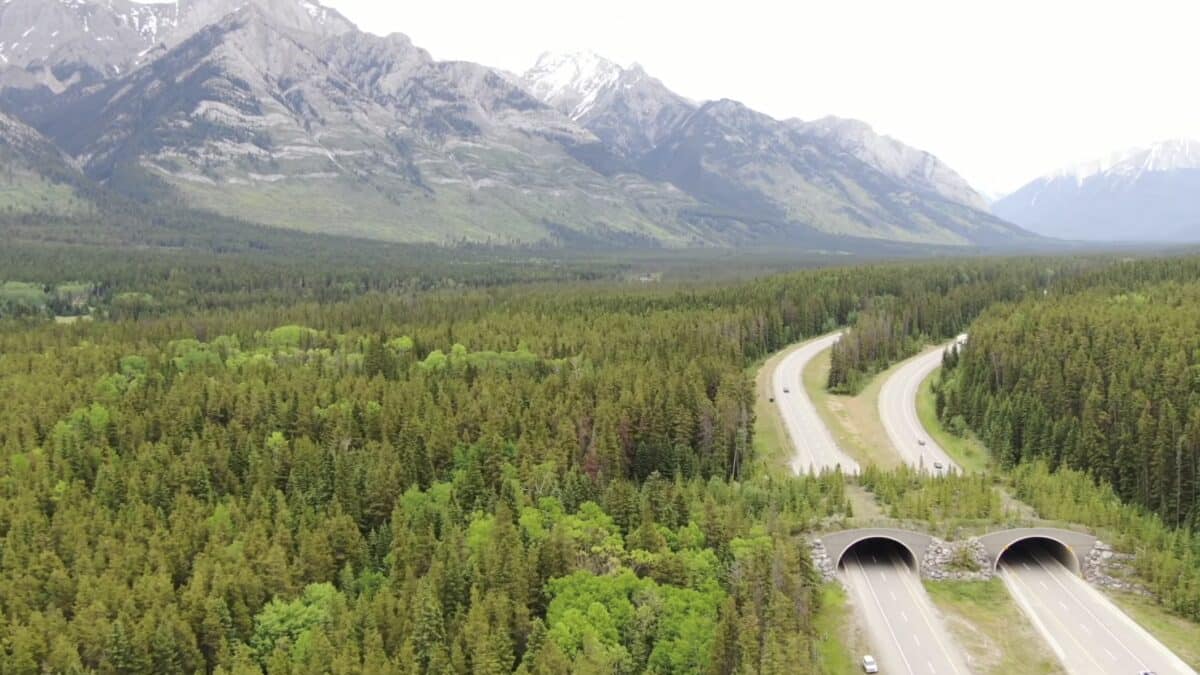
Alberta — Banff National Park is home to some of the most beautiful natural wonders on the planet. That includes seeing many species interacting with one another and with their environment. While many natural wonders don’t protect wildlife as much as they should, Banff isn’t among that group.
Since the late 1970s, wildlife crossings have been installed across the national park. In 1996, this push was expanded in response to the need to expand the Trans-Canada Highway from two to four lanes. Park crews installed wildlife crossings both over and under the highways and fences to keep wildlife off the roads. They also installed trail cams to make future adjustments.
The results are pretty impressive: carnivore mortalities from collisions have dropped by more than 80%, and ungulate mortalities by over 86%. Add in the reduction of vehicle damage from potential crashes, and it’s been a great value for Parks Canada. Ultimately, Banff National Park has become home to the largest number of wildlife crossings on the planet.
A recent Parks Canada video analyzes the success of this implementation and features some cool trail-cam footage.
Ultimately, its legacy comes from how feasible it is to implement. It has likely inspired areas in the United States to begin installing them. The most relevant example is in Utah, which has seen a few pop up in recent years. The world’s largest wildlife crossing, situated near Los Angeles, is scheduled to be completed later this year.
Image/Video Credits: Parks Canada
