

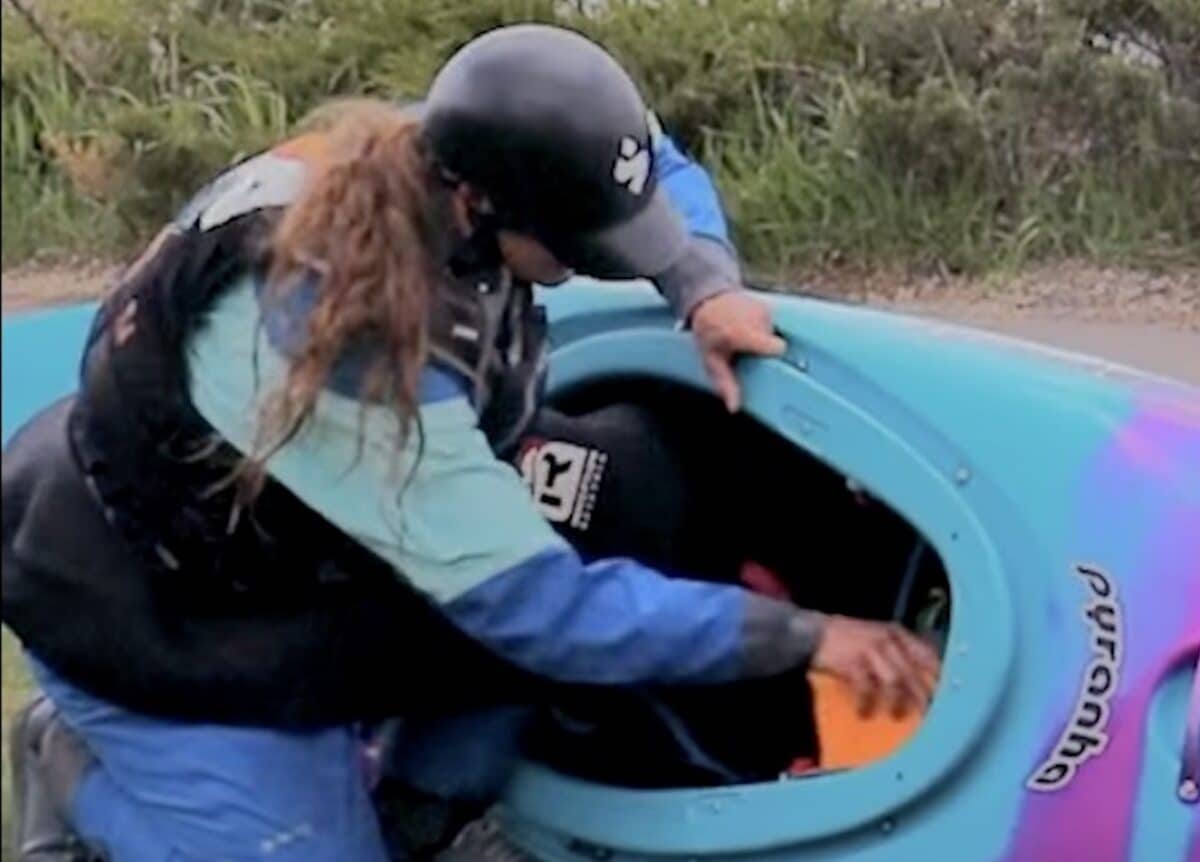
Shoutout to professional paddler Cheyenne Rogers for helping spread the word about the simple steps to preventing aquatic invasive species. Its dead simple and only a takes a few moments to help preserve wild places like the pristine waterways of Montana.
“I’ve paddled all around world kayaking many wild places bringing back incredible memories and the one thing I’ve never brought back with me…aquatic invasive species.” -Cheyenne Rogers
Here’s the drill: always always always clean, drain, and drying your kayak before and after every trip.
“Prevention is our best defense! You are the first line of defense in preventing the spread of aquatic invasive species. Once established, there are few if any means to control AIS in natural waterbodies. Control efforts are very expensive and total eradication is very unlikely.” –Montana Fish, Wildlife & Parks
Remember folks, aquatic invasive species prevention starts with you. Be mindful, be thorough and have fun.

Clean. Drain. Dry.
CLEAN: Completely remove all mud, water and vegetation before leaving access area.
- Cleaning will remove visible large-bodied organisms attached to or in watercraft or recreational equipment. Rinsing with water removes organisms, while hot water often kills them.
- Water at least 120°F is recommended; be sure to avoid contact with skin and check manufacturers’ recommendations to ensure equipment can withstand high temperatures.
- If hot water is not available or may cause damage, rinsing with tap water and completely drying will help prevent spread of aquatic invasive species.
- Inspect your boat, trailer, and all gear. Pay attention to crevices and hidden areas.
- Remove all mud and vegetation. Use a pressurized power sprayer found at most do-it-yourself car washes. The hot water kills organisms and the pressure removes mud and vegetation. No need to use chemicals or soap.
- Dispose of vegetation and debris in trash or on dry land away from water or ramp.
DRAIN: All water from watercraft and equipment.
- Draining removes small and nearly invisible organisms such as invasive mussel larvae (veligers) that can be found in standing water.
- Drain or remove water from boat, bilge, live well, engine, internal compartments, and bait buckets by removing drain plugs before leaving the access area.
DRY: Your watercraft and equipment. Aquatic invaders can survive only in water and wet areas.
- Dry your watercraft and fishing equipment thoroughly; this will kill most invasive species. The longer you keep your watercraft, trailer, waders, and other equipment outside in the hot sun, the better.
- Drying is necessary as many organisms can survive in standing water.
- Dry in the sun (drying times will vary) or use a towel.
