

Whistler Blackcomb is most famous for its top notch skiing and snowboarding, being the largest ski resort in North America and hosting some of the gnarliest in-bound terrain on the continent. However the ski resort’s summer activities are near equally as well regarded as the on-snow.
Specifically Whistler Blackcomb’s downhill mountain bike park is often considered the best in the world, hosting a wide variety of terrain from easy beginner rollers to intense expert level jump routes. Like its winter version, the mountain bike park is the largest in the world, with trails running from the very top Whistler to the valley below.
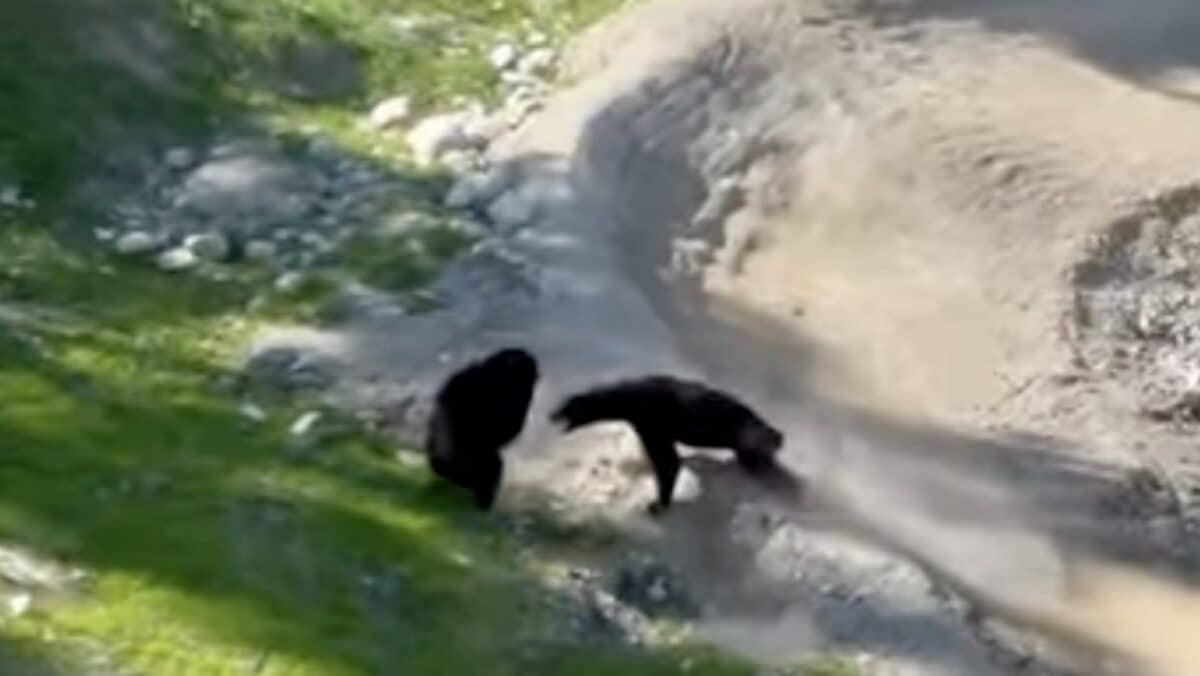
Whistler’s wildlife is nearly as iconic as the mountain bike park, too. Anyone visiting in the summer is nearly guaranteed to see a broad range of wildlife from birds and beavers to pikas and marmots. There’s also a large population of black bears living on and around the mountain (and some grizzlies in the area, though they’re less common). With the frequency of bears and bike tracks it’s not surprising to learn that the two cross paths from time to time. The two bears in the video below, for example, were filmed battling it out right next to a trail, slightly damaging one of the berms.
When you are out on the trails, you can significantly reduce the chances of a surprise encounter by staying in groups and making plenty of noise. The town of Whistler recommends carrying bear spray and knowing exactly how to operate it under pressure. Because bears are most active during low-light hours, avoiding trails at dawn and dusk will further lower your risk. Keep in mind that while black bears are the local majority, grizzly bears also inhabit the Whistler region and sightings are on the rise.
What to Do If You Encounter a Bear
If you cross paths with a bear, remember these immediate steps:
- Give them space: Never crowd the animal.
- Retreat carefully: Back away slowly while scanning the area for cubs, other bears, or nearby food sources (like a carcass) that the bear might be protecting.
- Alter your route: Either turn around and head back the way you came, or take a wide detour around the animal if you absolutely must keep moving forward.
- De-escalate: Speak to the bear in a calm, firm voice to signal that you are human and pose no threat.