

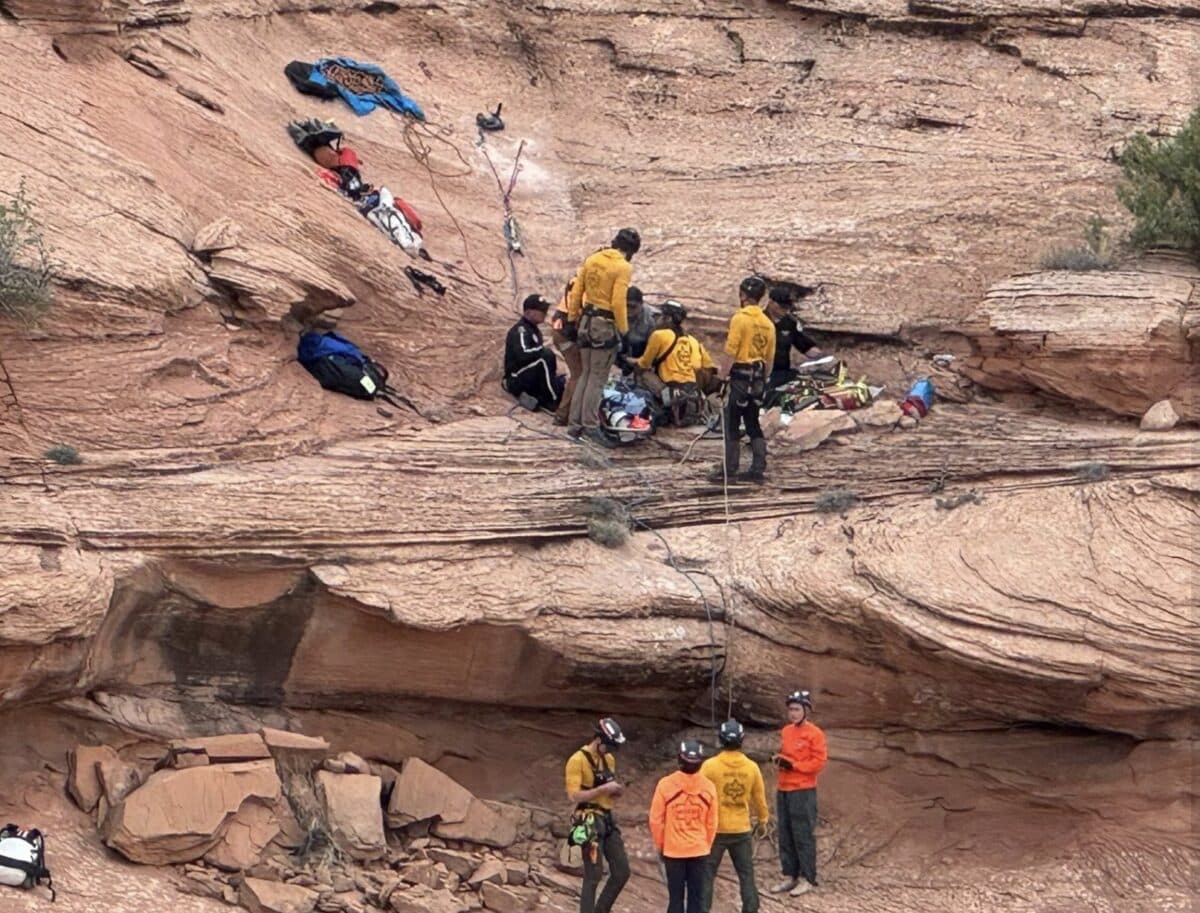
UTAH — On April 10, 2026 a family of four visiting Moab for spring break stopped near Pritchett Arch after riding into Pritchett Canyon on two motorcycles and a side-by-side. Although the area is only about five miles from town as the crow flies, the rugged terrain can take up to three hours to reach by vehicle. From their parking spot, the group hiked toward Cummings Arch, a smaller formation high above the canyon. During the hike, the group split up, and one adult fell after getting too close to the edge. The fall was not witnessed, but a child heard the screams and alerted the other parent.
The injured adult suffered severe trauma, including open fractures, and emergency help was called using a satellite SOS feature on a smartphone. Grand County Search and Rescue and EMS responded, along with a medical helicopter that arrived within minutes and landed about 150 yards from the patient. Rescuers found the victim in steep, technical terrain after an estimated 70 to 80 foot fall followed by an additional 50-foot tumble down slickrock.
Because of the terrain, crews conducted a technical rope rescue, bringing in specialized gear by helicopter and building an anchor system in the rock. The patient was stabilized, placed in a rescue litter and carefully lowered to safer ground before being carried to the landing zone. The entire operation took just under three hours from the time of the fall to evacuation. The patient was flown to a trauma center in critical condition, while additional helicopters were used to shuttle rescuers and equipment out of the canyon.
Grand County Sheriff’s Search and Rescue: Key Takeaways
This was a difficult rescue. Many modern tools were used to pull off this operation. For starters, the use of helicopters in such a coordinated way put resources on scene in a fraction of the time it would have taken to drive GCSAR’s OHVs to the area.
Using the DPS ship to retrieve assets saved the same amount of time at the end of the operation. Without the use of the helicopters, this rescue could have taken 10-12 hours—and that’s if no trouble befell the rescuers traveling to and from the scene on the difficult Pritchett Canyon trail.
Communications were challenging. Repeater and line of sight radio operations worked very well from the flight level of the helicopters. From on the ground at the scene back to Moab, radio communications were spotty at best. Early in the operation, an iPhone satellite message was used by a rescuer to give a partial scene size up and ask the EOC for technical rope rescue resources. On one of the air sorties, a mobile Starlink unit was brought out to use and communications improved dramatically.
Having a well-practiced technical rope rescue team along with additional capable medical providers were force multipliers that helped this operation move quickly and safely.
As for the reason for the rescue, no one saw the patient fall. The cliff edges in many places around Moab are deceptive. They slope gently from the top at first and quickly progress to vertical. It is not known what led up to the accident or what/if anything could have prevented it.
So many of us enjoy the wilderness that surrounds the Moab area. The ubiquitous advice to “Be Careful” is sound and sometimes bad things happen to good people. GCSAR wishes the family the best of luck moving forward. Grand County Search and Rescue is so grateful to Intermountain Health, the Department of Public Safety, and especially to its talented and dedicated members who all came together to perform this difficult rescue.
