


Colorado Parks and Wildlife confirmed that a beaver found dead in late October at the Gunnison River Whitewater Park was invected with tularemia, a bacterial zoonotic disease that can infect both other animals and humans.
CPW’s Wildlife Pathologist submitted the carcass to Colorado State University’s Veterinary Diagnostic Laboratory which confirmed that the animal was positive for the disease. Tularemia can infect several species in Colorado, inlcuding rabbits hares, beavers, and other rodents. While less common, it can be found in both domestic animals and humans.
“A diagnosis of tularemia in a wild animal in Colorado is not unheard of. However, CPW’s Wildlife Health Lab usually only receives reports of tularemia in wildlife a couple of times per year. Large-scale outbreaks are less common.” – CPW Wildlife Health Veterinarian Peach Van Wick.
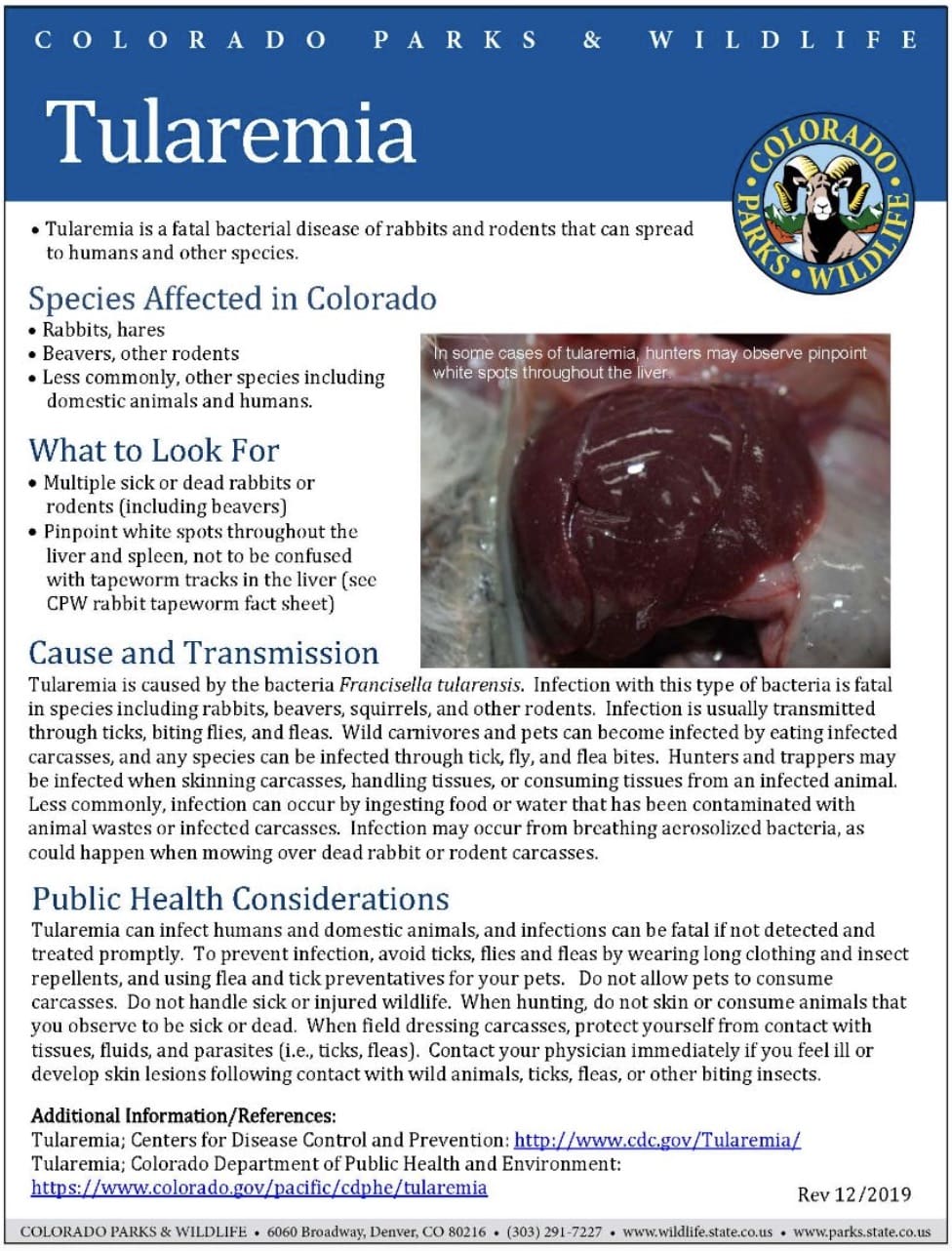
CPW recommends keeping pets away from wildlife at all times and to never allow pets to eat carcasses. Handling sick or injured wildlife is highly discouraged. Hunters and trappers can be exposed to the Francisella tularensis bacteria, which causes tularemia, when skinning carcasses, handling tissues, or consuming tissues from an infected area. Hunters should never skin or consume animals that are sick or dead.
Infection is usually transmitted through ticks, flies, and fleas, though wild carnivores and pets can become infected by eating the infected carcasses. Infection can also occur by ingesting food or water that has been contaminated with animal wastes or infected carcasses, though it’s less common. In some cases, infection can occur from breathing aerosolized bacteria.
If you feel ill or develop skin lesions after contact with wild animals, ticks, fleas, or other biting insects, contact your physician immediately. If you’ve been exposed to a wild animal that’s tested positive for tularemia, contact Gunnison County Health & Human Services at 970-641-3244.