

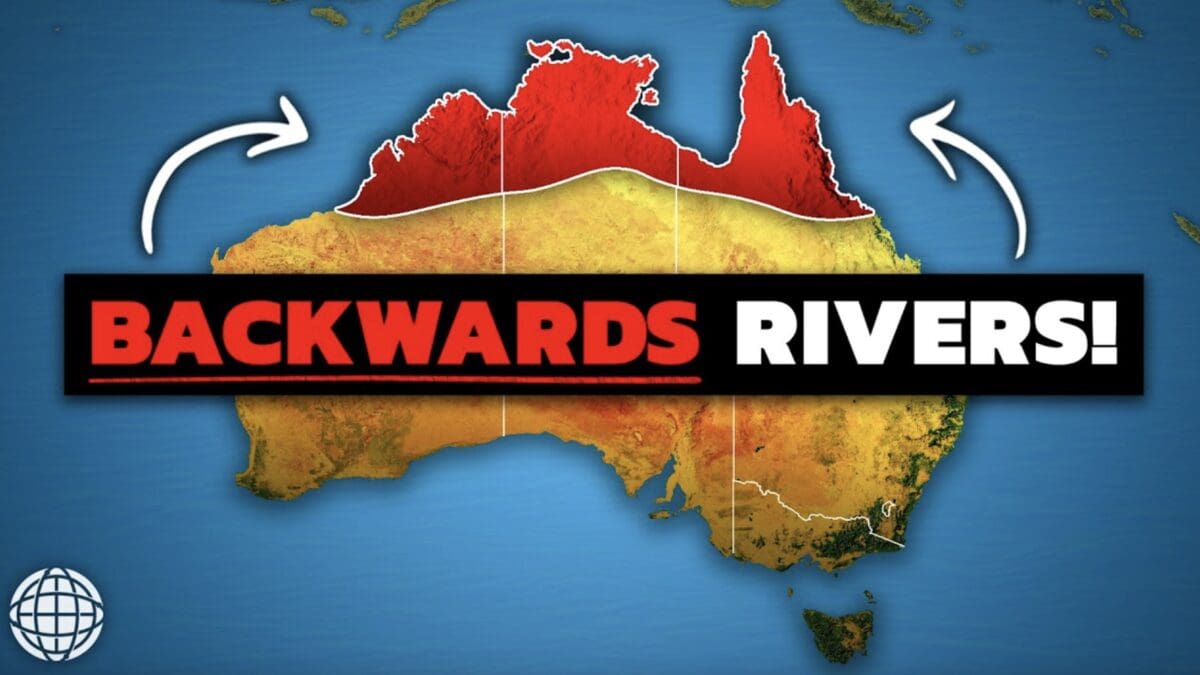
Australia is an interesting country, to say the least. From it’s terrifying bugs, reptiles, and sea life to its vast and weird landscape, the massive country really does feel like a different world. By far its weirdest reaches lie in the country’s northern portion. These are 15 wild facts about Northern Australia.
- Two Seasons Only: Northern Australia has just a wet season (October–April) with heavy rains and a dry season (May–September) with clear skies and low humidity.
- Oldest Rainforest: The Daintree Rainforest in far north Queensland is the world’s oldest continuously surviving tropical rainforest, living ~180 million years old.
- Horizontal Waterfalls: In the Kimberley region, extreme tidal ranges (up to 12 meters) force billions of liters of water through narrow gorges in Talbot Bay, creating unique “horizontal waterfalls.”
- Rivers Flow Backwards: During king tides in the wet season, massive tidal surges reverse the flow of major rivers for hours, pushing saltwater inland.
- Tropical Savannah: Unlike the iconic red deserts Australia is often known for, northern Australia is dominated by vast tropical savannah grasslands with eucalyptus and acacia, covering around 25% of the continent.
- WWII Bombing of Darwin: On February 19, 1942, Japanese air raids hit Darwin with more aircraft than Pearl Harbor, marking the largest direct attack on Australian soil.
- Ancient Rock Art: Arnhem Land and Kimberley rock shelters are home to the world’s oldest continuous art galleries with paintings over 20,000 years old.
- Macassan Trade: For centuries before European arrival, Indonesian Macassan sailors annually visited Arnhem Land to harvest sea cucumbers.
- Failed Colonial Outposts: 19th-century British settlements like Fort Dundas and Port Essington were abandoned due to disease, cyclones, and infertile soil.
- Matthew Flinders’ Mapping: Between 1801 and 1803, Matthew Flinders circumnavigated and fully charted Australia’s treacherous northern coast aboard HMS Investigator.
- Immense Emptiness: 40% of Australia’s landmass is north of the Tropic of Capricorn, but this area holds only 5% of the country’s population.
- Savannah Way Drive: This 3,700 km route from Cairns to Broome crosses 15 national parks and 5 World Heritage areas.
- Giant Cattle Stations: Northern cattle ranches often exceed 1 million acres, defining the region’s economy and frontier culture.
- Strategic Military Hub: Proximity to Southeast Asia makes the north vital for defense, with major military bases sitting in Darwin.
- Young & Multicultural: Darwin, the region’s main city, is Australia’s youngest capital and most multicultural.
