


La Niña, characterized by cooler-than-average sea surface temperatures in the central and eastern equatorial Pacific, is likely to influence the 2025-2026 winter, with NOAA forecasting a 71% chance of its onset from October to December 2025, and a 54% chance it persists through December to February. This pattern, driven by stronger trade winds that shift warm water westward and allow cold water to surface along South America’s coast, typically pushes the jet stream northward, bringing distinct regional weather impacts across the United States.
La Niña 101
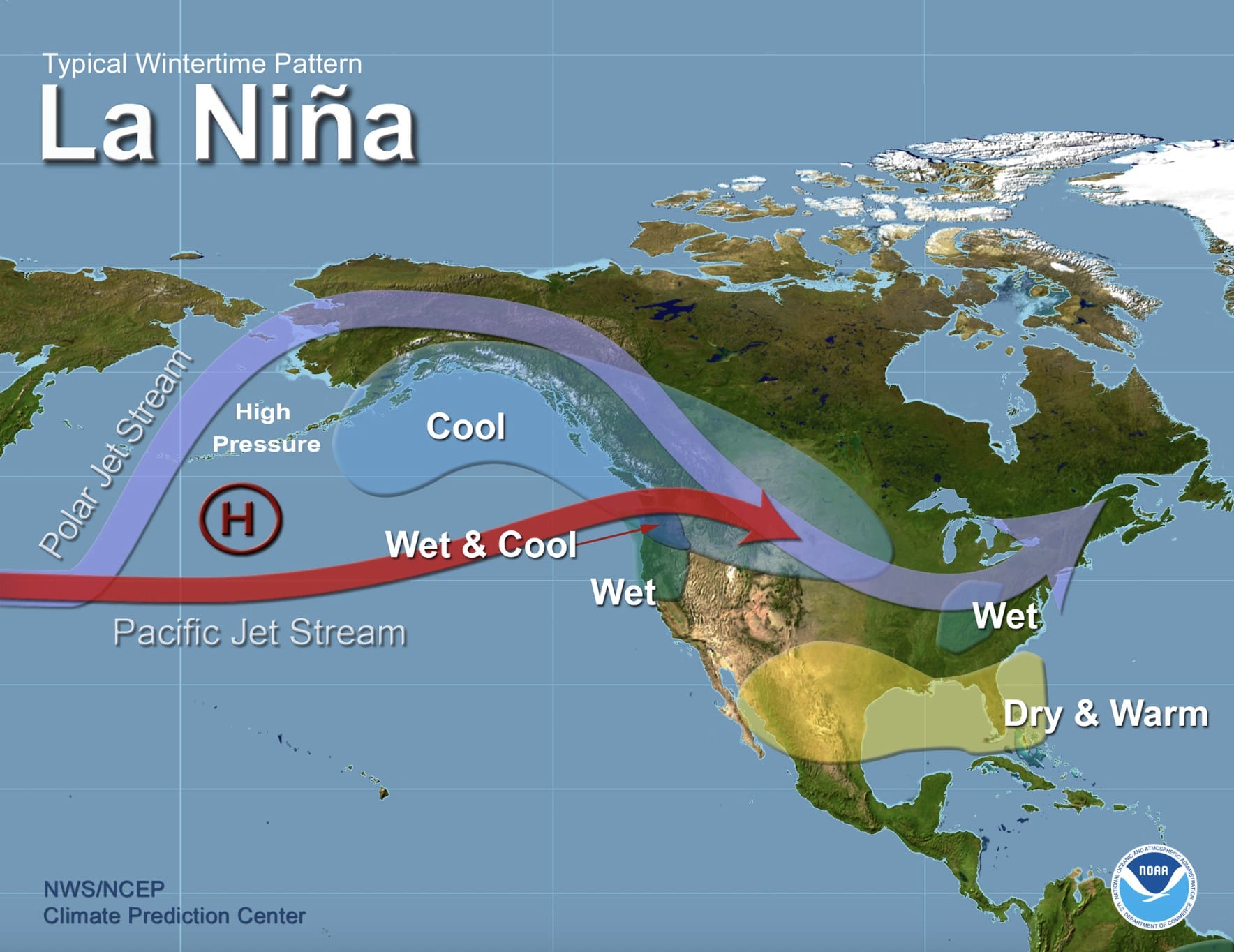
La Niña is the cool counterpart to El Niño, driven by colder-than-average sea surface temperatures in the central and eastern equatorial Pacific. Stronger trade winds push warm water west, letting cold water well up along South America’s coast. This shifts the jet stream north, steering storms toward the northern US and Canada while leaving southern regions high and dry.
Regional Outlook (December 2025 – February 2026)
La Niña’s influence creates distinct regional patterns. Here’s what NOAA’s data suggests for winter 2025-2026:
- Pacific Northwest (Washington, Oregon, northern Idaho): Expect a cold, wet winter with above-normal snowfall. Frequent storms could dump heavy, wet snow in the Cascades and Olympics.
- Northern Rockies & Plains (Montana, Wyoming, Dakotas): Cold and snowy, leaning strongly toward deep snow cycles. The jet stream’s northern track should deliver frequent storms, piling up blower snow in the Tetons and Colorado’s front range.
- Northeast (New York, New England): Slightly cooler and wetter than average, with a chance for snowier mountains. More storms may hit the Greens and Adirondacks, though lower elevations could see mixed rain and snow.
- Alaska (Interior & Southern regions): Cold with above-normal snowfall favored. There’s a good chance of reliable chills and heavy dumps.
- Southwest (California, Arizona, New Mexico): Milder and drier than normal, with below-average snowfall. The Sierra Nevada may struggle with thin cover, challenging early-season operations.
- Southeast (Southern Appalachians): Warmer and likely drier, with limited snow potential.
What This Means For Skiers And Snowboarders
A weak La Niña, as NOAA predicts, could mean a great winter for northern resorts like those in Montana, Wyoming, and Washington, where cold temps and heavy snow align for deep powder days. But southern skiers, especially in California’s Sierras, may need to road-trip north to escape thin, crusty conditions. Keep an eye on NOAA updates as the season nears as the pattern could always shift.
