

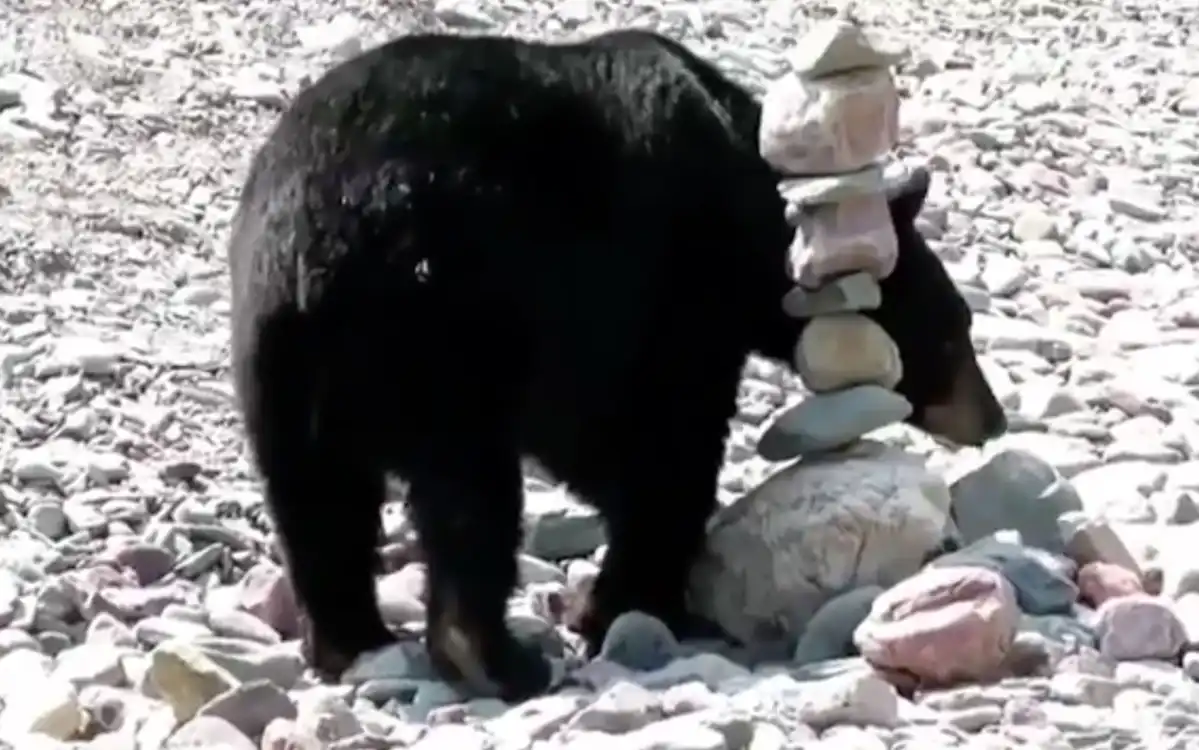
While making an ornamental stack of rocks in our National Parks may seem like good clean fun, it can in fact negatively impact the natural environment and is highly discouraged in places like Glacier National Park. To raise awareness about the prohibited activity, Glacier elicited the help of one its resident black bears to illustrate their point. Tempting as it may be to delicately balance rocks in the serene landscapes of National Parks to take a picture for social media, we ask you abide by the Leave No Trace ethic and refrain from the practice. While Smokey Bear is famous for raising awareness about wildfires, this Glacier National Park bear is an unsung hero doing its part to discourage rock stacking.
How do you feel about cairns?
Remember Leave No Trace Principals six and seven:
Respect Wildlife and Be Considerate of Other Visitors.
Stacking rocks can have negative impacts on the natural environment. Removal of rocks from waterways can displace aquatic life, like mayflies and stoneflies, and result in increased erosion.
Cairn construction can also be a safety concern. Tall cairns may accidentally get toppled and could result in injuries. Abundant or randomly placed cairns may cause confusion, as they are used to mark routes.
Lastly, rock cairns can take away the wilderness character of a place, making it feel less wild.
According to Leave No Trace, an unofficial stack of rocks doesn’t even count as a cairn, it’s just a stack of rocks. They present three impacts of stacking rocks, ecological, erosion, and aesthetic. The ecological impact relates to the destruction of habitats, as removing even a small rock could be destroying the hiding place/home of a bug, fish, aquatic macroinvertebrates, and other animals.
On the erosion side of things, embedded rocks hold soils in place, allowing the body of water to effectively drain and excess while creating a place for plant life to grow. Take that rock out of its rightful place and boom, the rate of erosion on the land has increased. Hundreds of people do that every year while visiting your favorite river and suddenly that river looks entirely different, and you’re partially to blame.
The aesthetic impact, of course, is the destruction of the image of wilderness. Many of us go out in nature to get away from civilization and visual reminders that humans leave in their wake kill the vibe. We don’t want to see the remnants of someone’s staged Instagram photo sitting near that gorgeous stream or on that majestic mountaintop. The message is clear and simple, don’t stack rocks.