YELLOWSTONE NATIONAL PARK, Wyoming – Yellowstone National Park is full of gorgeous views, landscapes, and bountiful hydrothermal features, but many people think of the park’s abundant wildlife before they think of its unique geography and geology.
Yellowstone is home to the largest concentration of mammals in the lower 48 states, with 67 different species ranging from small animals to seven large predators including black bears, grizzly bears, mountain lions, wolverines, and wolves. But the park’s unofficial mascot is one of its eight ungulate species, the bison, and it’s hard to miss. The bison population has ranged from 3,500 to nearly 6,000, and they can be spotted throughout the park, though the Hayden and Lamar valleys are the most reliable viewing spots.
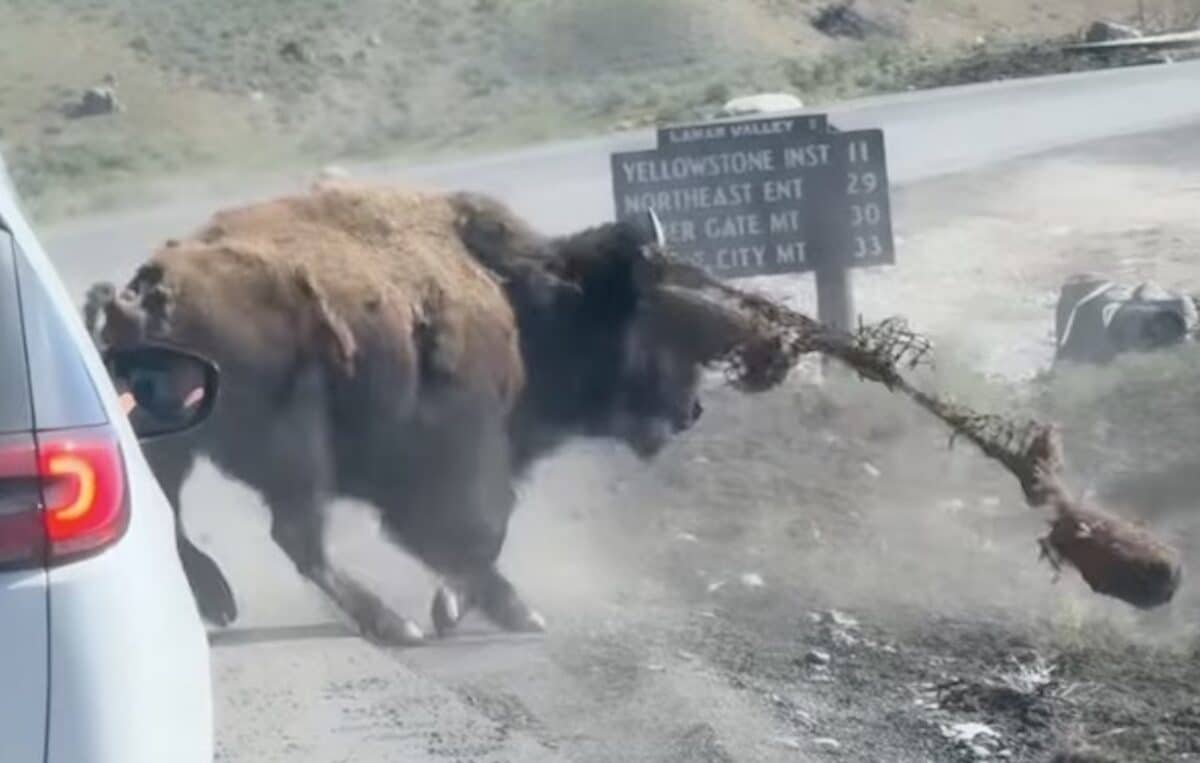
Filmed by wildlife cinematographer Tanner Haver, this bison in the Lamar Valley area of the park was pretty worked up by some netting wrapped around its horns. The netting appears to be a biodegradable anti-erosion netting, something the U.S. Fish and Wildlife Service uses to protect soil without causing damage to wildlife and the environment. Fortunately after a frantic struggle, the massive bison broke free.
Everyone in the video were on their best behavior, staying in their vehicles and not attempting to assist the animal. Remember bison are extremely dangerous and have injured more people in Yellowstone than any other animal. They’re fast, running up to 3 times faster than people, and won’t hesitate to charge and maim people who they feel are threatening them. Even if you think you’re helping the animal, there’s a good chance they won’t see it that way. If you plan on visiting the park, make sure you give bison plenty of space at all times. Read more on bison safety in Yellowstone below.
Yellowstone Bison Safety Guidelines:

Stay at least 25 yards away from bison
Keep at least 25 yards (23 meters) from bison at all times and never approach a bison to take a photo. If need be, turn around and go the other way if a bison walks within 25 yards.
Run away if a bison charges
If approached too closely, bison may respond by bluff charging, head bobbing while staring at you, pawing, bellowing, or raising its tail. These are warning signs that you are too close and that a charge is imminent—do not stand your ground! Immediately walk or run away from the animal. If the bison follows you, spray bear spray as you are moving away, and seek cover behind nearby trees or cars.
Drive carefully around bison
Plan extra time when driving through Yellowstone—the speed limit is 45 mph, unless posted otherwise, and you’re likely to encounter a “bison jam”. If bison are on the road, be patient, drive slowly, and stay in your vehicle. Wait for bison to move along; do not honk your horn or drive aggressively toward them.
The size and dark coloration of bison means you should be especially careful when driving at night or anytime visibility is poor.