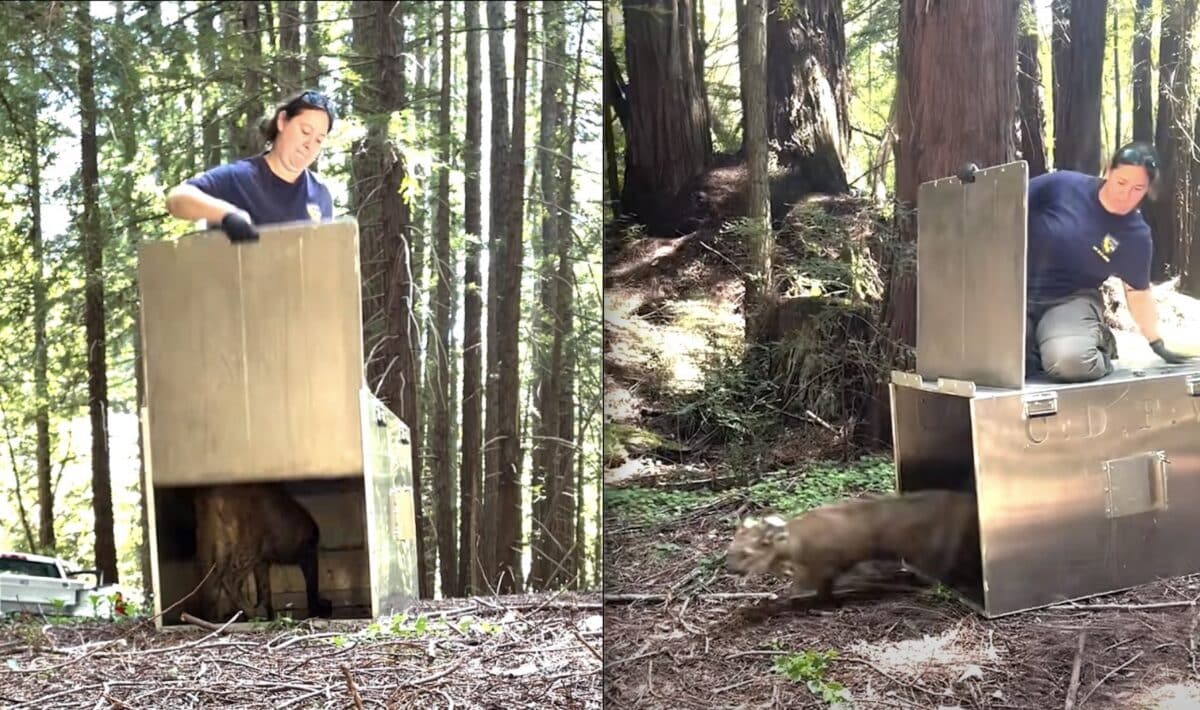
A juvenile mountain lion that was captured in a Redwood City, California backyard on Monday was successfully released in an open space area in the Santa Cruz Mountains.
Redwood City Police asked residents to keep their pets indoors Monday morning as the big cat wandered the neighborhood. California Fish and Wildlife was called to the scene where they worked with the police to track and tranquilize dart the female mountain lion which is estimated to be 1 to 2 years old.
“Mountain lions are very wary of humans and often avoid populated areas but can on rare occasion make their way into cities in search of food or other resources. In most cases these animals find their way back to open spaces on their own, but busy city streets and freeways can make that return difficult and dangerous.” -California Fish and Wildlife
The big cat was evaluated and determined to be healthy before it was fit with a GPS-tracking collar for a UC Santa Cruz Puma Project telemetry study. The mountain lion was then loaded into a crate for transport and taken to nearby habitat in the Santa Cruz Mountains where it was successfully released.
This is a great example of alert citizens reporting a potentially dangerous wildlife situation and the proper authorities handling it safely for both the residents and the animal. Should you encounter a California mountain lion in a residential setting, CDFW wildlife officers asks that you CalTIP at 1-888-334-2258 or using the Tip411 app. This particular mountain lion showed no signs of aggression and was not associated with any reports of wildlife conflict but in the event of a public safety threat, dial 911.
About Santa Cruz Puma Project

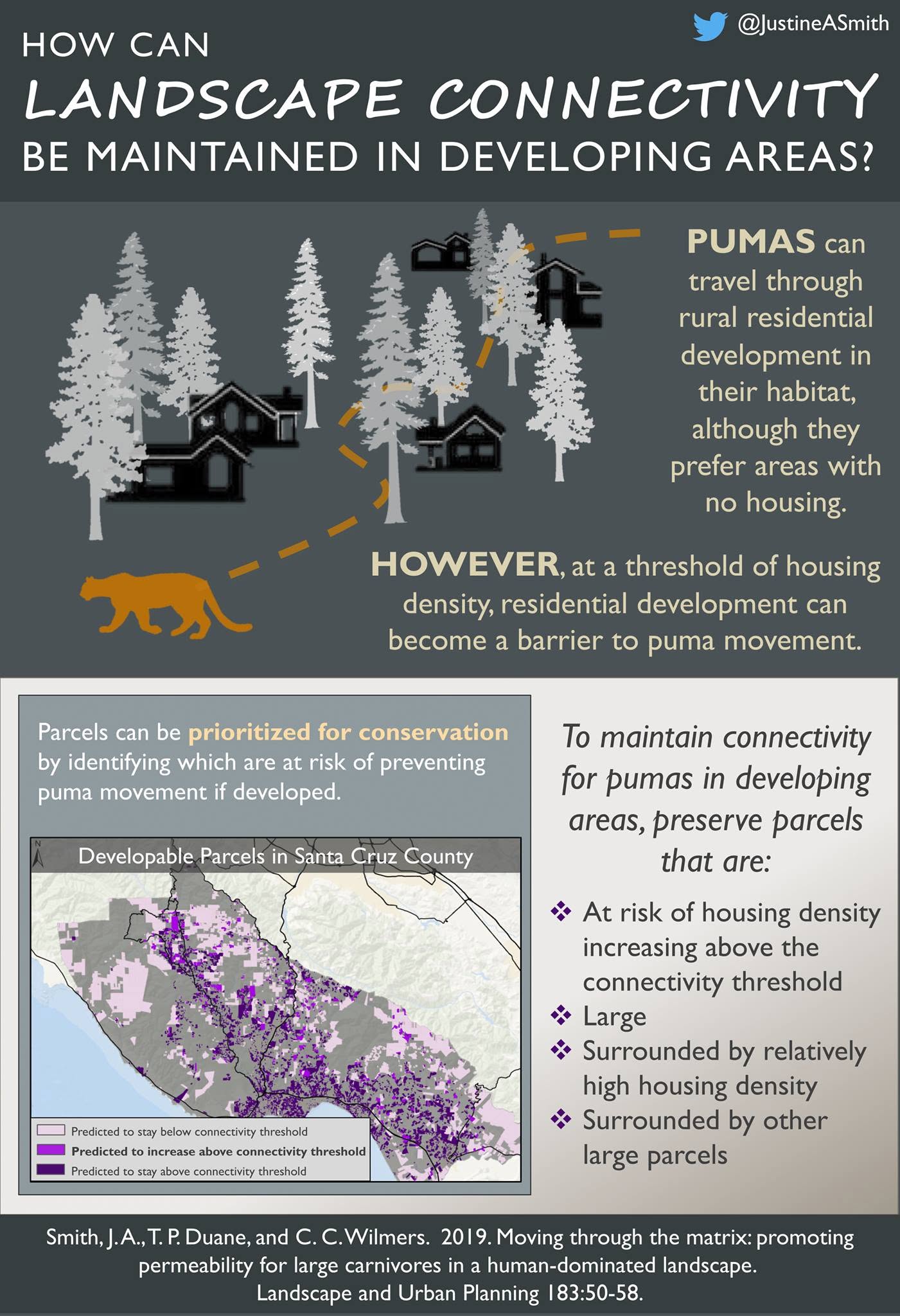
The Santa Cruz Puma Project is a partnership between UC Santa Cruz and California Department of Fish and Wildlife. The project involves deploying telemetry collars on mountain lions that collect continuous movement and location data from each animal.
By studying and analyzing data collected from these collars, Dr. Chris Wilmers and his team hope to answer important physiological and ecological questions that have so far evaded science. In addition to providing solutions to pressing environmental problems, the research project will further enhance the understanding of cougar habitat requirements as well as provide guidance on important movement corridors for lions within and between the Santa Cruz Mountains located in the central coast of California.