

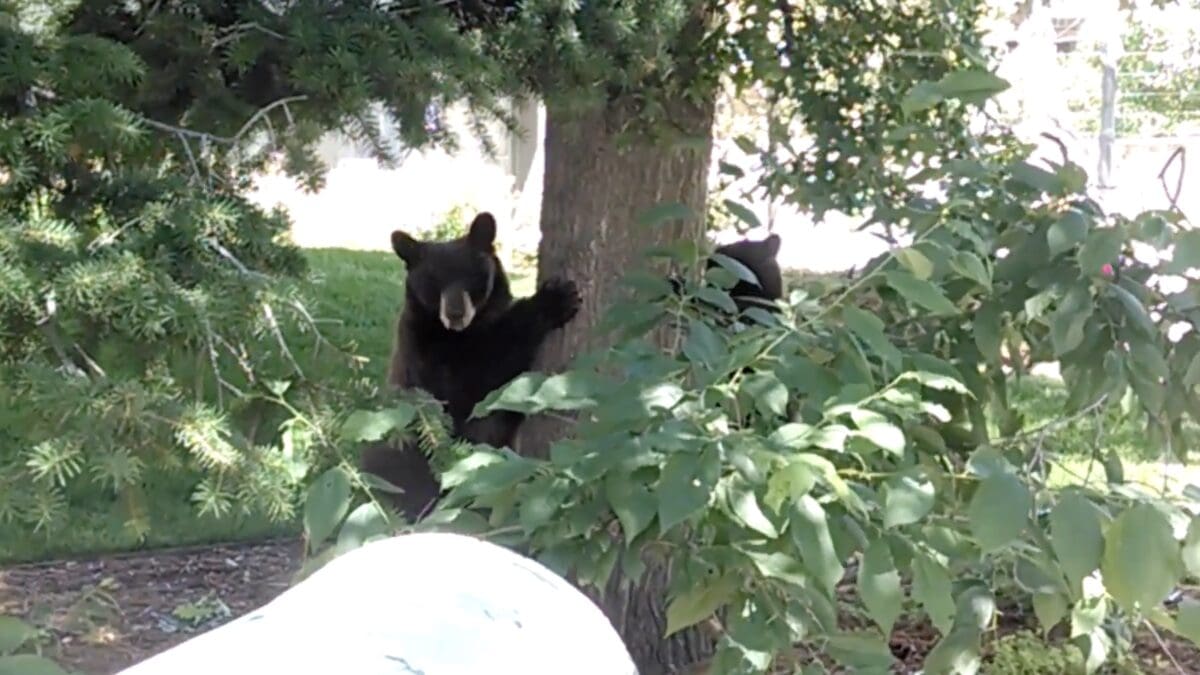
As the fall begins to take hold across the state, Colorado Parks and Wildlife (CPW) is warning residents and visitors to be aware of increased black bear activity as the animals enter hyperphagia. Hyperphagia is a natural phase of increased activity and intense eating that bears go through to prepare their bodies for the winter. This usually includes traveling up to 20 hours per day while searching for food. During this period, chance encounters are likely to increase and CPW urges the public to continue to prevent bears from easily gaining access to food sources.
Black Bear Hyperphagia
During this period of hyperphagia, black bears attempt to consume a total of 20,000 calories per day so they can pack on weight to help survive the winter. In fast food terms, that’s around 20 chicken sandwiches, 10 large orders of french fries, 10 soft drinks, and 10 milkshakes. Around half of 2024’s reported bear incidents occurred in August, September, and October, as the animals travel into ares outside of their typical territory in search of food.
Attractants like trash, bird seed, pet food, and barbecue grills are all a common cause of reported conflicts with bears. Once they become to comfortable around people, black bears can destroy property and become a threat to human safety.
CPW BearWise Basics
Six At-Home BearWise Basics
- Never Feed or Approach Bears – Intentionally feeding bears or allowing them to find anything that smells or tastes like food teaches bears to approach homes and people looking for more. Bears will defend themselves if a person gets too close, so don’t risk your safety and theirs!
- Secure Food, Garbage and Recycling – Food and food odors attract bears, so don’t reward them with easily available food, liquids or garbage.
- Remove Bird Feeders When Bears Are Active – Birdseed and grains have lots of calories, so they’re very attractive to bears. Removing feeders is the best way to avoid creating conflicts with bears.
- Never Leave Pet Food Outdoors – Feed pets indoors when possible. If you must feed pets outside, feed in single portions and remove food and bowls after feeding. Store pet food where bears can’t see or smell it.
- Clean & Store Grills – Clean grills after each use and make sure that all grease, fat and food particles are removed. Store clean grills and smokers in a secure area that keeps bears out.
- Alert Neighbors to Bear Activity – See bears in the area or evidence of bear activity? Tell your neighbors and share information on how to prevent conflicts with bears. Bears have adapted to living near people; now it’s up to us to adapt to living near bears.
Six Outdoor BearWise Basics
- Stay Alert & Stay Together – Pay attention to your surroundings and stay together. Walk, hike, jog, or cycle with others when possible. Keep kids within sight and close by. Leave earbuds at home and make noise periodically so bears can avoid you.
- Leave No Trash or Food Scraps – Double bag your food when hiking and pack out all food and trash. Don’t burn food scraps or trash in your fire ring or grill. Leaving scraps, wrappers, or even “harmless” items like apple cores teaches bears to associate trails and campsites with food.
- Keep Dogs Leashed – Letting dogs chase or bark at bears is asking for trouble; don’t force a bear to defend itself. Keep your dogs leashed at all times or leave them at home.
- Camp Safely – Set up camp away from dense cover and natural food sources. Cook as far from your tent as possible. Do not store food, trash, clothes worn when cooking, or toiletries in your tent. Store in approved bear-resistant containers OR out of sight in locked vehicle OR suspended at least 10 feet above the ground and 10 feet from any part of the tree. Local regulations vary.
- Know What To Do If You See a Black Bear – If you see a bear before it notices you, don’t approach. Stand still, enjoy, then quietly move away. If a bear sees you, back away slowly. Never run; running may trigger a chase response. If a bear approaches, hold your ground, wave your arms and yell “Hey Bear” until it leaves. Stay with your group. If it keeps approaching, use bear spray. If a black bear makes contact with you, do NOT play dead; fight back aggressively.
- Carry Bear Spray & Know How To Use It – Bear spray is proven to be the easiest and most effective way to deter a bear that threatens you. It doesn’t work like bug repellent, so never spray your tent, campsite or belongings.