

ALTA, Wyo. — Grand Targhee Resort’s controversial plan to expand by 694 acres is facing another round of federal scrutiny, with the U.S. Forest Service requiring additional environmental reviews and clarifications before the project can receive final approval.
In an October 26 response to objections, Acting Regional Forester Kristin Bail issued 12 instructions that the Caribou-Targhee National Forest must address before moving forward. The decision follows a formal review process involving 154 objections from government agencies, conservation organizations, backcountry skiers and community members concerned about the expansion’s environmental and recreational impacts.
The requirements include further consideration of impacts on bighorn sheep, completion of a federal biological assessment process and additional explanations of the Forest Service’s environmental analysis. Although the instructions could result in changes to the proposal, they do not constitute a rejection of Grand Targhee’s expansion plans.
Grand Targhee Wants to Expand Into Two Popular Backcountry Areas
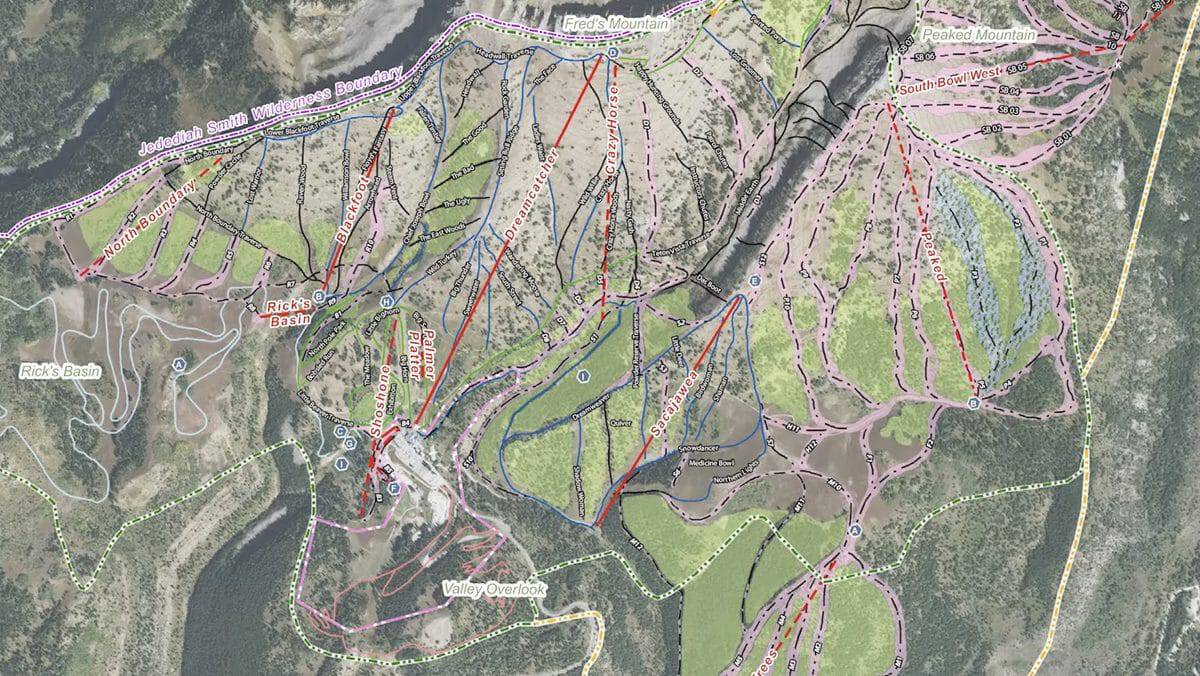
The Forest Service’s preliminary decision, released in May, would allow Grand Targhee to expand its special-use permit boundary by 694 acres, increasing its permitted footprint to approximately 3,000 acres.
The project includes new lift-served skiing in South Bowl and Mono Trees, additional chairlifts, expanded snowmaking, two on-mountain restaurants and improvements to existing facilities. The broader development plan also includes new hiking and biking trails and additional summer recreation opportunities.
Grand Targhee has been pursuing the expansion since introducing its 2018 master development plan. The proposal has already been scaled back from earlier versions, but the remaining expansion into South Bowl continues to generate significant opposition.
During the federal objection process, backcountry skiers are concerned about losing access to terrain outside the resort’s existing boundaries. Conservation groups and wildlife officials have raised concerns about the potential impacts of additional chairlifts, avalanche mitigation and increased recreational activity in sensitive alpine habitat.
Bighorn Sheep Habitat Remains a Major Obstacle
One of the most significant outstanding issues involves the Teton Range bighorn sheep herd, an isolated native population that wildlife experts consider particularly vulnerable to human disturbance.
The Wyoming Game and Fish Department has strongly opposed development in South Bowl, warning that increased human activity, grooming, chairlift operations and avalanche control could cause the animals to abandon important habitat.
The latest federal instructions require the Forest Service to identify appropriate measures or alternatives to minimize impacts on the bighorn sheep population. However, the agency stopped short of requiring South Bowl to be removed from the expansion proposal.
The Forest Service must also receive a final biological opinion from the U.S. Fish and Wildlife Service before making its decision. That review includes potential impacts on federally protected whitebark pine trees, hundreds of which could be removed during construction.
Local Communities Question Who Pays for Resort Growth
The expansion has also generated opposition from local governments in Wyoming and Idaho. Although Grand Targhee operates in Wyoming, visitors generally access the resort through Idaho’s Teton Valley, creating additional demands on roads, emergency services and local housing.
Officials in Teton County, Idaho, have argued that their communities would shoulder much of the increased infrastructure burden without receiving a corresponding share of the resort’s tax revenue.
The federal review acknowledges those concerns but concludes that the Forest Service does not have the authority to require agreements addressing tax revenue distribution or local infrastructure costs.
Grand Teton National Park officials have also raised concerns about the expansion’s potential effects on wildlife and views of the surrounding mountains, particularly a proposed restaurant near the summit of Fred’s Mountain.
What Happens Next for Grand Targhee?
The Forest Service must now address the 12 instructions and incorporate the findings from the U.S. Fish and Wildlife Service before issuing a final decision. Teton Basin District Ranger Jay Pence confirmed that approval cannot proceed until those requirements have been satisfied.
A final decision could arrive in 2027, although no firm date has been established.
For Grand Targhee, the October review represents another significant step in a lengthy approval process. The resort remains positioned to receive approval for substantial improvements, but the future of the proposed South Bowl expansion remains uncertain as federal officials work through the remaining wildlife and environmental concerns.
