

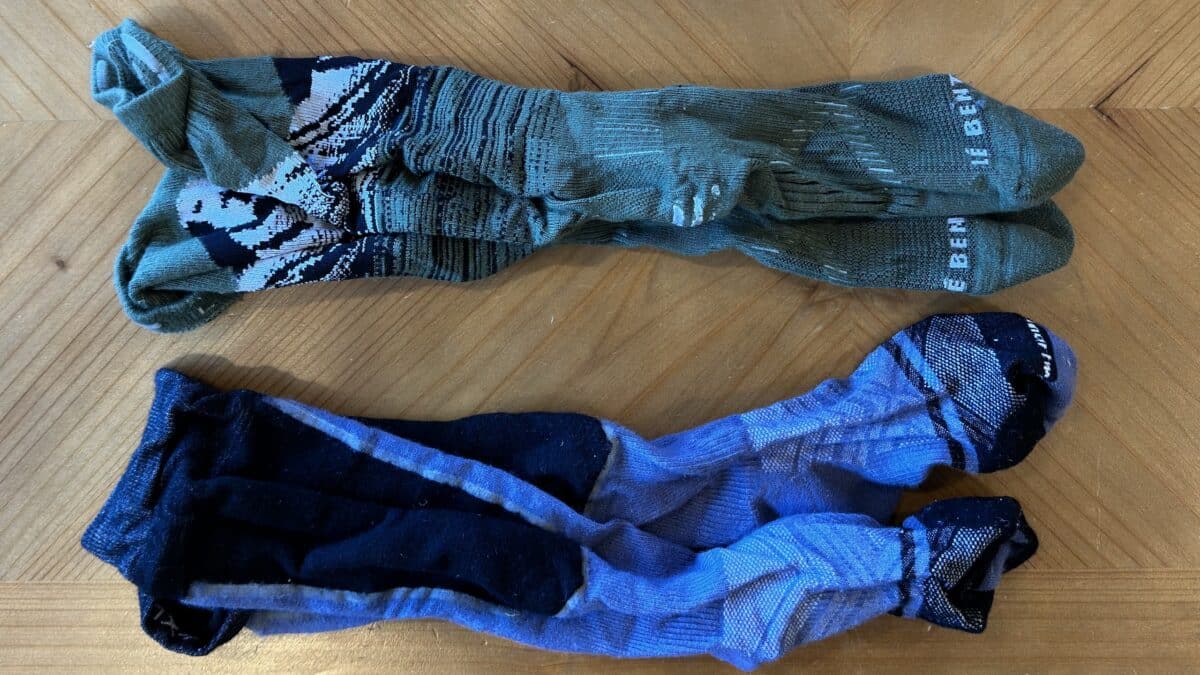
Choosing the right ski boots, skis, jacket, and pants gets a lot of attention before a day on the mountain. Socks often get overlooked, but the wrong pair can easily lead to cold toes, uncomfortable pressure points, and blisters, potentially ruining an otherwise great day out on the mountain.
There’s a lot more that goes into picking the right ski sock than just fit. Material, thickness, and cushioning is all quite important to keeping your feet comfortable inside your boots. Thankfully it’s not all that complicated as long as you follow a few basic guidelines.
Why Ski Sock Material Matters
The main rule is to never use cotton socks. It can be extremely tempting to reach for the first pair of socks you see in your dresser, but cotton absorbs moisture and dries slowly. In a day of skiing, this will leave your feet damp and seriously increase the likelihood of discomfort and blisters.
Material choice is vital when shopping for ski socks. Merino wool is a very common recommendation because it it naturally regulates temperature, manages moisture, and resists odors. Unlike cotton, merino wool can maintain its insulating properties even when damp, making it a particularly useful option for those who spend hours inside their boots.
Synthetic blends that use nylon and spandex materials help socks maintain their shape and allow them to dry quickly. Plenty of performance ski socks combine merino wool with synthetic fibers to take advantage of both materials.
Finding The Right Thickness And Cushioning
Plenty of people believe thicker socks automatically mean warmer feet, but excessively thick socks often make your feet colder by restricting circulation as they squeeze your feet inside your boots.
Instead, sock thickness should work to compliment your boot fit. Newer, fitting performance boots will benefit from thin or zero-cushion socks, providing a much closer connection to the boot while minimizing unnecessary pressure. Light or targeted cushioning is often a good middle ground for those with slightly more comfortable boot fits, with additional padding being included around the shin, heel or toe.
If your boots are really spacious and broken in, a full-cushion option can help provide additional comfort and warmth. You’ve got to be careful with this, though. The important thing is finding that good balance between cushion and space so you don’t wind up with numb feet.
Getting The Right Fit
Fit is quite a bit more straightforward. Ski socks should fit snugly without bunching, slipping, or major wrinkles. Look for socks with anatomical shaping and a properly positioned heel pocket. A seamless or low-profile toe can also help minimize pressure points.
Length can also be quite important. Over-the-calf socks are the standard for skiing, preventing the boot cuff from rubbing directly against your skin.
Should You Wear Two Pairs Of Socks?
Wearing two pairs might sound like a good way to stay warm, but it can create additional friction, increase pressure inside your boots, and restrict circulation. Stick to one properly fitted pair of ski socks.
You should also keep your base layer bottoms tucked above your boots rather than inside them. Your ski sock should be the only layer of clothing inside the boot.
Good ski socks are just as important as properly fitted ski boots. One pair of thin, moisture-managing ski socks with the correct cushioning makes a very clear and noticeable difference on the mountain.