

SAVOIE, France — A 39-year-old backcountry skier survived more than 24 hours trapped inside a crevasse in the French Alps after an avalanche swept him down a mountainside, leaving him seriously injured and unable to call for help.
Emeric Ossatte, an experienced ski mountaineer from the Grenoble area, was touring alone near Pointe Sommeiller in the Maurienne Valley on Sunday, November 8, when he was caught in the avalanche. The slide carried him into a crevasse approximately 30 feet below the surface, where he suffered a fractured femur and other reported leg injuries.
Despite his injuries, Ossatte managed to free himself from the snow and crawl through a narrow opening until he reached a sheltered cavity surrounded by rock and ice. With no cellphone reception and no way to escape the crevasse, he remained there overnight, hoping rescuers would find him.
In a November 11 interview with French broadcaster TF1, Ossatte described the moments following the avalanche:
“I was stuck in the snow. I only had one arm and my head sticking out. I tried to crawl to somewhere a little drier, a little more protected. And I found a cavity among the rocks.”
Rescuers Search Through the Night
When Ossatte failed to return home Sunday evening, his family contacted authorities. Mountain rescue personnel from CRS Alpes launched a search, but darkness, difficult terrain and avalanche danger complicated their efforts.
The search resumed Monday morning with approximately 30 rescuers, avalanche search dogs and three helicopters. Crews eventually identified evidence of an avalanche and discovered some of Ossatte’s equipment beneath the snow.
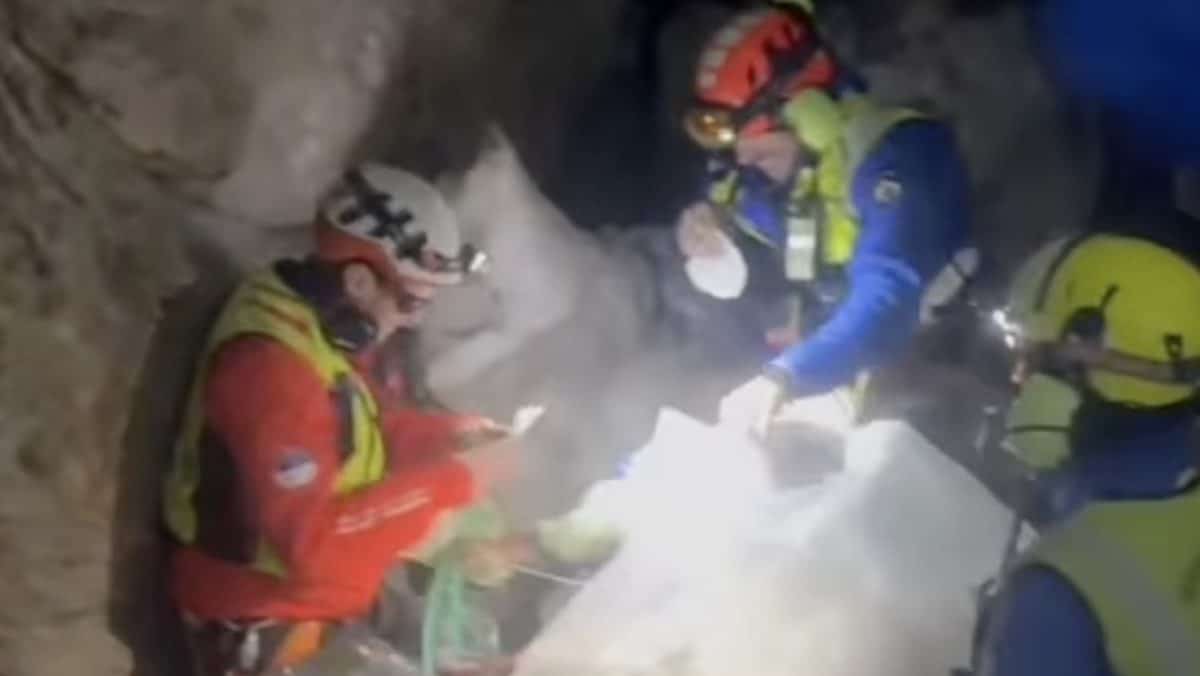
Search teams spent hours digging through avalanche debris, eventually locating his backpack and skis. Rescuers continued working despite the danger of additional avalanches. After approximately five hours of searching and excavation, a rescuer entered an opening in the ice and heard Ossatte calling for help. He was finally located Monday afternoon, more than 24 hours after the avalanche.
Ossatte was conscious but suffering from hypothermia when rescuers reached him. Emergency personnel provided treatment before carefully extracting him from the crevasse and transporting him by helicopter to Grenoble University Hospital.
Skier Credits Rescuers With Saving His Life
Speaking from the hospital, Ossatte described the uncertainty of spending a night alone beneath the snow. He knew worsening weather could make another rescue attempt impossible and tried to remain positive while waiting for help.
“I really tried to keep a positive thought, telling myself there was a chance and as long as I was alive, there was a chance.”
Ossatte underwent surgery for his fractured femur and received treatment for frostbite. Despite the ordeal, he expressed his gratitude to the rescue teams and said he hopes to return to the mountains.
The incident also prompted a reminder from French mountain rescuers about the dangers of early-season backcountry travel. Speaking with French radio station RTL, Major Yoann Haberey of CRS Alpes emphasized the importance of checking avalanche conditions, sharing planned routes and ensuring reliable emergency communications before entering remote mountain terrain.
Backcountry skiers should consult current avalanche forecasts, carry a transceiver, shovel and probe, know how to use that equipment, and receive avalanche safety training. Traveling with a partner and having a reliable way to summon help are especially important in remote terrain where a seemingly survivable accident can quickly become life-threatening.
