


NOAA’s Climate Prediction Center (CPC) says El Niño continues to strengthen, with the developing event now carrying a significant chance of becoming one of the strongest observed since records began in 1950.
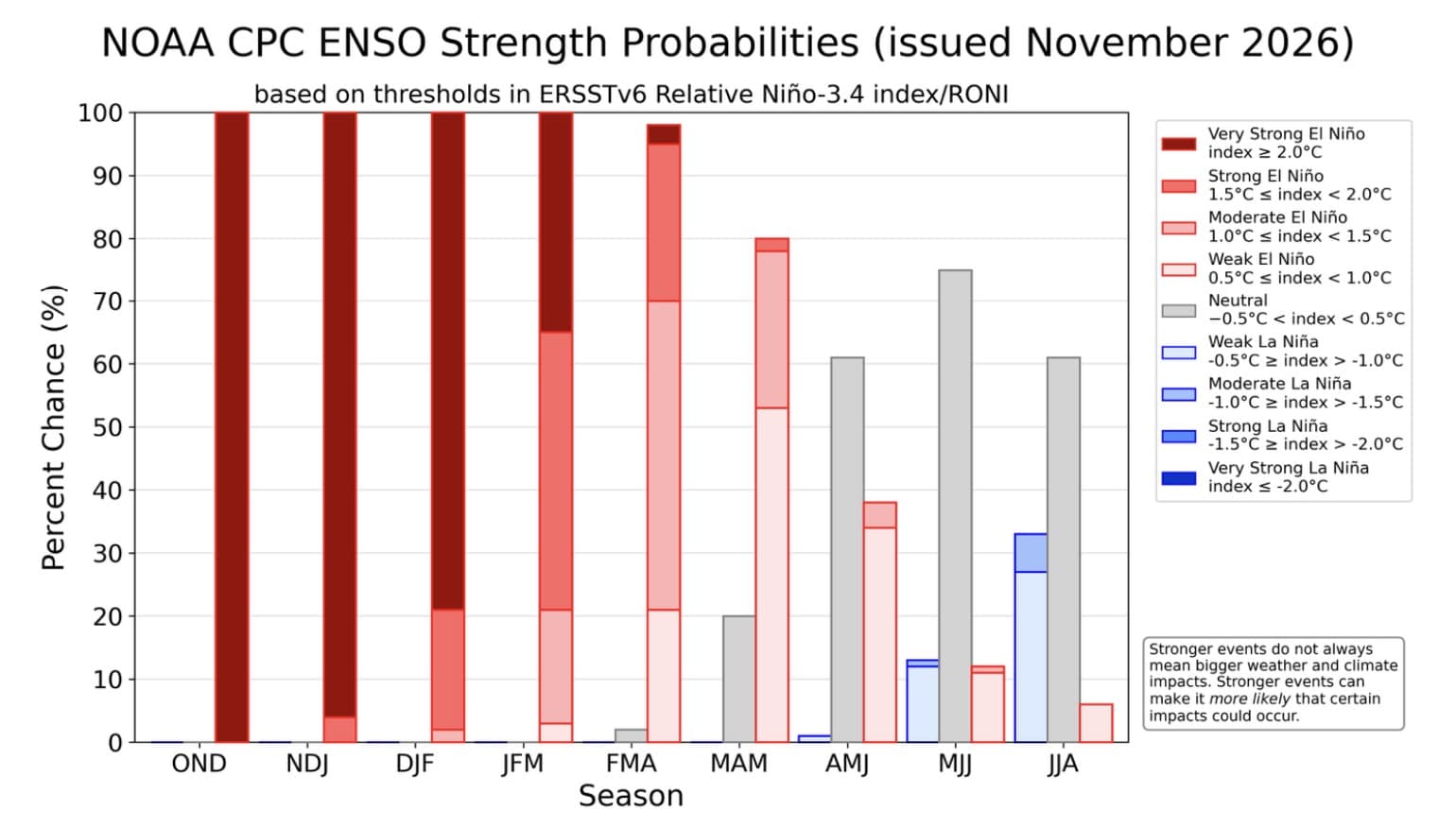
In its latest ENSO Diagnostic Discussion, issued November 12, NOAA maintained its El Niño Advisory, reporting that ocean temperatures across the equatorial Pacific have climbed considerably over the past month. The agency now gives a greater than 79% chance that a strong-to-very strong El Niño will persist through January-March 2027.
Sea surface temperature anomalies have exceeded 4°C in parts of the eastern equatorial Pacific, while the Niño-3.4 index, one of the primary measurements used to monitor El Niño strength, reached +2.5°C. Other measurements were even higher, with the Niño-3 index reaching +3.6°C and Niño-1+2 reaching +4.4°C.
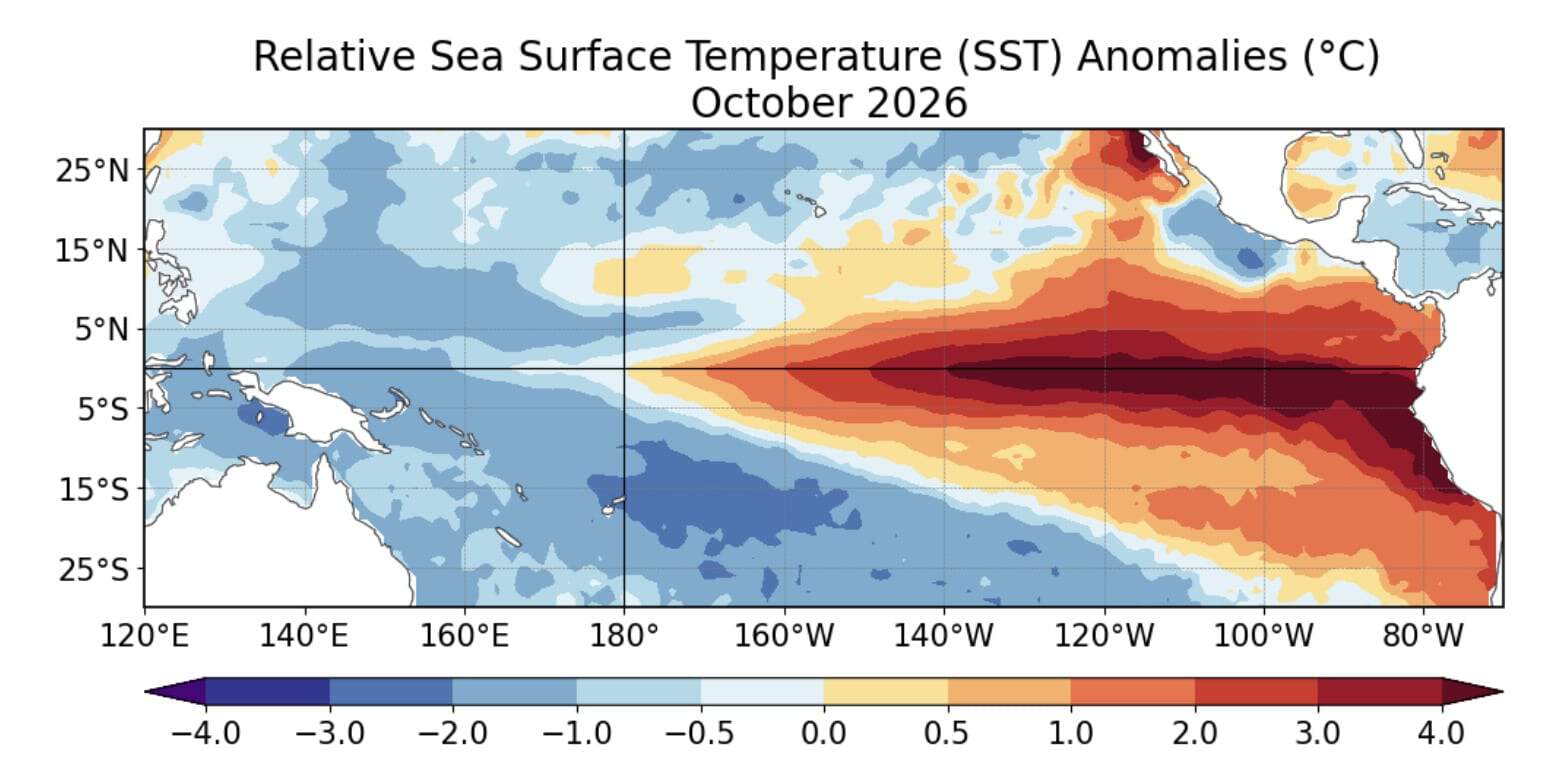
These numbers indicate that the current event is becoming exceptionally powerful. NOAA estimates there is approximately a 60% chance that this El Niño will reach historic strength, potentially exceeding previous events dating back to 1950.
What Does This Mean For Ski Season?
El Niño can have significant consequences for winter weather across North America, particularly for snowfall patterns throughout the western United States. However, a stronger event does not automatically translate into specific snowfall outcomes.
Historically, El Niño winters have often been associated with warmer and drier conditions across portions of the northern United States, while the southern United States can experience wetter conditions. The effects across the Rocky Mountains are more complicated, with snowfall outcomes varying considerably depending on location and other atmospheric patterns.
For skiers and snowboarders, that means the developing El Niño is worth watching, but it shouldn’t be treated as a guarantee of a poor winter in any particular mountain region. Individual storms and broader atmospheric patterns will ultimately determine how much snow ski areas receive.
NOAA expects El Niño to continue strengthening before beginning to weaken in early 2027. The agency’s next ENSO Diagnostic Discussion is scheduled for December 10, which should provide another update on the event’s projected strength and potential implications for the remainder of winter.
With a roughly 60% chance of reaching historic strength, this developing El Niño is shaping up to be one of the biggest weather stories of the 2026-27 winter season.