

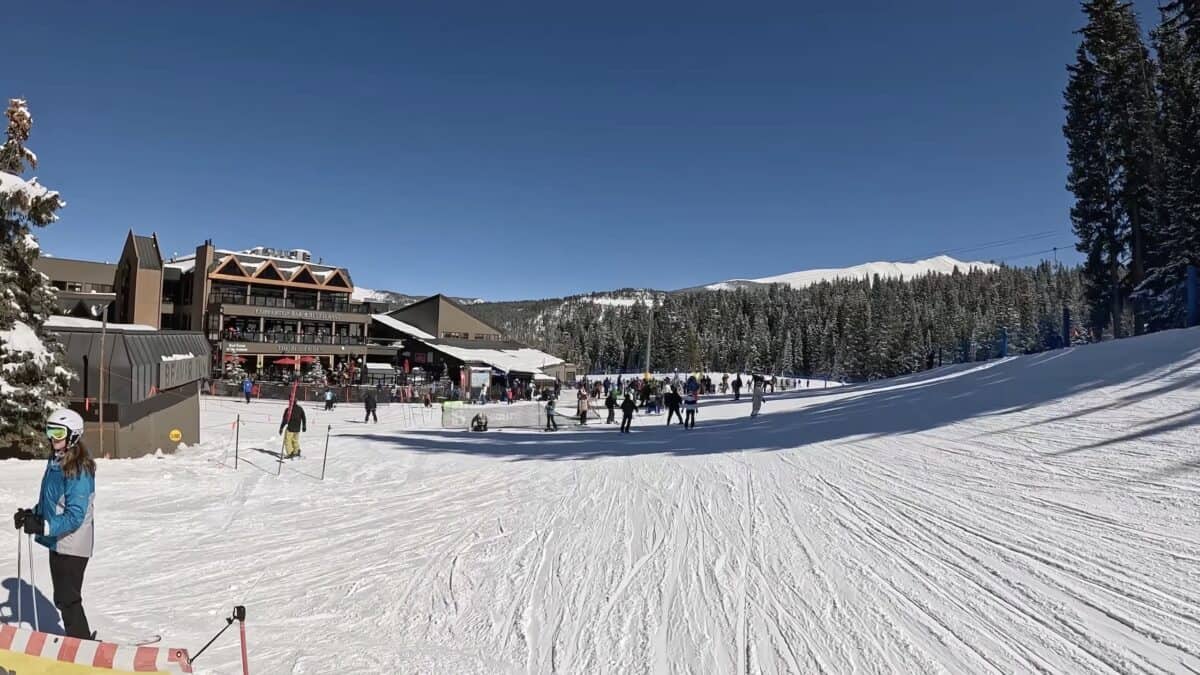
Japanese investors once controlled some of North America’s most recognizable ski resorts, including Breckenridge, Steamboat, Heavenly, and Stratton. Their investments helped fund major lift upgrades, terrain expansions, and resort developments before a financial downturn in Japan triggered a wave of sales that helped reshape the American ski industry.
PeakRankings recently explored this largely forgotten chapter of ski history and how Japanese investment helped lay the groundwork for today’s resort ownership landscape.
Japanese Companies Went on a Ski Resort Buying Spree
The investment boom accelerated in the late 1980s as a stronger Japanese yen made American assets more affordable. Japanese sporting goods retailer Victoria purchased Breckenridge, Colorado, in 1988 before acquiring Stratton, Vermont, the following year.
Meanwhile, Japanese tourism operator Kamori Kanko purchased Steamboat, Colorado, in 1989 and Heavenly on the California-Nevada border in 1990. Japan’s Seibu Group had already purchased Alyeska Resort in Alaska in 1980.
The buying spree extended beyond major destination resorts. Japanese investors acquired Snowshoe in West Virginia and Monarch Mountain in Colorado, while Japanese financing helped launch Whitetail in Pennsylvania. In Canada, Nippon Cable purchased Todd Mountain in British Columbia, which was subsequently renamed Sun Peaks.
By 1993, Japanese investors controlled interests in at least nine ski areas across the United States and Canada.
How Japanese Investment Changed American Ski Resorts
The acquisitions brought substantial improvements to several mountains. Steamboat replaced older chairlifts with high-speed quads, expanded snowmaking, and opened its 179-acre Morningside terrain pod in 1996.
At Breckenridge, the Mercury Superchair opened in 1990, improving access to Peak 9. Heavenly upgraded its lift network, while Alyeska opened an aerial tram in 1992 and a major hotel and spa in 1994.
Japanese investment also helped transform Sun Peaks into a larger destination, with new lifts, expanded terrain, and plans for a walkable alpine village. At Snowshoe, investment helped increase annual visits from roughly 280,000 in 1990 to a peak of around 400,000 by 1995.
Why Japan’s Ski Resort Empire Disappeared
Japan’s economic bubble collapsed in the early 1990s, creating financial pressure for companies that had borrowed heavily to expand overseas. Some investors needed to sell assets to reduce debt, while others found opportunities to purchase struggling resorts back home.
Victoria sold Breckenridge in 1993 and Stratton in 1994. Kamori Kanko sold Steamboat and Heavenly in 1997 to American Skiing Company in a reported $288 million transaction that helped the operator rapidly expand its western portfolio.
Those sales contributed to a broader period of consolidation that helped shape the modern North American ski industry. Japanese ownership did not disappear entirely. Nippon Cable retains its ownership of Sun Peaks and a financial interest in Whistler Blackcomb.
Decades after the buying spree began, the legacy remains visible in resort infrastructure and terrain across North America. What began as an overseas investment boom ultimately helped change who owns and operates many of the mountains skiers visit today.