

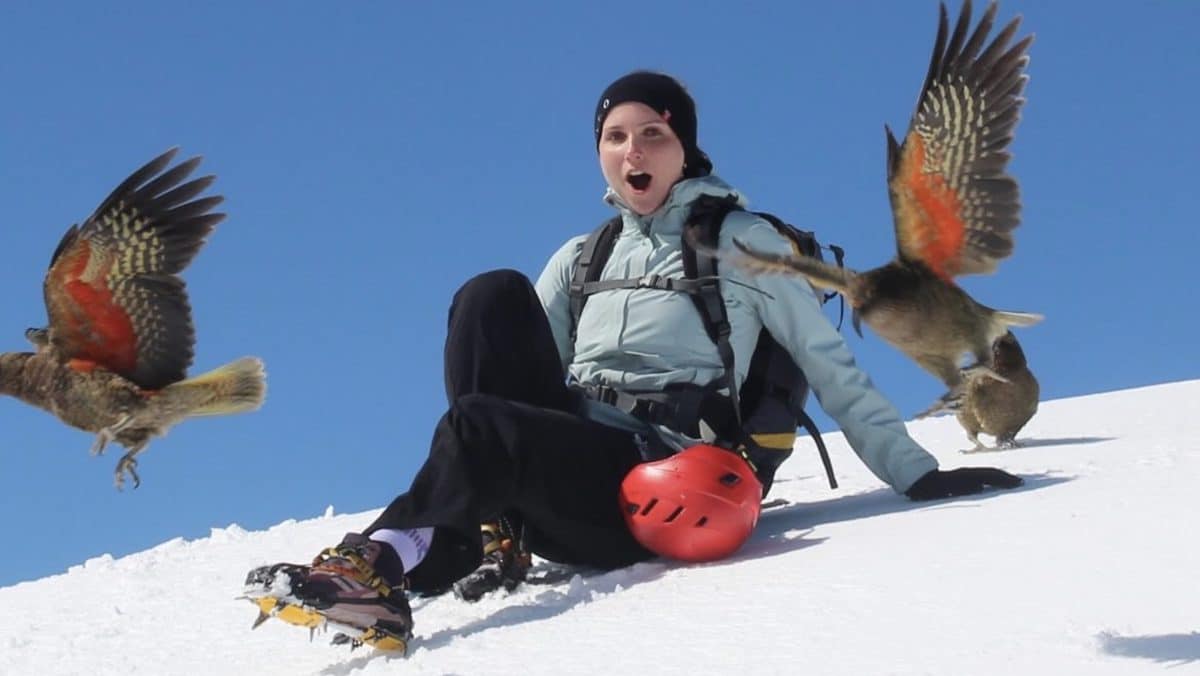
I’ll admit, I had no idea alpine parrots existed until today, and I suspect I’m not alone. Check out this incredible footage from the snow-covered mountains of New Zealand, where two hikers find themselves surrounded by a flock of kea, the world’s only alpine parrots. As it turns out, these highly intelligent birds are famously curious, and they aren’t the least bit shy about investigating visitors to their mountain home.
The World’s Only Alpine Parrot Is Also One Of The Smartest Birds
According to New Zealand’s Department of Conservation, kea are among the world’s most intelligent birds, capable of solving problems, manipulating objects and learning through exploration.
Their curiosity has made them notorious among hikers, mountaineers and skiers. The birds have been known to open backpacks, investigate climbing equipment, untie shoelaces, damage tent materials and pull rubber seals from parked vehicles.
Kea have even been documented moving traffic cones, turning on water taps and manipulating traps to steal bait. Their powerful curved beaks make it relatively easy to investigate objects that would be difficult for other birds to manipulate.
The behavior is especially common among younger kea, which frequently gather in groups to socialize, play and investigate their surroundings.
In March 2026, the Department of Conservation reported an unusually large flock of approximately 36 kea near Red Tarns in Aoraki Mount Cook National Park. Researchers captured and fitted 31 of the birds with identification bands containing tiny microchips to help track their movements. It was the largest flock documented in the area since surveying began in 2019.
The research is helping scientists understand how young kea move through the Southern Alps. Some birds have been recorded traveling more than 25 miles between mountain locations, crossing major divides and moving between lowland forests and alpine environments.
These Mischievous Parrots Are Actually Endangered
The Department of Conservation estimates that only 1,000 to 5,000 kea remain in the wild and classifies the species as Threatened–Nationally Endangered under New Zealand’s conservation assessment system.
One of the greatest threats comes from introduced predators, particularly stoats and feral cats, which prey on adult birds, chicks and eggs. Kea are especially vulnerable because they nest on the ground and spend considerable time foraging there.
Conservation research has found that approximately 70% of kea nests can successfully produce young in areas with effective predator control. Without predator management, nesting success can fall to 10% or less.
Human activity creates additional problems. Kea sometimes ingest toxic lead from old building materials, become injured by vehicles or develop dangerous habits after being fed by visitors.
What To Do If Kea Approach You
While encounters with kea can be entertaining, New Zealand wildlife officials strongly discourage feeding or encouraging interaction with the birds.
Human food can be harmful to kea, and feeding teaches them to associate people, vehicles and buildings with food. That can increase the likelihood of collisions, poisoning and other dangerous encounters.
The Department of Conservation recommends keeping food secured, putting away loose clothing and equipment, and avoiding interactions that reward the birds for approaching people. The best approach is to observe them without offering food or allowing them to investigate unattended gear.
For hikers and skiers exploring New Zealand’s Southern Alps, encountering a kea can be one of the most memorable wildlife experiences of a mountain trip. Just don’t expect these exceptionally curious parrots to respect your personal space, especially if you’ve left your backpack unattended.
