

A Texas snowboarder’s decision to buy another Epic Pass while actively suing Vail Resorts has helped bring his lawsuit to an end.
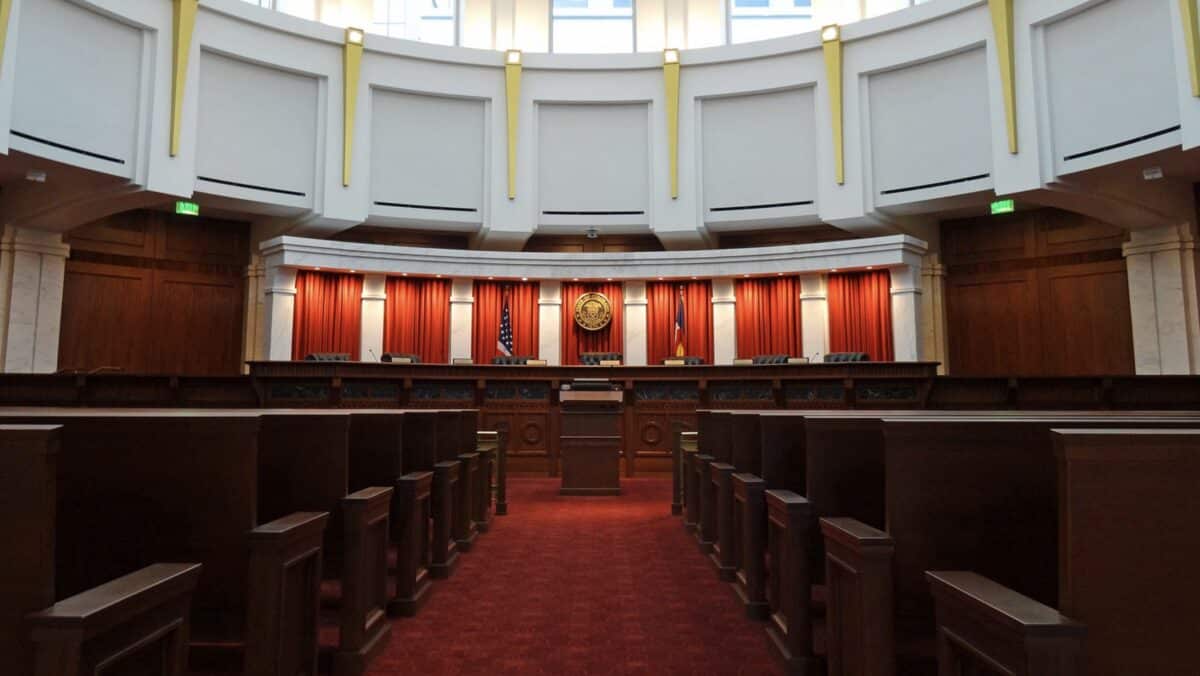
The Colorado Supreme Court ruled 4-3 on Monday that John Litterer released his existing legal claims against Vail Summit Resorts and one of its employees when he purchased a five-day Epic Pass for the 2022-23 season.
The unusual part is that Litterer bought the pass after the accident and after his lawsuit was already underway.
The court concluded that language in the online Epic Pass agreement releasing “any and all claims and rights” Litterer already had against Vail Resorts and its employees applied to his pending lawsuit.
In other words, he sued Vail Resorts, recovered enough to go snowboarding again, bought another Epic Pass and agreed to terms that the state’s highest court says released the very claims he was pursuing.
The Case Started With a Snowmobile Collision at Breckenridge
The case dates back to December 2020 at Breckenridge Ski Resort.
Litterer was snowboarding down the Wirepatch trail when he turned onto Peak 8 Road, a catwalk that is also approved for snowmobile traffic. He collided with a snowmobile operated by Vail Summit Resorts employee Dwight McClure.
The two sides offered substantially different accounts of what led to the collision.
According to a Vail Resorts incident summary cited by the Colorado Court of Appeals, McClure saw movement near the intersection, moved his snowmobile toward the edge of the road and began slowing. The report said he had been traveling about 18 mph in an area with a 25 mph speed limit.
That report described Litterer as making a high-speed turn onto the catwalk and said he was unable to stop or change direction before the impact. Litterer later testified that he saw the snowmobile only about one second before the collision.
Litterer’s attorneys disputed that characterization. In their Colorado Supreme Court filing, they argued that he was riding in control on a nearly flat section of terrain when the uphill-moving snowmobile appeared around the intersection.
The Colorado Supreme Court ultimately said the disagreement over exactly how the collision happened was not particularly important to the legal question it was deciding.
Litterer later sued Vail Summit Resorts and McClure, raising claims that included negligence and negligence per se.
Then He Bought Another Epic Pass
This is where the case took an unusual turn.
While the lawsuit was still being actively litigated, Litterer decided to return to Breckenridge.
On Nov. 20, 2022, he purchased an Epic Pass for the 2022-23 ski season.
As part of that online purchase, he electronically agreed to Vail Resorts’ release and waiver.
The agreement warned purchasers in capital letters that they were giving up certain legal rights, including the right to sue or claim compensation.
Farther into the agreement was the language that ultimately decided Litterer’s case.
The waiver stated that the buyer released “any and all claims and rights that I may now have” and said that included claims arising from “anything which has happened up to now.”
Vail Resorts argued that those words covered Litterer’s existing lawsuit.
A Summit County District Court agreed and dismissed his remaining claims. The Colorado Court of Appeals upheld that decision in January 2025.
Litterer appealed again.
As when the Colorado Supreme Court heard the case in April, the justices were asked to determine just how far ski resort liability waivers can extend.
The answer, at least in this particular situation, went Vail Resorts’ way.
The Court Says This Was Different From a Normal Ski Waiver
The distinction at the center of Monday’s ruling is important.
The Colorado Supreme Court did not simply say that every standard ski-area liability waiver protects a resort from every lawsuit.
Instead, the majority treated the 2022 agreement as a post-injury release of an existing legal claim.
That is different from the more familiar situation in which a skier signs a waiver before skiing and is later injured.
Justice Maria Berkenkotter, writing for the majority, said Litterer’s claims already existed when he purchased the new pass. By electronically agreeing to release claims he “may now have,” the court concluded he entered into an enforceable release.
Litterer argued that he never intended to give up his lawsuit merely by purchasing another ski pass.
The majority said his unexpressed intent did not control the contract.
The court also pointed out that Litterer signed the agreement, bought the pass and then used it at Breckenridge.
And if he did not want to agree to Vail Resorts’ terms, the majority noted that he had another option: ski somewhere else.
Why This Is Different From the Crested Butte Liability Case
The ruling is particularly interesting because the Colorado Supreme Court significantly limited ski-area liability waivers in another Vail Resorts case just two years ago.
In Miller v. Crested Butte, the court ruled that ski areas cannot use pre-injury waivers to eliminate liability for certain violations of statutory and regulatory duties.
That case involved Annie Miller, who suffered catastrophic injuries after falling from a chairlift at Crested Butte. Her family later won a $12.4 million jury award, as Unofficial Networks reported in 2025.
Litterer argued that the Miller decision should help preserve his negligence per se claim.
The Supreme Court disagreed.
The majority said Miller dealt with an agreement signed before an injury occurred. Litterer’s second Epic Pass agreement came after his injury, when his legal claims already existed.
That turned it, in the majority’s view, from a typical pre-injury liability waiver into a release of an existing claim.
That distinction became decisive.
Three Justices Strongly Disagreed
The ruling was far from unanimous.
Justice Richard Gabriel wrote a lengthy dissent joined by Justices William Hood and Carlos Samour.
The dissent argued that an ordinary customer buying a ski pass would not reasonably expect the transaction to settle an existing lawsuit.
Gabriel noted that the release was four single-spaced pages long and contained 17 paragraphs of legal language.
He argued that if Vail Resorts wanted to settle Litterer’s pending lawsuit, the company should have negotiated a settlement rather than relying on language contained inside the ski-pass purchase agreement.
“This simple transaction should not become a game of ‘gotcha’ for unsuspecting ski pass purchasers,” Gabriel wrote.
The dissent also argued that the agreement’s combination of forward-looking liability waivers and a release of existing claims made it unclear that purchasing a pass could terminate pending litigation.
The majority did not agree.
The Epic Pass Purchase Ended Up Being Decisive
The Colorado Supreme Court ultimately affirmed the Colorado Court of Appeals decision, leaving the dismissal of Litterer’s lawsuit in place.
The ruling does not mean a ski resort can necessarily escape every future lawsuit simply because an injured skier signed a standard waiver before getting hurt.
Colorado’s Miller decision still limits what pre-injury ski-area waivers can accomplish when statutory duties are involved.
Litterer’s situation was different because he went back and signed another agreement after the accident and while his lawsuit was pending.
That second purchase ended up mattering a lot more than the cost of another ski trip.
The full ruling, Litterer v. Vail Summit Resorts, Inc., was issued Sept. 21, 2026.
image credit: Photo: Jeffrey Beall/Wikimedia Commons, CC BY 3.0. Cropped from original.

