

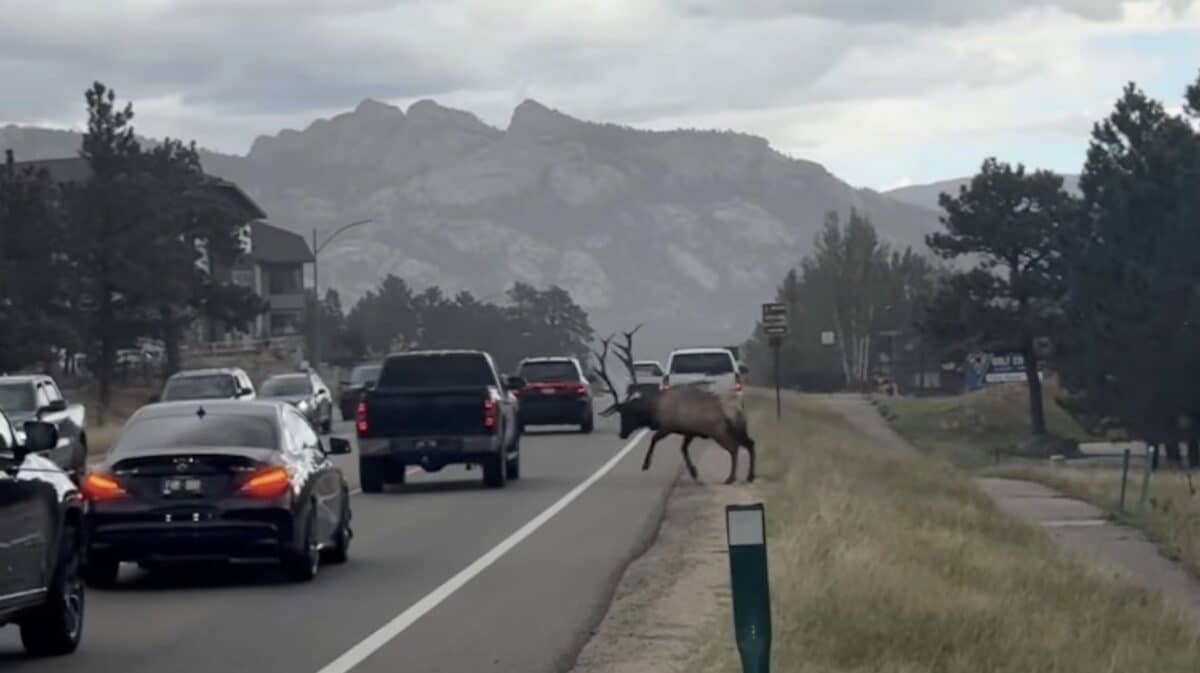
Tough day for this pickup driver who might need to visit a body shop after getting too close to rutting elk in Colorado.
The scene went down on a road in Estes Park durning a rainstorm which appears to have slowed traffic. The roadside bull elk appeared agitated as the vehicles creeped by and took issue with pickup. The bull lowered its antlers and connected with the Chevrolet Silverado’s bedside pannel and the driver wisely sped off. The BMW behind the Silverado clearly didn’t want to suffer the same fate and quickly pulled a U-turn rather than passing the elk as it wandered back to the shoulder.
Why Bull Elk Are So Aggressive Right Now
September lands right in the heart of elk mating season, known as the rut.
Rocky Mountain National Park says peak rut activity in the area generally runs from mid-September through mid-October, although bugling can continue into November. During this period, mature bulls gather groups of cows and work to keep rival males away.
That competition can make bulls particularly territorial and unpredictable.
The National Park Service says heightened testosterone during the rut contributes to defensive behavior as bulls compete for dominance. Bulls may challenge other elk, people and even vehicles they perceive as threats.
Colorado Parks and Wildlife notes that bulls spar for dominance and control of groups of cows during the fall breeding season.
Estes Park is one of the best-known places in the country to watch this behavior because elk regularly move through town as well as nearby Rocky Mountain National Park. That also means encounters can happen on streets, golf courses, lawns and other places where people might not normally expect to find a several-hundred-pound wild animal.
How To Stay Safe Around Rutting Elk
The safest strategy is simply to give elk much more room than you think they need.
Rocky Mountain National Park tells visitors to remain at least 75 feet from elk, roughly the length of two school buses. If an elk changes its behavior because of your presence, you are already too close and should increase your distance.
Drivers should also resist the temptation to squeeze past an elk simply because there appears to be enough room for the vehicle.
If elk are occupying or crossing a road, slow down and give them time and space to move. Colorado Parks and Wildlife advises people not to approach wildlife and to use an animal’s behavior as a guide. An elk that becomes nervous, raises its head or reacts to your movement is a sign that you should back away.
If you are outside a vehicle and an elk approaches, calmly increase your distance. If a bull actually charges, National Park Service guidance recommends getting into a vehicle or behind a tall, sturdy barrier as quickly as possible.
Visitors should also avoid feeding elk, attempting to attract their attention or imitating their bugles. In Rocky Mountain National Park, approaching or harassing wildlife is prohibited.
The bull in this video provides a fairly convincing demonstration of why those recommendations exist. A pickup truck offers considerably more protection than being on foot, but apparently not much protection from a body shop bill.
