

First of all, cheers to Aspen One Veterans Therapy Program (AVTP) and The Aspen Elevation Institute who are on a mission to help veterans with PTSD & Traumatic Brain Injuries
heal through skiing and snowboarding.
“Skiing and snowboarding are not just outdoor activities — they are multisensory, high-engagement, neurobiologically active therapeutic environments. No other sport places a participant in a dynamic, cold-weather, gravity-driven, rhythm-based flow state that simultaneously activates trauma recovery mechanisms across the brain, body, and social system.”
During the course of this incredible program, a study was conducted to access skiing’s effect on the human brain. Participants in the study arrived in Aspen on Sunday, March 22, 2026, and completed initial clinical and neurological assessments upon arrival.
The core intervention took place over five consecutive days of structured skiing and snowboarding, designed to combine physical engagement, cognitive demand, and environmental immersion. Following the week of on-mountain activity, participants completed post-program assessments prior to departure to evaluate short-term changes in psychological well-being and brain-based measures. Select components of the broader research and data analysis process may also occur off-mountain, including supporting research activities conducted in Denver.
“45% of veterans in AEI’s first cohort saw a clinically meaningful reduction in PTSD symptoms. It’s an early result from a small pilot study, not the final answer. But it gives us a pretty compelling reason to keep asking questions.”
Study Design
This pilot study will enroll 30 U.S. veterans with diagnosed PTSD. Twenty veterans will participate in a one-week immersive skiing and snowboarding experience in Aspen, while 10 veterans will serve as a comparison control group.
Participants will complete assessments immediately before and after the program week (and on the same timeline for control participants). Findings will be used to evaluate feasibility and early impact, refine the program, and inform the design of a larger, longer-duration clinical study.
Research Methods & Measures
The study uses a combination of validated clinical self-report tools and objective neurological measures to evaluate short-term change.
Clinical Outcomes (Self-Report Measures)
Validated instruments will assess PTSD symptom severity and overall mental well-being immediately before and after the intervention week (and on the same schedule for control participants).
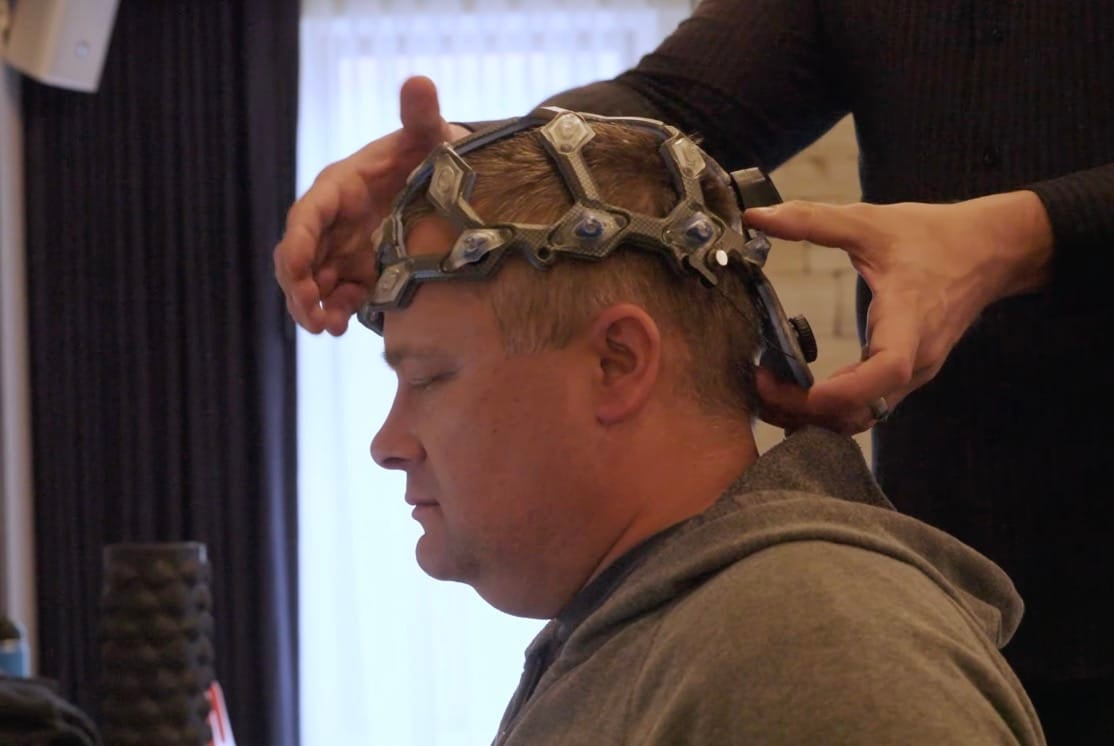
Neurophysiology & Cognitive Function (WAVi)
Participants will complete the WAVi (Whole-Brain Assessment of Vigilance), an EEG-based assessment that evaluates attention, processing speed, and autonomic nervous system regulation. WAVi testing will occur pre- and post-program to explore short-term changes associated with intensive mountain sport participation.
Neurological / Oculomotor Screening
A right-eye oculomotor assessment will be administered pre- and post-program as an objective neurological marker commonly used in concussion and brain health screening. This provides additional insight into neurocognitive and sensorimotor function.
Collectively, these measures help evaluate feasibility, participant tolerance, and preliminary signals of clinical and neurophysiological change.
What Outcomes Were Tracked?
Because this is a small, one-week pilot, the focus is on short-term, measurable changes appropriate for early-stage research.
- PTSD symptom change: Pre- to post-program differences in self-reported PTSD symptoms and emotional regulation
- Mental well-being & stress regulation: Changes in psychological well-being, perceived stress, mood, and resilience
- Neurocognitive & autonomic function: Pre/post WAVi changes in attention, processing speed, and autonomic balance
- Neurological / oculomotor function: Pre/post changes in right-eye assessment as an objective neurologic and sensorimotor marker
These outcomes are intended to identify feasibility and early therapeutic signal—not definitive efficacy—and to guide the design of a larger clinical trial.
Who Is Conducting the Research?
Dr. John Drozd leads the clinical and measurement approach for this pilot study.
Why This Matters for Potential VA Approval
This pilot study matters for potential VA consideration because it produces early, program-specific evidence that supports evaluation under Whole Health and complementary and integrative health frameworks.
- Feasibility & safety: Documents participant tolerance, completion rates, and absence of adverse events
- Measurable outcomes: Uses validated clinical tools plus objective neurological measures (WAVi and oculomotor screening)
- Comparison group: Helps evaluate whether observed changes are plausibly associated with the intervention rather than time or expectation alone
- VA-relevant decision data: Tests whether a short, intensive mountain-sports intervention shows early signals strong enough to justify a larger study
In short, this research helps move skiing and snowboarding from being viewed as recreation toward evaluation as a structured, evidence-generating therapeutic intervention.
