

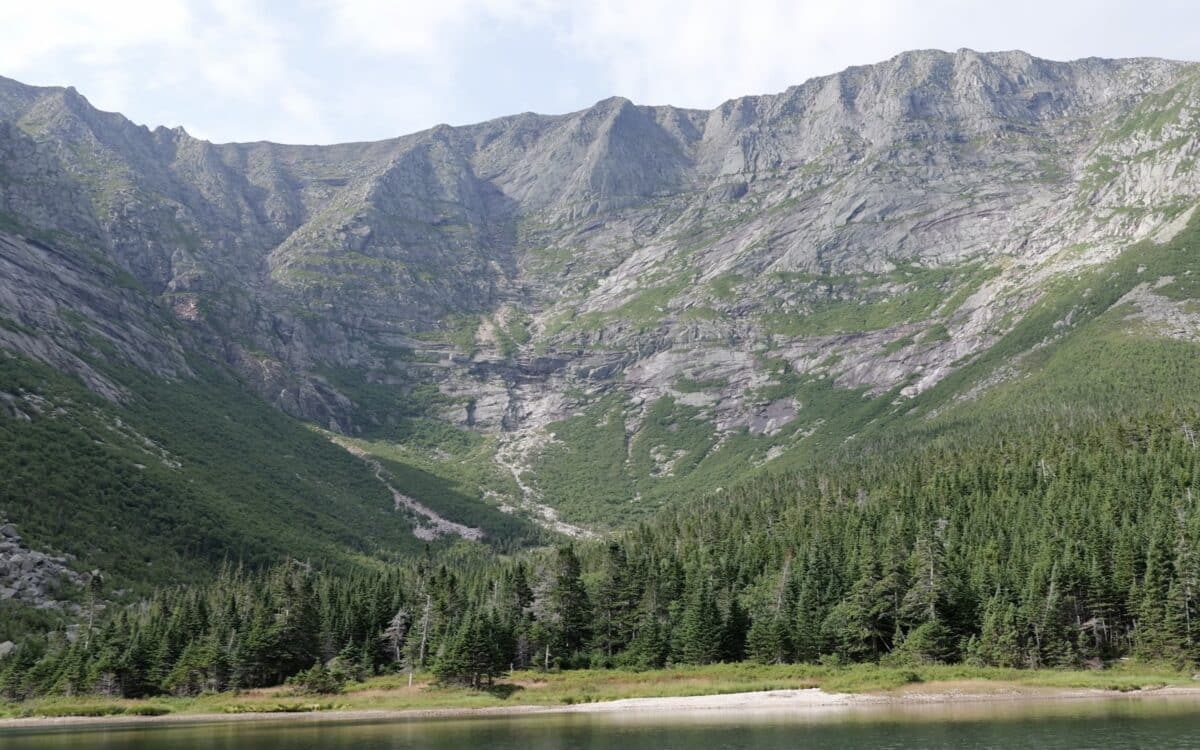
The rugged mountains and vast wilderness of the western United States usually dominate the conversation around American backcountry, but a recent video from Topo Traveler offers a compelling reminder that the East Coast still has wild places capable of challenging even experienced western hikers.
The video follows a demanding climb of Mount Katahdin in Maine’s Baxter State Park, including the infamous Knife Edge Ridge. What begins as an attempt to determine whether the East Coast has legitimate mountains and wilderness becomes an exploration of one of the most unusual protected areas in the country.
A Park Built to Stay Wild
Baxter State Park covers roughly 209,000 acres of forests, lakes and mountains surrounding Mount Katahdin. Unlike a national park or a federally designated wilderness area, its unusual history traces back to Percival Baxter, a former governor of Maine who wanted to protect Katahdin from development.
After efforts to secure government protection failed, Baxter began purchasing land himself. He donated the property to Maine with strict conditions governing how it would be managed and continued acquiring land for decades.
The result is a massive protected landscape where wilderness preservation takes priority over maximizing visitor numbers. The park limits access to popular trailheads through a permit system and restricts development in an effort to preserve its remote character.
A Serious Mountain Challenge
The route up Katahdin involves nearly 4,000 feet of elevation gain before reaching the summit area, with steep terrain and enormous granite boulders adding to the difficulty.
Above treeline, the landscape changes to alpine tundra, exposed granite, and glacial features. The Knife Edge Ridge then provides a narrow and exposed route toward the summit, with scrambling required along portions of the ridge.
Despite concerns about the notorious route, Topo Traveler ultimately found the Knife Edge manageable compared with some western scrambling routes. The steep climb leading toward the ridge proved to be one of the most difficult sections of the entire hike.
