

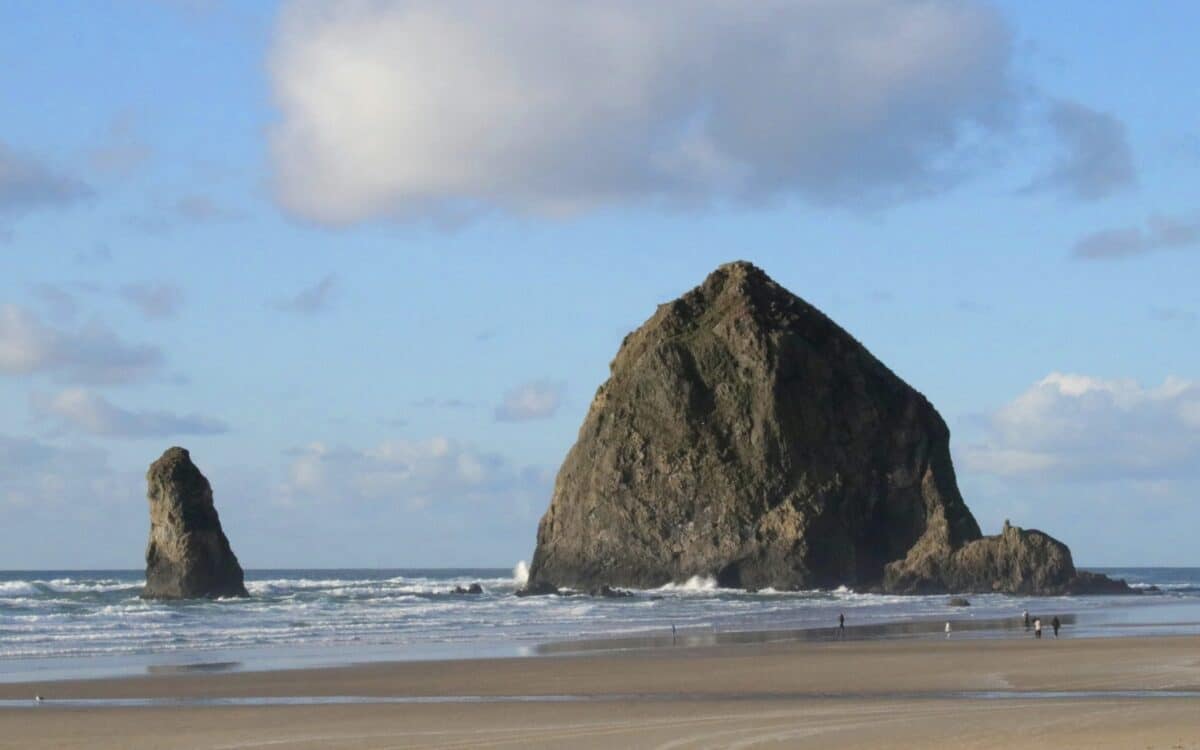
Two paragliders were cited after they were reported flying near Haystack Rock in Cannon Beach, Oregon, disturbing local wildlife in a protected area.
The Cannon Beach Police Department initially reported the incident on August 7th after receiving information about two individuals operating paragliders around the iconic coastal landmark. The pilots were identified by police, who documented the incident and forwarded the information to the U.S. Fish and Wildlife Service for review.
Paragliders Cited For Wildlife Harassment
An update issued by the Cannon Beach Police Department on August 18th confirmed that both pilots were contacted by U.S. Fish and Wildlife Service Law Enforcement officers.
Both individuals received citations for unauthorized aircraft while harassing wildlife. Haystack Rock and the surrounding shoreline are home to a variety of marine and bird species. The area also includes protected lands managed as part of the Oregon Coast National Wildlife Refuges.
The original incident report did not provide details about how close the paragliders were operating to Haystack Rock. However the feature serves as a home for a wide range of seabirds, including the most accessible colony of Tufted Puffins in the Northwest
Haystack Rock
Haystack Rock is one of Oregon’s most recognizable coastal landmarks, rising 235 feet above the shoreline in Cannon Beach. The basalt sea stack is part of the Oregon Islands National Wildlife Refuge and is also designated as one of Oregon’s seven Marine Gardens. Its protected status helps preserve both the rock and the surrounding intertidal ecosystem, which supports a wide variety of marine life and seabirds.
At low tide, visitors can explore the tidepools around Haystack Rock, where sea stars, anemones, crabs, chitons, limpets, and nudibranchs can be found. Tufted puffins are among the most recognizable species found in the area, with the birds nesting there from approximately April through July. Pelagic cormorants, western gulls, pigeon guillemots, and black oystercatchers are among the other birds that can be seen around the rock.
Because of the area’s protected status, visitors are required to avoid disturbing wildlife and marine life. No animals or materials may be removed from within 300 yards of Haystack Rock, and climbing above the barnacle line is prohibited. Visitors are encouraged to remain on sand and bare rock when exploring the intertidal area to avoid damaging fragile organisms.