

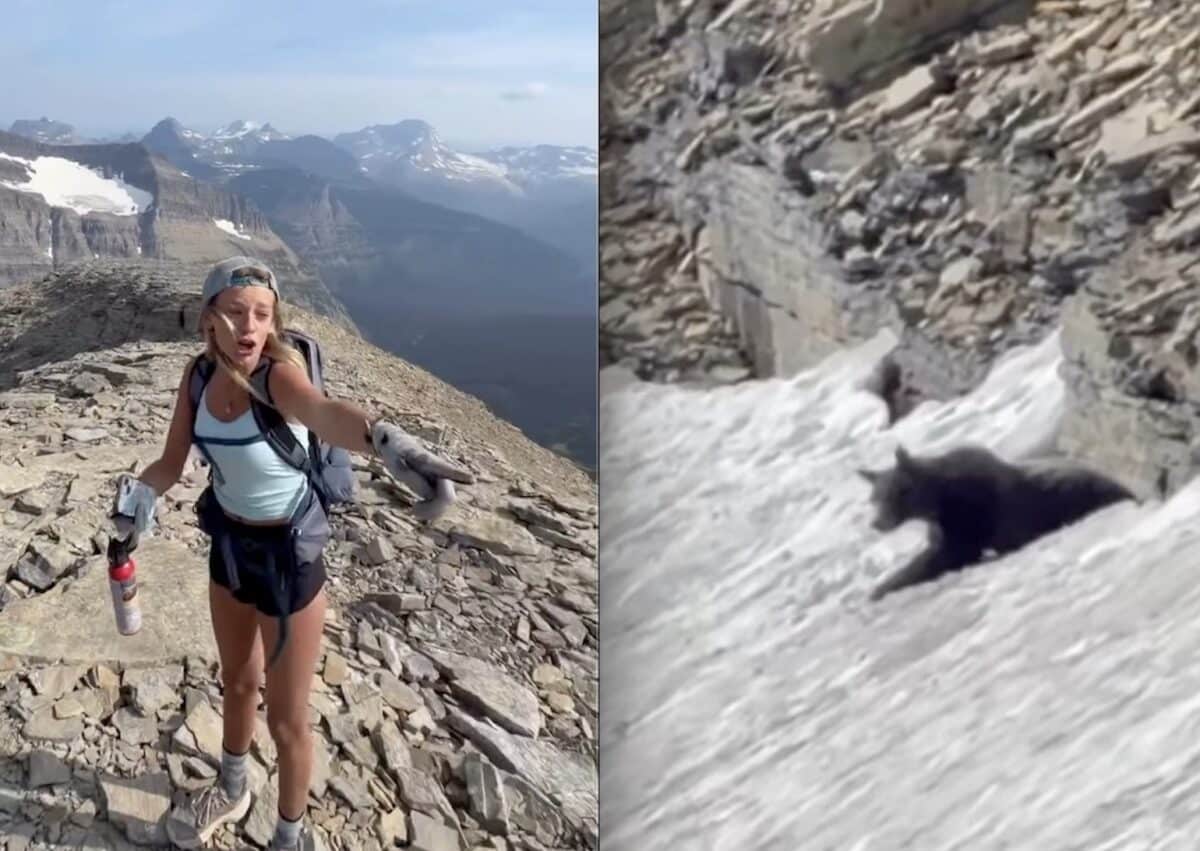
A trio of hikers attempting to summit Siyeh Peak (Glacier National Park’s third-highest point at 10,020 feet) got an unforgettable surprise this week when the came across eight grizzly bears occupying the summit.
“8 Grizzlies on the top of Siyeh Peak. We tried to summit 10,020 foot elevation but there were 8 Grizzlies at the top today.” -Ryan Roberts
The bears weren’t there by accident. From mid-July through the end of August, high-elevation talus slopes in Glacier become seasonal buffets for grizzlies feasting on army cutworm moths. These moths migrate from agricultural fields on the Great Plains up into alpine rockslides, tucking themselves between boulders by day.
Bears flip rocks and lick up the moths before they can escape and feast on the insects. Researchers have found grizzlies can eat thousands of moths in a single day, since the insects are packed with fat and among the richest natural food sources available to bears anywhere in their range.
Seeing this many grizzlies together in one place is genuinely rare and these hikers were truly lucky to see it in person. Moments like this are a reminder of how wild Glacier’s backcountry can be. Learn more about Glaciers resident grizzly bear population preying on moths in video below:
Glacier National Park Bear Encounters Safety Guidelines:
If you encounter a bear inside the minimum recommended safe distance (100 yards; 91 m), you can decrease your risk by following these guidelines:
- If a bear or other animal is moving in your direction on a trail, get out of its way and let it pass.
- If you can move away, do so. If moving away appears to agitate the bear, stop. In general, bears show agitation by swaying their heads, huffing, and clacking their teeth. Lowered head and laid-back ears also indicate aggression. Bears may stand on their hind legs or approach to get a better view, but these actions are not necessarily signs of aggression. The bear may not have identified you as a person and may be unable to smell or hear you from a distance. Help the bear recognize you as a friendly human.
- Talk quietly.
- Do not run! Back away slowly. Stop if it seems to agitate the bear.
- Use your peripheral vision. Bears may interpret direct eye contact as threatening.
- Continue to move away as the situation allows.
- If a bear appears intent on approaching you, your group, or your campsite in a non-defensive manner (not showing signs of agitation), gather your group together, make noise, and try to discourage the bear from further approaching. Prepare to deploy your bear spray. If you are preparing or consuming food, secure it. DO NOT LET THE BEAR GET YOUR FOOD!
- If a bear approaches in a defensive manner (appears agitated and/or charges), stop. Do not run. Talk quietly to the bear. Prepare to deploy your bear spray. If contact appears imminent and you do not have bear spray, protect your chest and abdomen by falling to the ground on your stomach, clasp your hands around the back of your neck, and leave your pack on for protection. If the bear attempts to roll you over, try to stay on your stomach. If the attack is defensive, the bear will leave once it recognizes you are not a threat. If the attack is prolonged, FIGHT BACK!
