

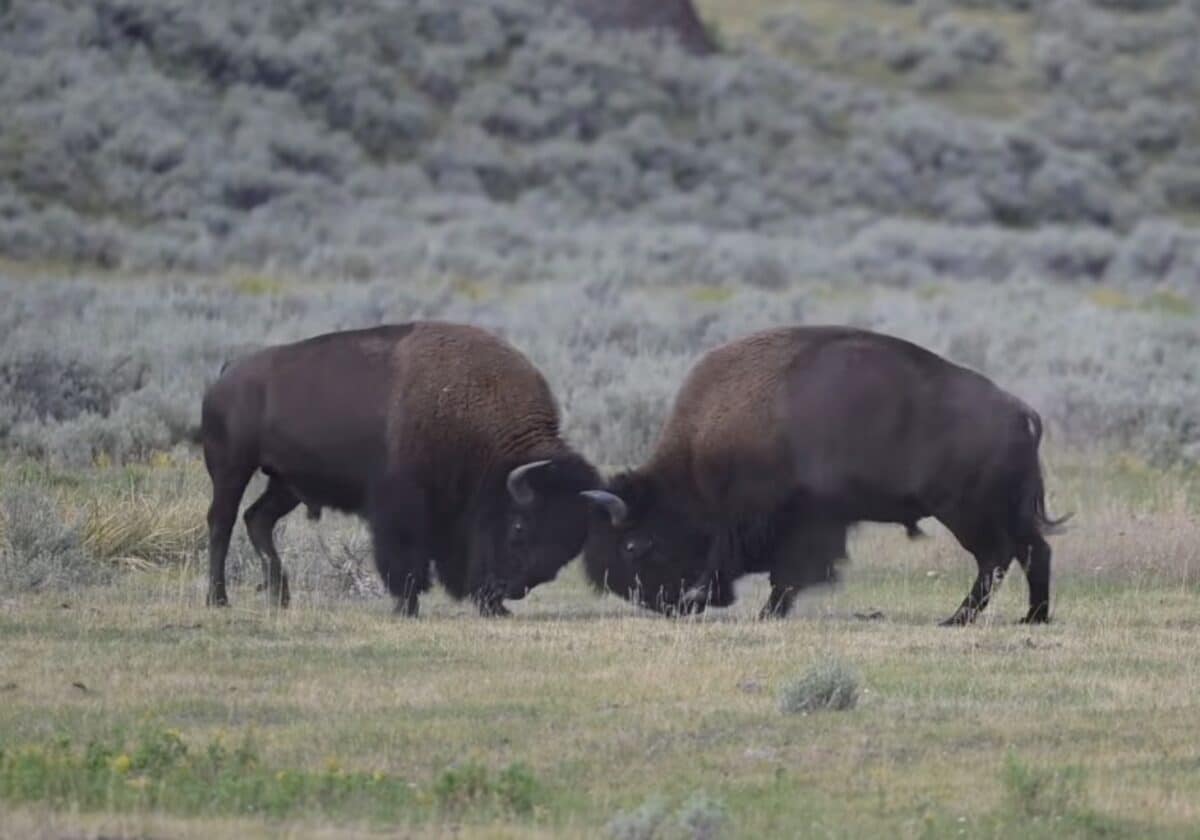
YELLOWSTONE NATIONAL PARK, Wyo. — A one-on-one bison duel spiraled into a chaotic, multi-animal brawl in Yellowstone National Park on Monday, with several bulls piling into the fray forcing one bison onto a park roadway.
The video, taken during the peak of the park’s annual bison rut, begins as a fairly typical clash between two bulls but quickly drew the attention of several animals turning into violent scrum of horns, dust, and massive bodies.
While single combat between rutting bulls is a common late-summer sight in Yellowstone, fights that escalate to include multiple bison —and threaten to spill into traffic — are considerably rarer, making the video a standout even by rut-season standards.
Annual Bison Rut Season
Yellowstone hosts the largest bison population on U.S. public land, an estimated 4,000 to 5,000 animals. Each year from roughly July through August, testosterone-fueled bulls compete for breeding rights, squaring off in head-butting and horn-locking contests. Despite weighing up to 2,000 pounds, bison can charge at speeds topping 30 mph, making the rut one of the most volatile times to be near them.
Safety Reminder for Visitors
Park officials stress that bison remain wild and unpredictable all round but especially during the rut. The National Park Service requires visitors to keep at least 25 yards away at all times and to never approach for photos or block an animal’s path. If bison are near or on a roadway, drivers are advised to stay inside their cars with windows up and wait for animals to clear rather than attempting to pass. Officials say incidents involving bison are among the most common visitor injuries in the park, a risk that climbs sharply each summer as the rut gets underway. Learn more about bison safety at Yellowstone National Park below.
Yellowstone Bison Safety Guidelines:
Bison have injured more people in Yellowstone than any other animal. Bison are unpredictable and can run three times faster than humans. Always stay at least 25 yards (23 m) away from bison.
- Give bison space when they are near a campsite, trail, boardwalk, parking lot, or in a developed area. If need be, turn around and go the other way to avoid interacting with a wild animal in close proximity.
- Approaching bison threatens them, and they may respond by bluff charging, head bobbing, pawing, bellowing, or snorting. These are warning signs that you are too close and that a charge is imminent.
- Do not stand your ground. Immediately walk or run away from the animal. Spray bear spray as you are moving away if the animal follows you.

