
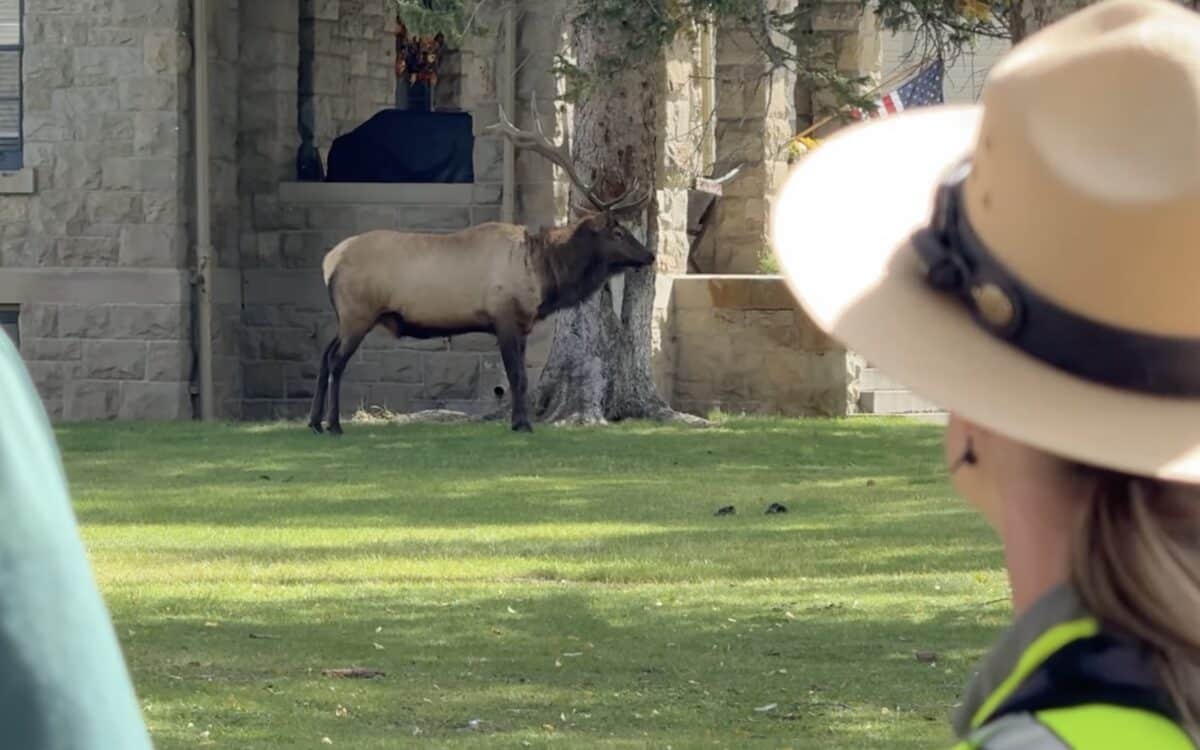
As fall gets closer, rangers at Yellowstone National Park are preparing for one of the most dramatic wildlife events of the year. The annual elk rut brings serious competition between bull elk, with loud bugling and increased wildlife viewing activity across the entire park.
The rut occurs every full when bull elk compete for access to females, advertising their strength through distinctive bugling, sparring with rivals, and fiercely defending groups of female elk known as harems. The behavior is a real spectacle, but Yellowstone officials want it to be very clear that elk become very dangerous when approached or threatened. As such, park rangers do a lot to monitor and manage elk and visitors during the rut, working to keep both animals and people safe.
Rangers Focus on Wildlife Safety
During the rut, Yellowstone’s rangers manage both the wildlife and the people who come to watch it. Just because these animals aren’t predators does not mean they aren’t dangerous, so rangers work to keep traffic moving in areas where elk gather and establish safe viewing distances of at least 25 yards. Visitors are encouraged to enjoy the mating season through binoculars or zoom lenses, rather than trying to approach the animals for a closer look.
The increased attention from visitors can create challenges along Yellowstone’s roads and wildlife viewing areas. Rangers must balance the public’s desire to see elk with the need to prevent animals from becoming stressed or visitors from getting too close.
What Visitors Should Know During Elk Season
The elk rut can provide some of Yellowstone’s most memorable wildlife encounters, particularly when bulls begin bugling and competing with one another. However visitors should never assume that an elk is safe to approach simply because it’s not a predator. Giving elk adequate space allows their natural behavior to continue while reducing the risk of an encounter becoming dangerous.
Yellowstone’s safety and education programs are supported by Yellowstone Forever, the official non-profit partner of Yellowstone National Park. They aim to help visitors enjoy the rut period while understanding how to safely observe animals in the park. Watch from a safe distance, follow ranger instructions, and let the animals have the space they need.