

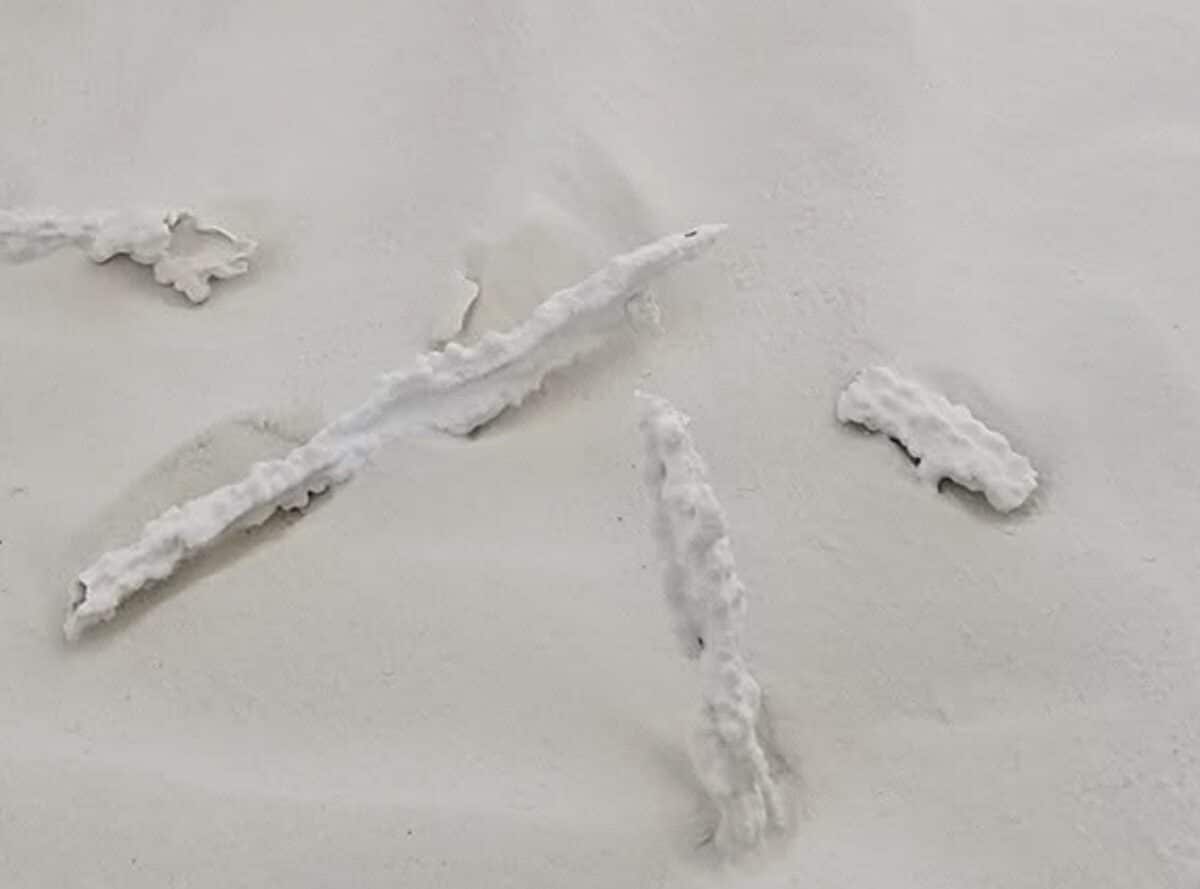
Incredible image from White Sands National Park in New Mexico capturing one of nature’s most dramatic transformations: a lightning strike leaving behind a rare formation known as a fulgurite, often referred to as “fossilized lightning.” In an instant, the extreme heat and electrical energy of a cloud-to-ground bolt can alter sand along its underground path, preserving a fragile physical record of the strike.
Lightning channels can reach roughly 50,000°F (about five times hotter than the Sun’s surface). At White Sands, where the dunes consist largely of gypsum rather than ordinary quartz sand, lightning can fuse grains into unusual gypsum fulgurites.
A single lightning strike can reach temperatures nearly 5 times hotter than the surface of the sun.
— US Department of the Interior (@Interior) August 10, 2026
At White Sands National Park, that incredible heat can fuse gypsum sand into formations called fulgurites, better known as "fossilized lightning." pic.twitter.com/bxX7vQ4MjK
Nature’s lightning sculptures
Fulgurites form when cloud-to-ground lightning sends a powerful electrical discharge into soil, sand, or rock. The sudden heat melts, sinters, or otherwise fuses mineral grains along the bolt’s path. As the material cools rapidly, it hardens into a jagged structures that may resemble lightning.
The name comes from the Latin fulgur, meaning lightning. Although the nickname “fossilized lightning” is quite colorful, a fulgurite is not an actual fossil. It is instead a naturally made sculpture made by heat, pressure, and electricity.
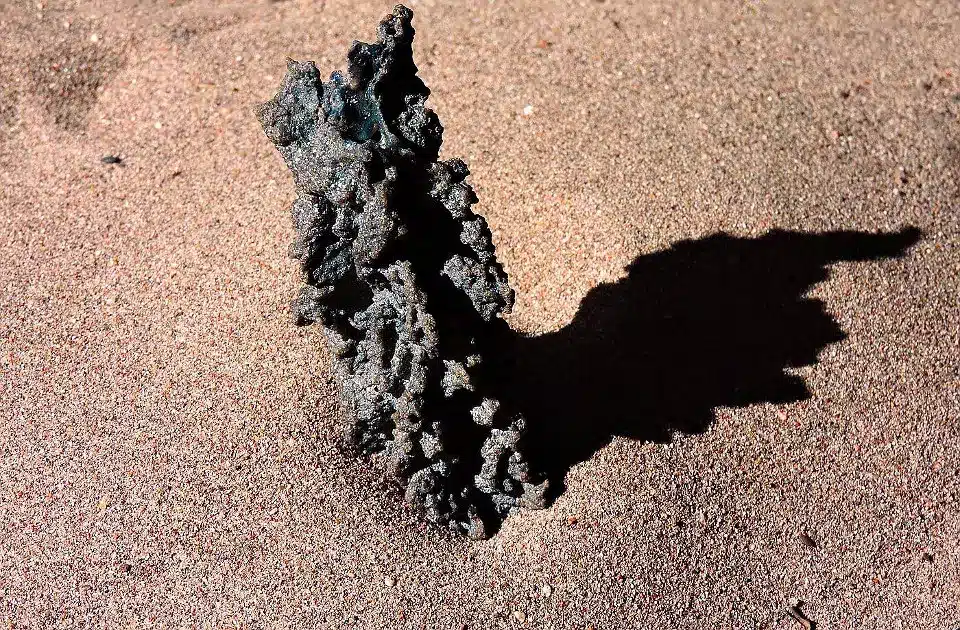
Why most fulgurites are glassy
The classic fulgurite occurs in dry, relatively clean quartz sand, such as that found in deserts and on beaches. Quartz is primarily silica, the same basic material used to make glass. Because silica typically melts at roughly 2,900–3,600°F, a lightning strike can melt it almost instantaneously under the right conditions.
White Sands is different
White Sands National Park is an especially dramatic setting for this phenomenon because its famous dunes are made of gypsum, a soft calcium-sulfate mineral. The National Park Service identifies gypsum sand and selenite crystals as the park’s most abundant forms of gypsum.
The standard descriptions of fulgurites often refer to silica sand fusing into glass, but White Sands’ gypsum-rich deposits produce a different result. The formations can still record where lightning struck and altered the sediment, yet they lack the glassy silica interior associated with conventional quartz-sand fulgurites.
Bound sand from plant roots at White Sands National Park can be mistaken for fulgurite. However, if you put a black light on the root-bound structures, the roots will glow. This is an easy way you can distinguish fulgurite from root structures in the park. Fascinating!
