

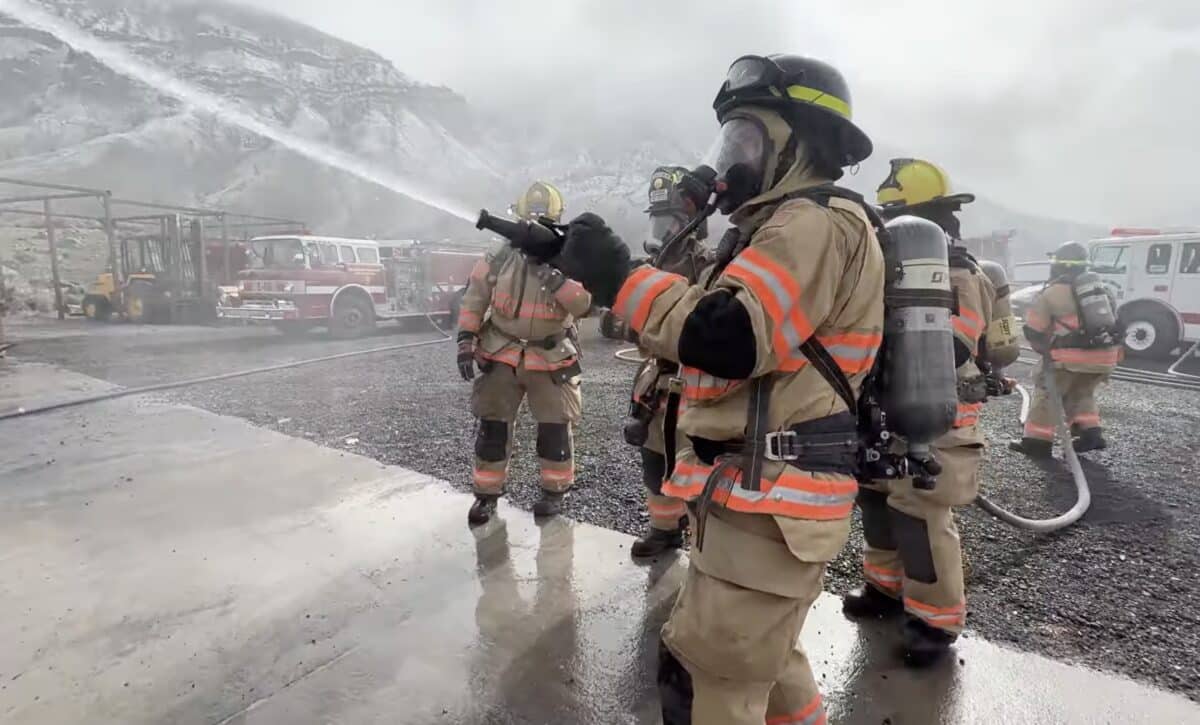
Yellowstone National Park is best known for its hydrothermal features, wildlife, and vast wilderness, but protecting the park also means safeguarding more than 1700 buildings spread across one of the largest and most remote landscapes in the National Park System.
From visitor centers to employee housing and historic landmarks like the Old Faithful Inn, many of Yellowstone’s structures are located hours from the nearest municipal fire department. That reality requires the park to maintain a highly trained structural firefighting force capable of responding quickly when emergencies occur.
The Largest Structural Fire Company In The National Park Service
Yellowstone’s Structural Fire Company is the largest in the National Park Service, operating 11 fire engines stationed across six developed areas to allow crews to respond throughout its nearly 3,500 square miles.
To strengthen emergency response capabilities, Yellowstone also maintains mutual aid agreements with gateway communities in Montana and Wyoming along with Grand Teton National Park. Those partnerships allow agencies to assist one another during larger or more complex incidents.
Firefighters Fill Multiple Roles
Unlike many municipal fire departments, Yellowstone relies on more than just full time firefighters. While the park employs a small number of career structural firefighters, much of its fire program is made up of employees who serve as firefighters in addition to their primary jobs.
These employees complete extensive training through Pro Board accredited programs that meet nationally recognized professional standards. Their instruction includes fire suppression, incident command, risk management, and other essential skills needed to respond safely and effectively during emergencies.
Prepared Before Emergencies Happen
Much of Yellowstone’s structural fire program focuses on prevention, planning, and readiness long before an emergency occurs. Firefighters spend significant time training so they can respond quickly when lives, historic buildings, and park infrastructure are at risk.
That preparation is especially important in Yellowstone where distance and isolation can make outside assistance difficult to reach during the earliest and most critical moments of a fire.