

Ski Utah meteorologist Evan Thayer believes the 2026 and 2027 winter is setting up to be one of the most interesting ski seasons in years as a powerful El Niño develops across the Pacific Ocean.
In a new seasonal outlook, Thayer points to the latest data from the National Oceanic and Atmospheric Administration, which has already issued an official El Niño Advisory. According to NOAA, there is a 100 percent chance that El Niño will continue through the upcoming winter, with an 81 percent probability that it reaches very strong strength during the late fall months.
While seasonal forecasts are never guarantees, Thayer says the current setup is far more convincing than many previous years when forecasters were still waiting for El Niño to fully develop.
NOAA Forecast Shows an Unusually Strong Signal
The July update from NOAA placed the Niño 3.4 sea surface temperature index at 1.2 degrees Celsius above average, comfortably above the threshold needed to classify an El Niño event. Forecast models also show a 97 percent chance that the pattern remains in place into early spring of 2027.
According to Thayer, a very strong El Niño belongs in the same category as the historic events of 1982 and 1983 and 1997 and 1998, both of which produced memorable winters across much of the western United States.
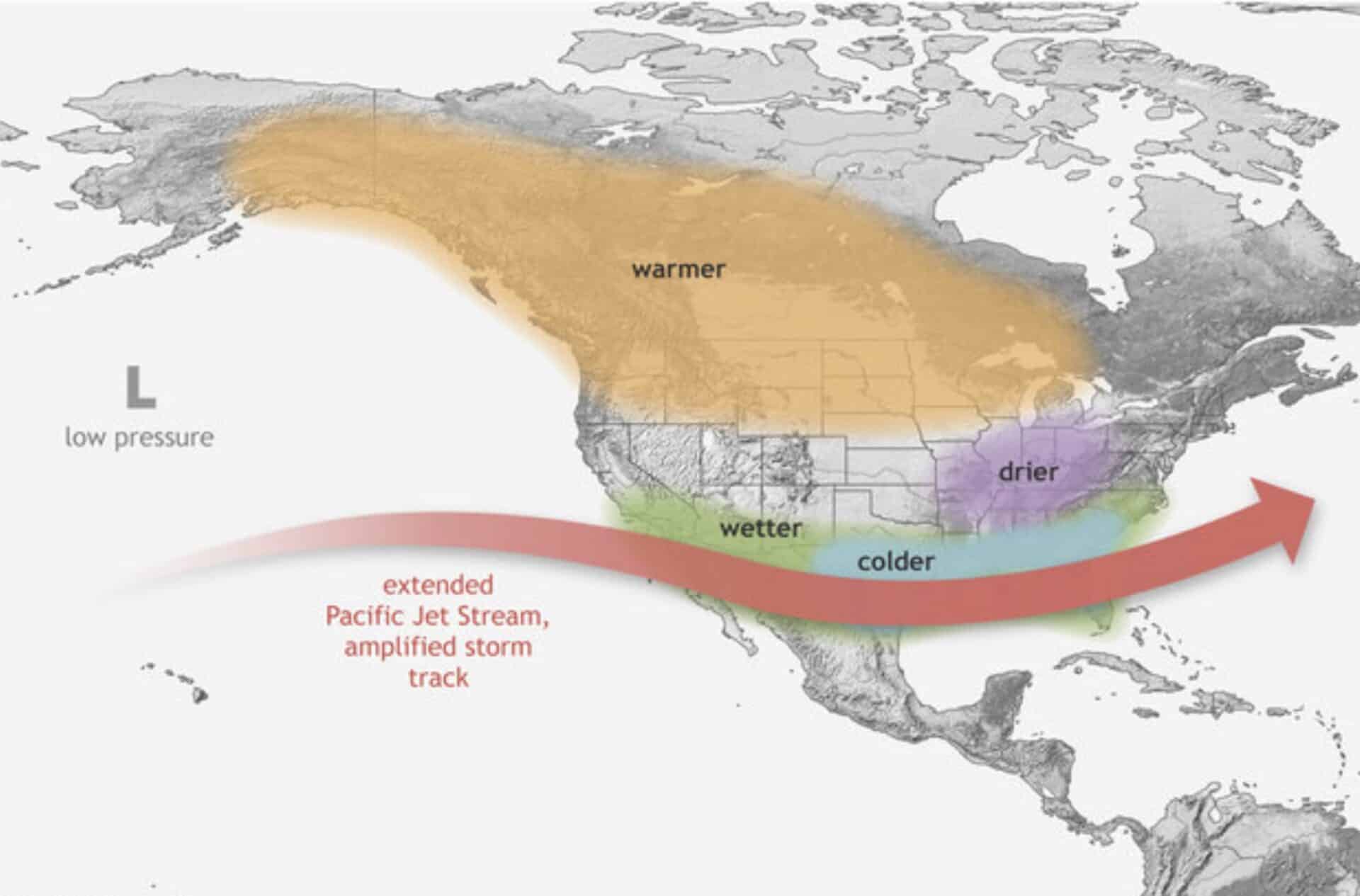
El Niño develops when unusually warm water forms across the equatorial Pacific Ocean. That warming can shift the jet stream, changing where winter storms track and how much snow reaches ski resorts across the West.
What It Could Mean for Utah Ski Resorts
Thayer says southern Utah has historically been one of the biggest beneficiaries of El Niño winters, often receiving above average snowfall when the storm track shifts farther south.
Northern Utah presents a more complicated picture, as strong El Niño winters have often produced slower starts across the Wasatch before snowfall increases during the second half of the season.
He points to the 2023 and 2024 winter as a recent example. Early season snowfall was underwhelming before storms became more frequent later in the winter, allowing Alta to finish with more than 600 inches of snow.
However, Thayer also notes that the strongest El Niño events have occasionally produced exceptional snowfall in northern Utah. During the legendary winter of 1982 and 1983, the Cottonwood Canyons reportedly received between 800 and 900 inches of snow, making it one of the snowiest seasons ever recorded in the state.
Reasons for Optimism Ahead of Winter
Thayer stresses that long range forecasts should always be viewed as probabilities rather than promises. Weather patterns can change, and snowfall totals cannot be predicted months in advance.
Even so, he believes there is legitimate reason for optimism heading into the 2026 and 2027 ski season. With NOAA forecasting a very strong El Niño and confidence remaining unusually high before winter begins, skiers across Utah and the broader West will be watching closely to see whether this developing pattern delivers another memorable season.
