

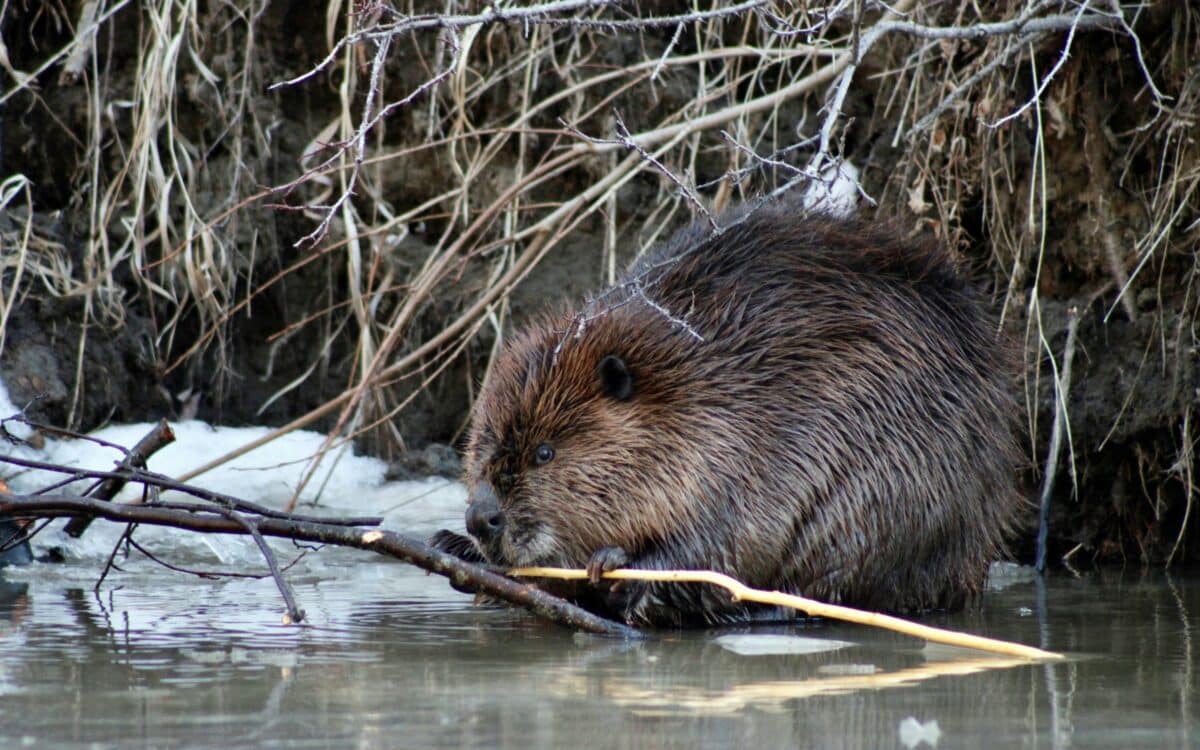
Colorado Parks and Wildlife is using a combination of engineered beaver dams and live beaver relocation to restore damaged stream habitat at two western Colorado state wildlife areas. The effort is designed to slow water flow, reduce erosion, and improve wetlands that support a wide variety of wildlife.
The agency announced that it has completed the first phase of the restoration project at West Rifle Creek and has already expanded the strategy to Garfield Creek State Wildlife Area. The long term goal is to reverse decades of channel erosion that transformed healthy streams into fast moving ditches with reduced water retention.
Beaver Inspired Restoration Begins At West Rifle Creek
The project began in August 2024 when Colorado Parks and Wildlife staff surveyed a four mile stretch of West Rifle Creek and identified an active beaver colony. To encourage the animals to expand into degraded sections of the creek, staff built two beaver dam analogs about one mile downstream. These man made structures are designed to imitate natural beaver dams and help slow water while trapping sediment.
Within a month, local beavers had moved into one of the new structures and expanded it with their own construction. Building on that early success, Colorado Parks and Wildlife partnered with Colorado Open Lands, EcoWorks, Ducks Unlimited, the Mule Deer Foundation, and the National Wild Turkey Federation. Using funding from the agency’s wetland program, EcoWorks constructed 39 additional beaver dam analogs along the creek earlier this spring.
Work at West Rifle Creek will continue over the next two years as crews seek to restore the stream’s natural winding path and improve surrounding wetland habitat.
Project Expands To Garfield Creek
After encouraging results at West Rifle Creek, Colorado Parks and Wildlife launched a similar restoration effort about 33 miles south at Garfield Creek State Wildlife Area near New Castle.
Construction began on June 1st with crews building nine new beaver dam analogs along Upper Baldy Creek. The project made use of leftover wooden stakes from the West Rifle Creek work along with locally sourced willow and conifer branches.
To help ensure the new structures remain active over time, the agency partnered with the Pauline S. Schneegas Wildlife Foundation to relocate seven beavers to the area. Wildlife officers released the animals into the new habitat on June 5th under guidance from Colorado Parks and Wildlife’s recently approved Beaver Management Plan.
Wetlands Expected To Benefit Wildlife
By slowing water and encouraging streams to spread across their natural floodplains, beaver activity can improve water storage, reduce erosion, and create healthier wetlands for fish, birds, mammals, and other species.
Colorado Parks and Wildlife hopes the relocated beavers at Garfield Creek will produce the same positive results already seen at West Rifle Creek. If successful, the projects could serve as another example of how natural engineering and targeted wildlife management can restore degraded waterways across Colorado while improving habitat for countless native species.