

Wildfires can quickly transform a landscape to an unrecognizable state but they also have lasting effect long after the flames are gone. One of the most serious post-fire hazards is hydrophobic soil, a condition in which burned ground becomes water-repellent and can no longer absorb rain the way healthy soil does.
When a wildfire burns hot enough, it releases waxy organic compounds from vegetation and organic matter. Those compounds can sink into the soil as vapor and then cool into a coating around soil particles. The result is a thin, hidden layer that resists water instead of soaking it up.
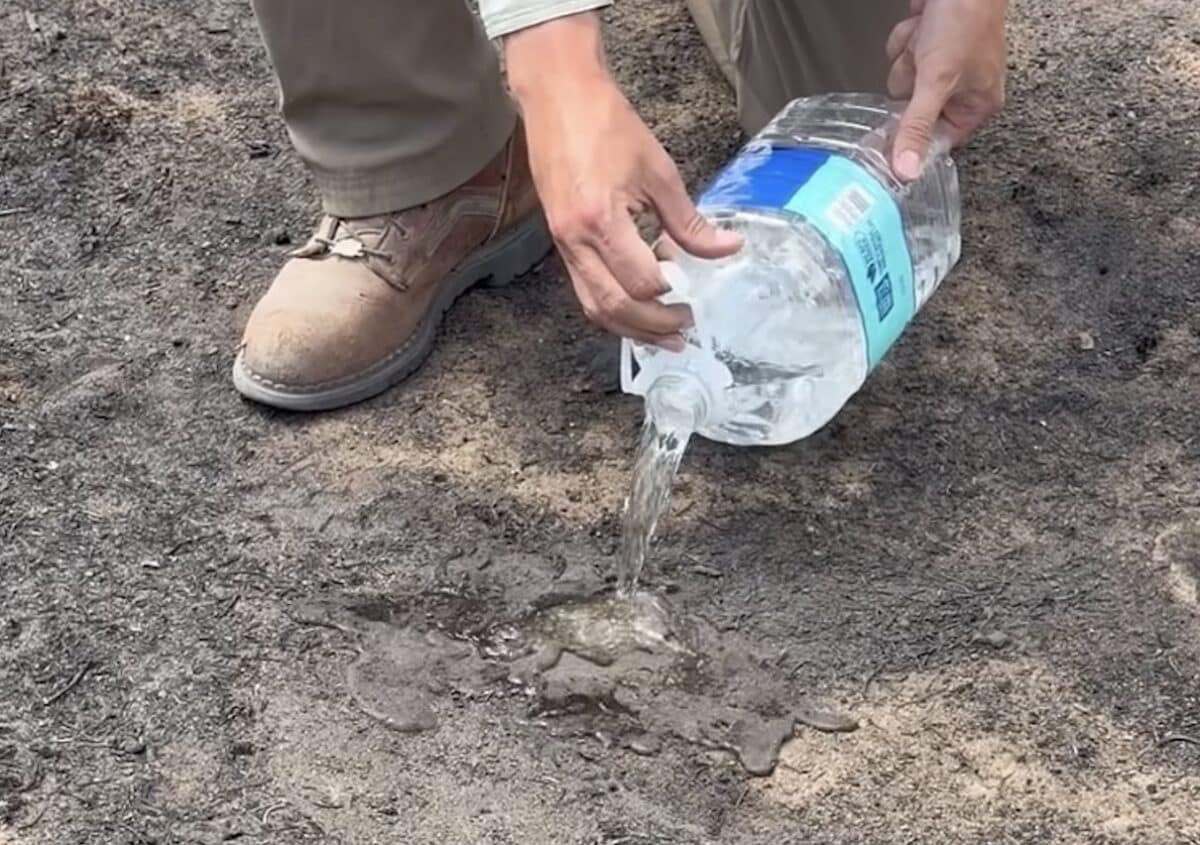
Here is a quick demonstration hydrophobic soil by National Weather Service Pueblo who toured the toured the Aspen Acres burn scar with the USGS and CDOT to gain better intelligence on how water will flow around the burn scar.
Our WCM and our Service Hydrologist toured the Aspen Acres burn scar with the USGS and CDOT to gain better intelligence on how water will flow around the burn scar. While there we tested how well the water infiltrates into the soil- here is an example of hydrophobic soils.
“We care about this because this is the sole cause of the flash flooding risk over burn scars, the fire burns so hot that the soils become hydrophobic. Hyrdo=water, phobic=scared, which means that all the rain runs off instead of being sinking into the soils.”
That change matters because soil normally acts like a sponge. It slows runoff, helps recharge groundwater, and reduces erosion. But when soil becomes hydrophobic, rainfall runs off the surface much faster. The water can then race downhill, overwhelm drainage channels, and collect in low-lying areas below the burn scar.
Wildfires make the problem worse in other ways too. They remove plants and roots that hold soil in place and slow the movement of water. Without that natural protection, a heavy rain can quickly turn a burned hillside into a flood source.
That is why flash flooding is such a common danger after major wildfires. Even a brief storm can send water, mud, ash, and debris surging through drainages and into nearby communities. In steep terrain, the danger can arrive suddenly and with little warning. Over time, soil usually regains some of its ability to absorb water. But until that happens, burn scars remain vulnerable, and storms that might once have seemed harmless can become destructive in minutes.
