

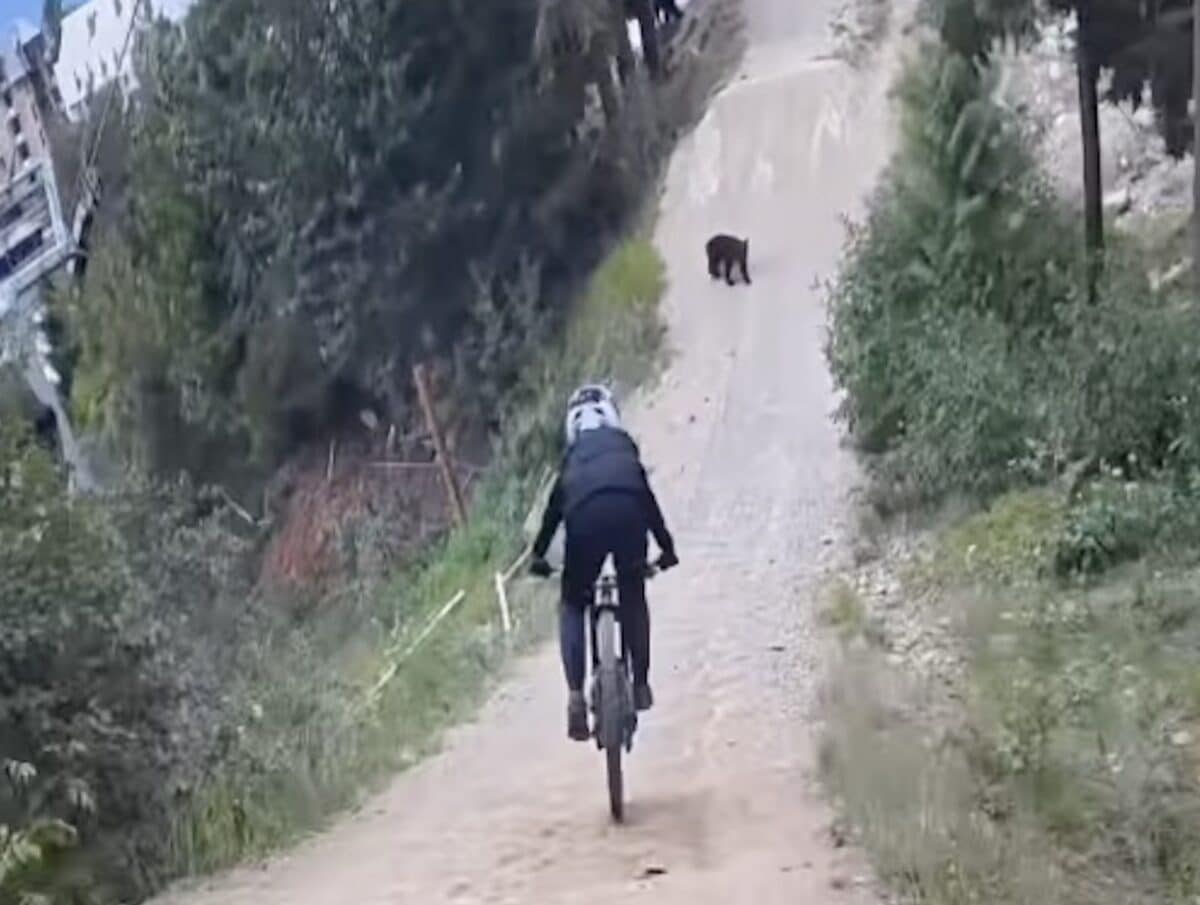
Close call for a pair of mountain bikers at Whistler Blackcomb who had to slam on the breaks after encountering a family of bears at the ski resort’s bikepark.
Whistler Blackcomb’s summer season transforms the resort into one of North America’s busiest alpine recreation hubs, drawing visitors with a mix of high elevation hiking, scenic dining, and world class mountain biking. At the center of it all is the Whistler Mountain Bike Park, widely regarded as one of the premier lift-accessed bike parks globally. Its trail network spans from the valley floor to alpine terrain, offering everything from beginner-friendly flow trails to some of the most technically demanding downhill runs in Canada.
Beyond recreation, Whistler is also recognized for its unusually visible population of black bears. Dozens of bears inhabit the slopes of Whistler and Blackcomb, frequently foraging in ski runs and forest edges during summer months. Sightings from the Whistler Village Gondola are common, and the resort even operates guided bear viewing tours led by trained naturalists who interpret bear behavior and ecology for visitors.
With both high-speed bike traffic and an active bear population sharing the same terrain, encounters between riders and wildlife do occur like this one from over the weekend. Jose Ballesteross and his buddies were racing down the jump line at the bike park when the came over a berm and found a family of bears chilling in the middle of the trail. Thankfully they were able to slam on the brakes and avoid a collision but it wasn’t far off:
While most black bears avoid humans, these overlapping uses of the landscape highlight the importance of situational awareness and adherence to wildlife safety guidelines in multi-use alpine environments. Learn more about bear safety at Whistler below:
Whistler Bear Safety Guidelines:
Both black bears and grizzly bears live in Whistler. Bears prefer to avoid people; even if a bear appears comfortable, stay at least 100 metres away. Bears can be motivated to go near people if they smell food or a scent they believe is edible.
Trail tips:
- make noise by clapping or talking loudly to make sure any nearby bears will hear you
- travel in a group of four or more when hiking, especially in grizzly habitat
- avoid trails at dawn and dusk
- carry bear spray and understand how to use it
- keep dogs under control and on leash — dogs can provoke defensive behaviour in bears
- never feed a bear
If you see a bear:
- give the bear as much space as possible; back away slowly
- check around for other bears, cubs or a food source
- back away slowly the way you came or give the bear a very wide berth, if you must continue
- speak calmly and firmly to show you aren’t threatening
If you come across a bear, whether it’s a black bear or a grizzly bear, you should give the animal as much space as possible and back away slowly the way you came. The mountain biker in this video attempts to do exactly that, backing away from the bear after coming to a stop.
