

Nearly five years after a devastating wildfire scorched 25,000 acres across the northern slopes of Mount Shasta in California, a massive reforestation effort is showing results.
The Lava Fire tore through the area in June 2021, leaving large stretches of landscape without enough surviving trees to naturally regenerate. In response, the Shasta-Trinity National Forest launched the Lava Fire Restoration Project, deploying crews to accelerate recovery and restore healthy forest conditions to the burn scar.
Since 2024, planting crews of 10 to 15 workers have put more than 1.47 million seedlings in the ground across 2,769 acres. The species of choice are ponderosa pine and Jeffrey pine, both selected for their adaptability to the Mount Shasta, Weed, and Lake Shastina area.
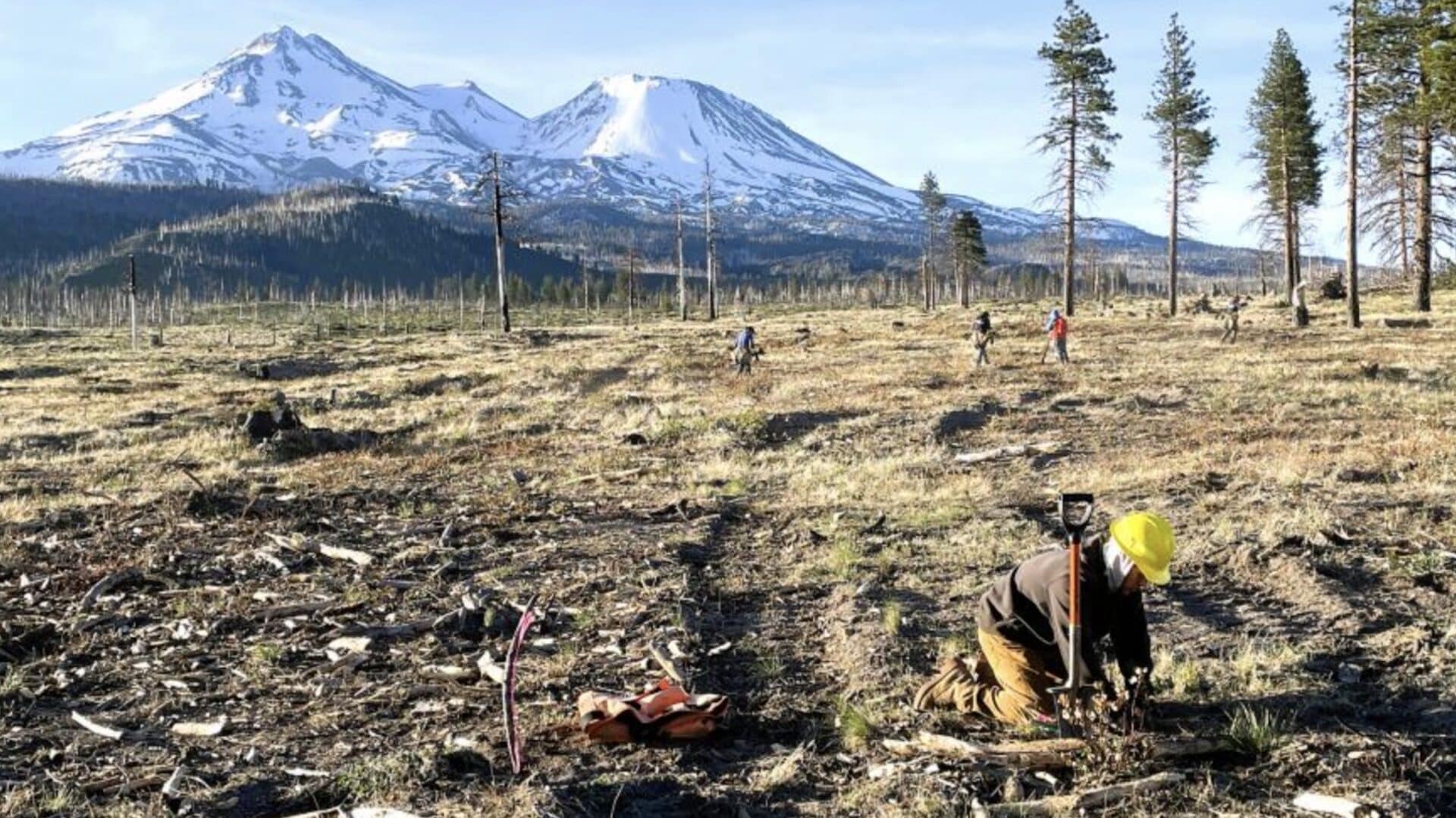
Salvage loggers first cleared dead and dying fire-impacted trees, then large masticators reduced regrown brush and smaller dead trees to create suitable planting conditions. Small-business partners including Gonzalez Forestry, Imperial Forestry, and Absolute Forestry worked alongside Forest Service staff throughout the effort.
Forest planners called silviculturists guided the large-scale operation, ensuring each seedling was placed in the right location for long-term survival. The seedlings themselves had already spent one to two years growing before arriving on site, with many standing a foot tall at planting time.
Restored forest cover supports wildlife habitat, improves watersheds, and increases carbon storage. The area also draws more than 26,000 out-of-town visitors annually, and the recovering landscape offers a visible sign of progress.
“This work is about more than planting trees. It’s about restoring a resilient forest that can better withstand future wildfire, insects, drought and changing conditions.” – Lily Martindale, reforestation program manager for the Shasta-Trinity National Forest.