

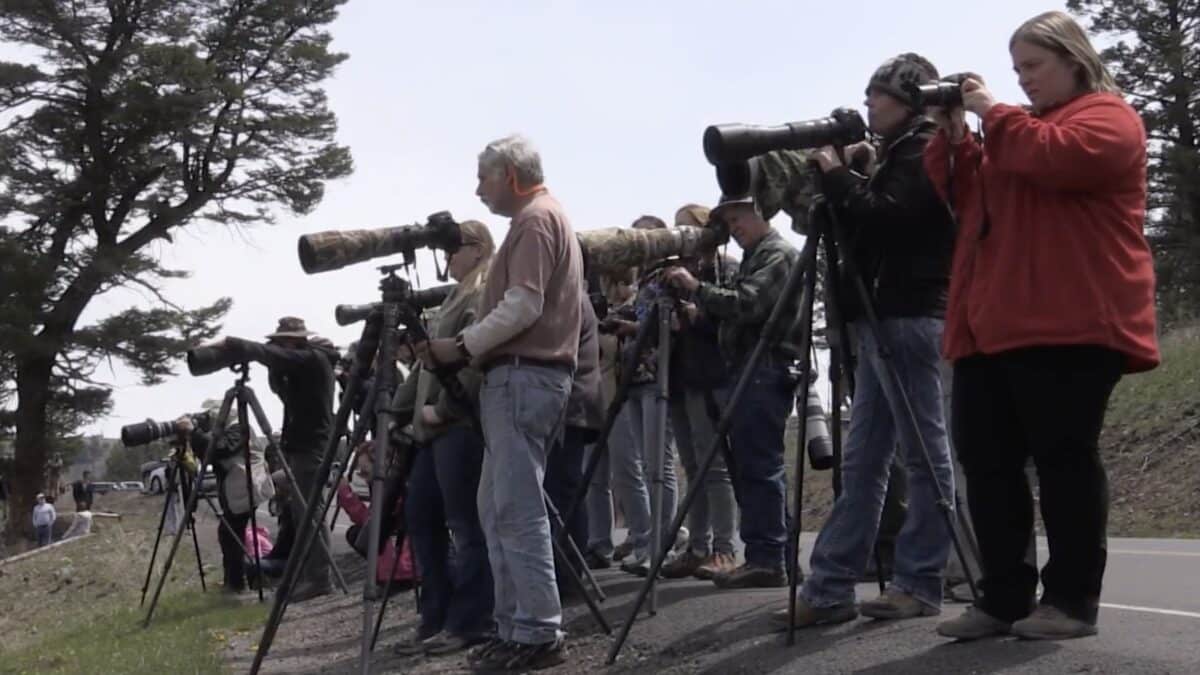
Togwotee Pass is one of Wyoming’s most scenic drives, and with that comes a steady stream of wildlife watchers hoping to catch a glimpse of bears and other animals along the route. It runs between the town of Dubois, Wyoming and Moran, an unincorporated territory that’s home to one of the primary fee collection stations for Grand Teton National Park.
In the winter, Togwotee Pass is a frequent sight for backcountry skiers, snowboarders, snowmobilers, and other winter recreators. In the summer, the pass is often full of tourists making their way to Wyoming’s iconic National Parks, though it offers its own collection of stunning views, hikes and wildlife viewing opportunities. Sadly in recent weeks significant bear jams and poor wildlife viewing ethics have been observed in the area, prompting an urgent PSA from the Wyoming Game and Fish Department.
If unsafe viewing practices continue or if bears clash with people, wildlife managers may be forced to take action, including capture, relocation, or removal of the animals involved. Nobody wants that outcome.
The Wyoming Game and Fish Department, U.S. Fish and Wildlife Service, and U.S. Forest Service Bridger-Teton National Forest are all patrolling the area daily to minimize traffic jams, haze wildlife when necessary, and keep the public safe. Read the Wyoming bear jam guidelines below.
Wyoming Game and Fish Department Bear Jam Guidelines:
We need your help to keep bears and humans safe.. Please be responsible when viewing wildlife:
- Never approach bears, stay in your vehicle, and always maintain a distance of at least 100 yards away from bears and wolves, and 25 yards from other wildlife.
- Do not stop your vehicle in the Togwotee Pass area to support ongoing safety efforts.
- Do not feed or make food accessible to wildlife.
- Slow down and be vigilant while driving. Wildlife have been killed on Togwotee Pass due to collisions with vehicles.
Grand Teton National Park Bear Safety Guidelines:
If you encounter a bear:
- DO NOT RUN. Bears can easily out run any human. Running may elicit attacks from non-aggressive bears.
- If the bear is unaware of you, detour quickly and quietly.
- If the bear is aware but has not acted aggressively, back slowly away while talking in an even tone or not at all.
- Use your peripheral vision. Bears may interpret direct eye contact as threatening.
- Do not drop your pack – this teaches bears how to obtain human food. Your pack can also protect your body in the case of an attack.
- Do not climb trees – all black bears and some grizzly bears can also climb trees.
The vast majority of bear attacks have occurred when people surprised a bear. In this situation the bear may attack as a defensive maneuver. The bear may be protecting young or defending a carcass.
If a bear charges you:
- DO NOT RUN. Some bears will bluff their way out of a threatening situation by charging, then veering off or stopping suddenly.
- Bear experts generally recommend standing still until the bear stops and then slowly back away.
- If you have bear spray this is the time to use it!
- If the bear makes contact with you, drop to the ground and lie flat on your stomach with your legs spread apart slightly and play dead. Cover the back of your neck with your hands. Keep your pack on to protect your back. Do not move until you are certain the bear has left.