

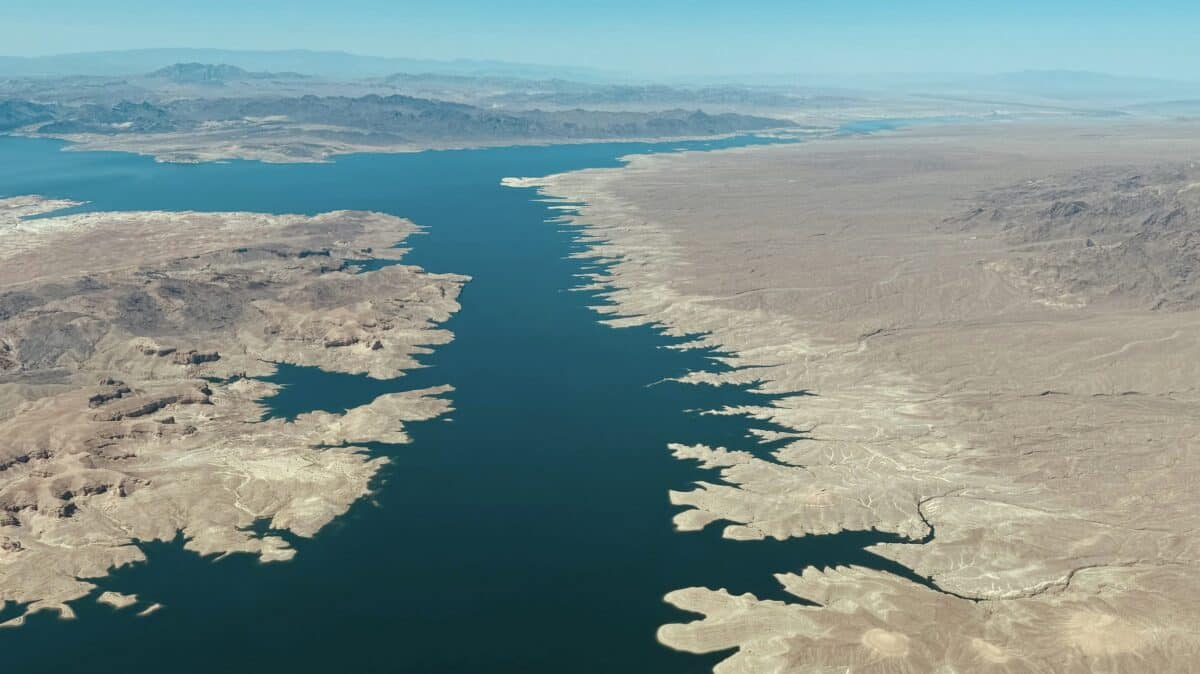
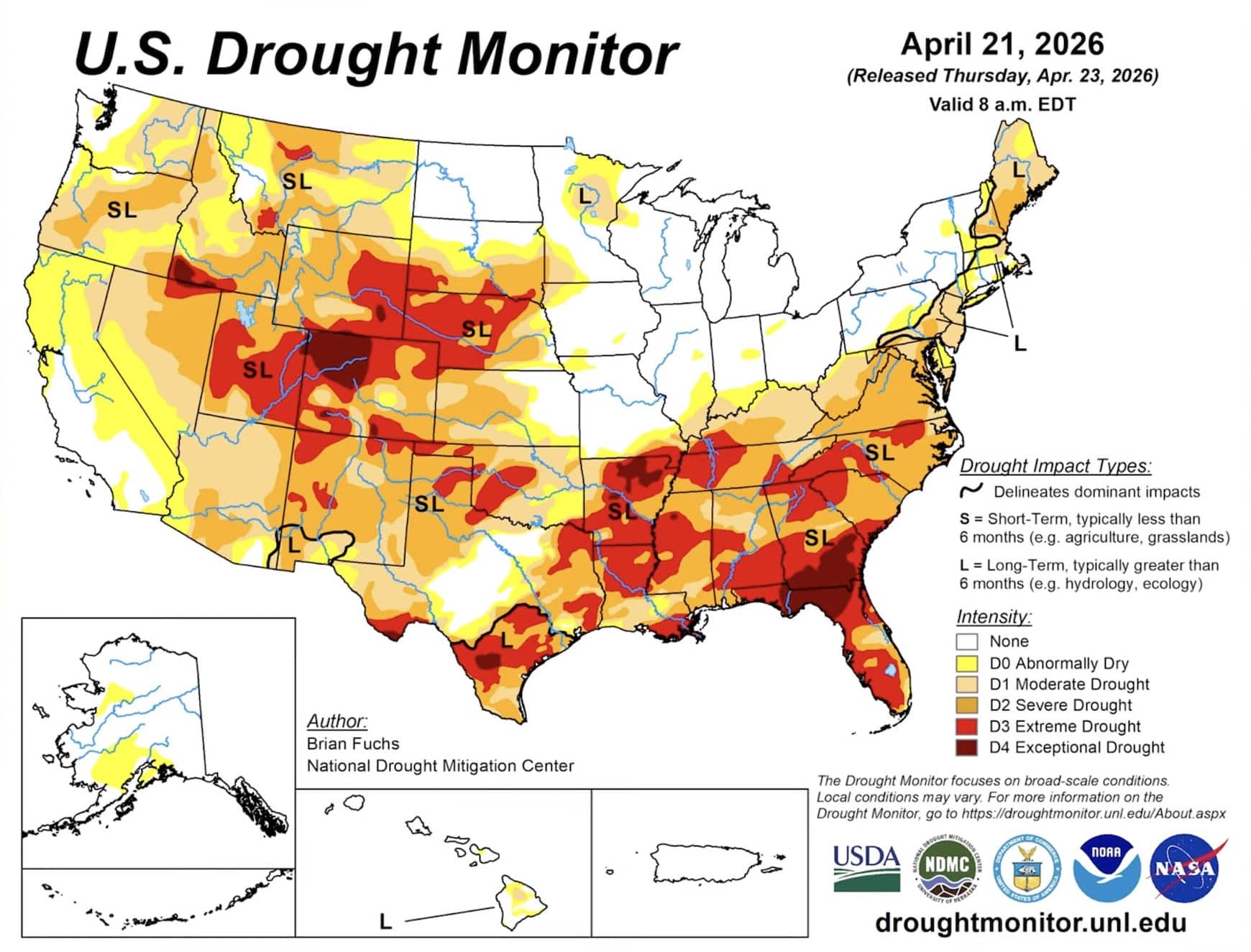
The latest U.S. Drought Monitor report, released April 23rd, 2026, paints a pretty sobering picture of water conditions across the country. More than half of the United States is now experiencing moderate drought or worse, and the number of Americans living inside drought boundaries climbed significantly in just one week.
According to the report, 52.46% of the combined area of all 50 states and Puerto Rico is now classified as being in moderate drought or worse. That figure is up from 51% the prior week. The human toll is equally intense, with approximately 155.7 million people now living in drought-affected areas, an increase of nearly 7 million from the 148.8 million reported just seven days earlier.
Where It Rained and Where It Did Not
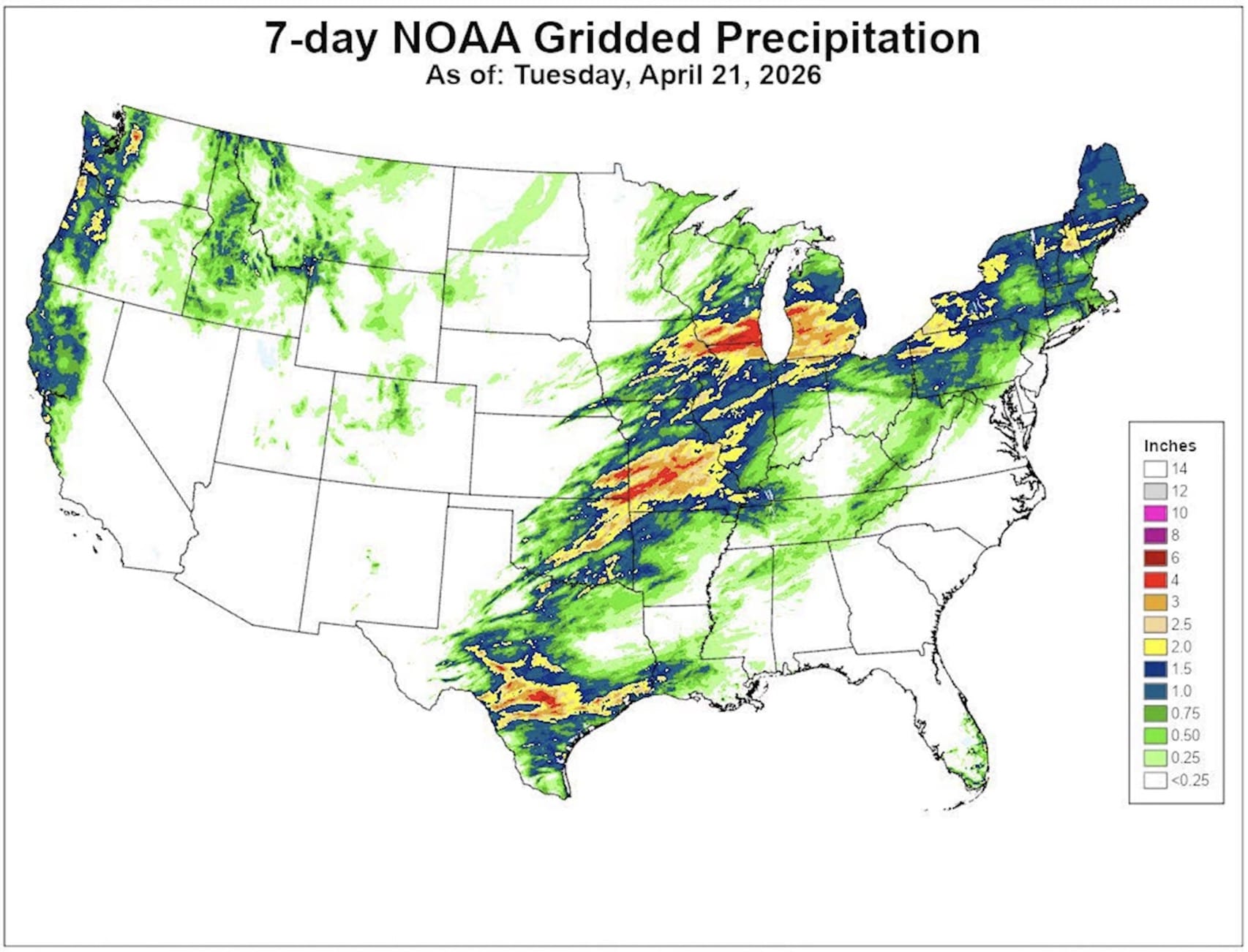
The week saw stark contrasts in precipitation. A notable band of above-normal rainfall stretched from South Texas and eastern Oklahoma northward through Missouri, Illinois, Michigan, and into southern Wisconsin. Much of that corridor received more than 150% of normal weekly precipitation, and some localized areas recorded over 400% of what is typical for this time of year.
The northern Northeast also saw some meaningful moisture. Areas from western New York stretching into Maine received 200% or more of normal precipitation, offering at least temporary relief to parts of that region.
The rest of the country was far less fortunate, leaving conditions notably dry across the Ohio Valley and into the Southeast where little to no precipitation fell across most of the region. The West was similarly parched with above-normal rain limited to coastal sections of California and portions of the Pacific Northwest. The vast interior of the West received essentially nothing.
Temperature Swings Add Stress Across Regions
Temperatures varied widely across the country during the reporting period as well. The West experienced near-normal to slightly below-normal temperatures with some areas recording readings as much as five degrees below average. That cooler pattern offered a modest buffer against drought intensification in those areas.
Across the Central Plains, Midwest, Northeast, and Mid-Atlantic, however, temperatures ran five to ten degrees above normal, accelerating soil moisture loss and evaporation. The Southeast saw near-normal to slightly above-normal temperatures overall, though the Florida Panhandle experienced cooler-than-average conditions.
Where Drought Got Worse
Drought and dryness intensified across parts of the Southeast and the West during the week. The Northeast, Midwest, High Plains, and South all saw mixed pictures, with some areas improving while others degraded. Alaska skipped the national trend, registering some improvement in its drought conditions.
What This Means Going Forward
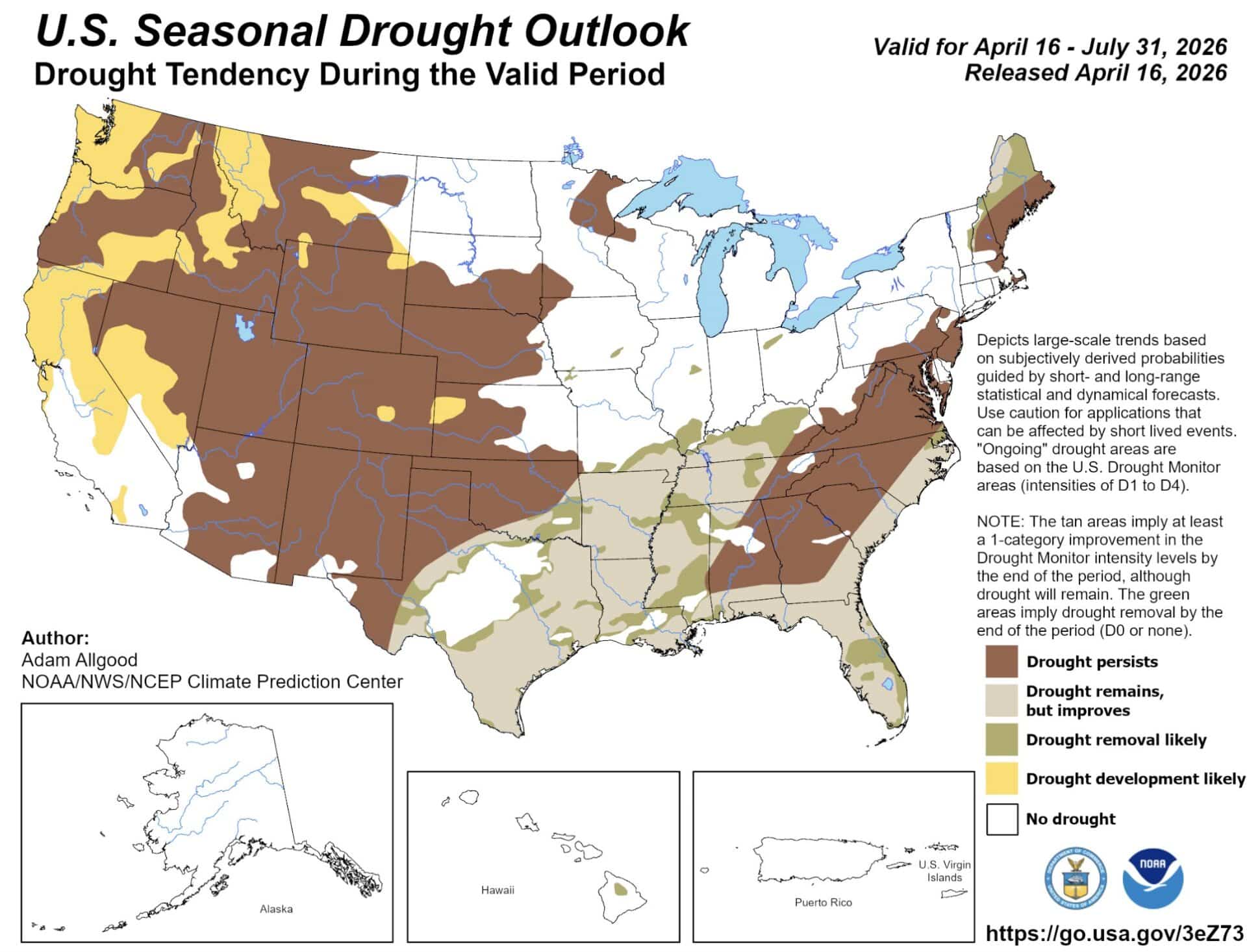
With more than half the country now in at least moderate drought and the affected population growing week over week, water resource managers, farmers, and local governments in impacted areas are certainly under increasing pressure. The combination of expanding drought coverage, above-normal temperatures in key agricultural regions, and a largely dry West creates a challenging outlook heading into late spring.
The U.S. Drought Monitor is produced every Thursday through a partnership between the National Drought Mitigation Center at the University of Nebraska-Lincoln, the USDA, NOAA, and NASA. Current maps and archived data are available at droughtmonitor.unl.edu. Additional information about drought vulnerability research and mitigation work can be found at drought.unl.edu.
