

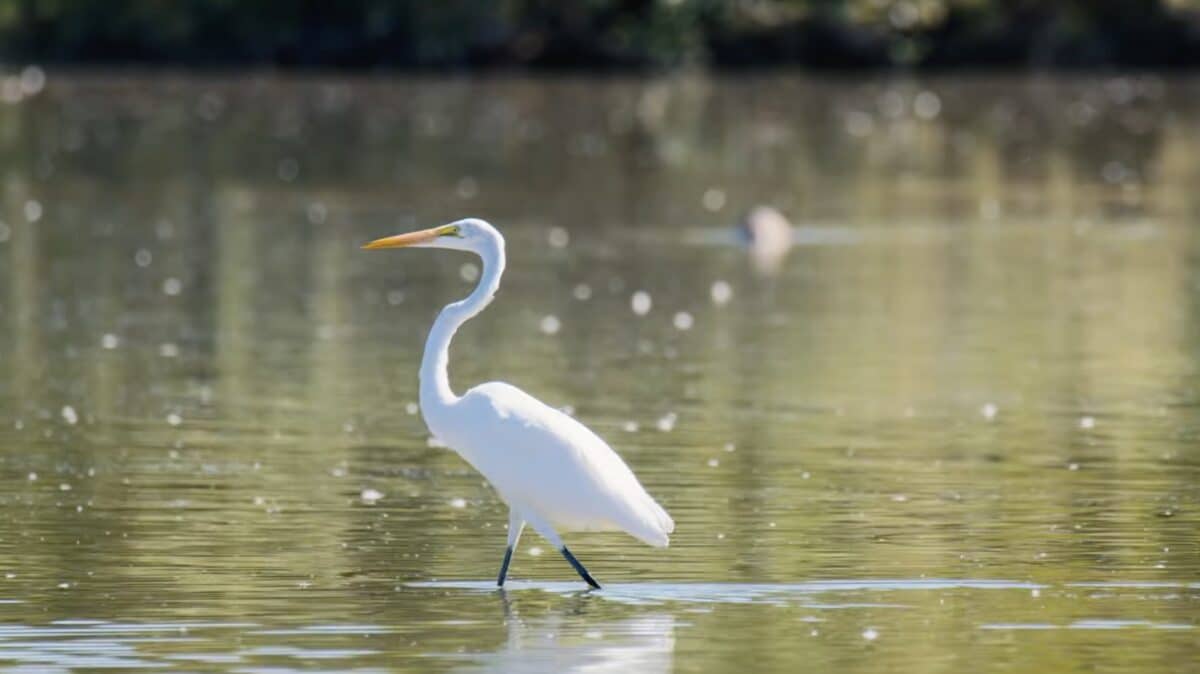
Riparian areas make up only about 2% of Arizona’s landscape, yet 80% of the state’s wildlife depend on rivers or riparian zones at some point in their life cycle. As water supplies across the arid Southwest face growing pressure, conservationists are sounding the alarm about what disappearing habitat means for migratory birds and the millions of people who rely on the same waterways.
Sites across the Phoenix metro area demostrate both the problem and the promise. The Rio Salado Audubon Center, located in the heart of the city, sits on land that was a garbage dumping site just 30 years ago. Through community partnerships and habitat restoration, it’s become a lush riparian corridor in the middle of the desert. The Gilbert Riparian Preserve at Water Ranch in Gilbert is a 110-acre nature preserve and water recharge facility, its seven ponds filled with treated wastewater that supports thriving bird habitat while replenishing local groundwater.
Across the state, a coordinated effort to track migratory birds is helping researchers identify weak links along migration routes. The Motus Wildlife Tracking Network uses a system of antennas to detect tags placed on birds in flight, with the first urban Motus station in Arizona recently installed in the East Valley. The data, managed by Birds Canada, is publicly available and guides on-the-ground conservation decisions.
The stakes extend well beyond the wildlife, too. Rivers like the Colorado, Salt, and Verde sustain roughly 4 million people in the Phoenix metropolitan area, along with agriculture and industry across the region. Conservationists argue that protecting water and habitat is ultimately one and the same fight.