

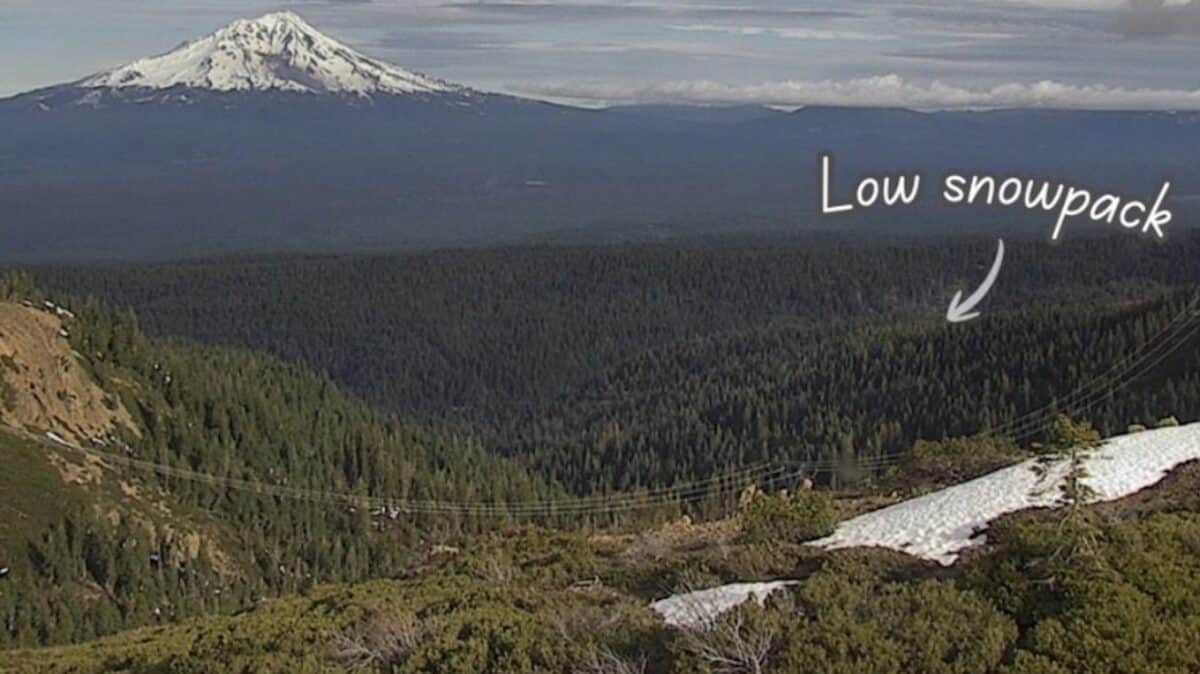
California’s snowpack has dropped to just 10–20% of normal levels, a record low that California Fire Chief Joe Tyler says could accelerate wildfire conditions across the state well ahead of what most residents expect.
The low snowpack figure is more consequential than it might appear on the surface. Snowpack functions as a slow-release water source for California’s vegetation. When that reservoir runs dry early, moisture disappears faster and grasses and brush begin drying out weeks sooner than in a normal year. The drier that vegetation becomes, the more easily it ignites and the more rapidly fire can spread through it.
#California's snowpack is at 10–20%, a new record low. That number matters more than most people realize.
— CAL FIRE Chief (@CALFIRE_CHIEF) April 16, 2026
When the snowpack is low, that moisture disappears faster. Vegetation dries out weeks earlier than normal, and the drier the grass and brush, the easier it ignites, and the… pic.twitter.com/LjNy1ULcXa
“Fire activity in California does not follow a predictable schedule, and conditions this year are a reminder that preparation cannot wait.” – California Fire Chief Joe Tyler
There is no reliable window in which conditions are safe and no date on which residents should begin paying attention. Fire behavior is driven by conditions on the ground, and right now those conditions are historically unfavorable.
Residents near wildland areas are being urged to establish defensible space, review evacuation plans, and take stock of emergency supplies before a crisis develops rather than during one.
Record low snowpack years have historically correlated with earlier and more destructive fire activity in California. With vegetation drying out well ahead of schedule this spring, officials say the time to act is now.