

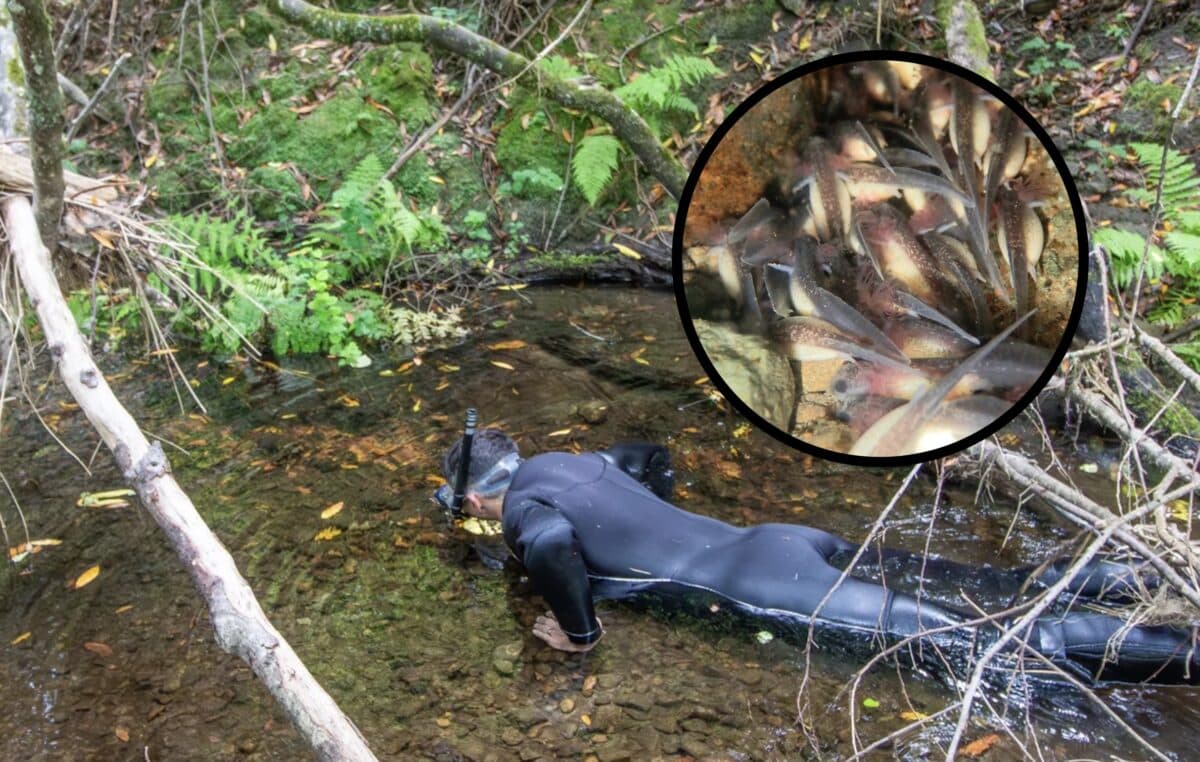
A fish biologist conducting a routine snorkel survey in Point Reyes National Seashore in California last September photographed something no scientist had ever captured in the wild before.
Michael Reichmuth was scanning Olema Creek on September 10th, 2025, when he spotted an unfamiliar cluster of small creatures beneath the rocks of a shallow pool. He initially mistook them for fish, but they were actually recently hatched California giant salamander larvae, a life stage that had never been documented in the wild through photographs.
U.S. Geological Survey biologist Patrick Kleeman confirmed the species. The larvae’s visible yolk sacs and tight clustering indicated they had hatched very recently. Those sacs can sustain young salamanders for months as they learn to feed independently.
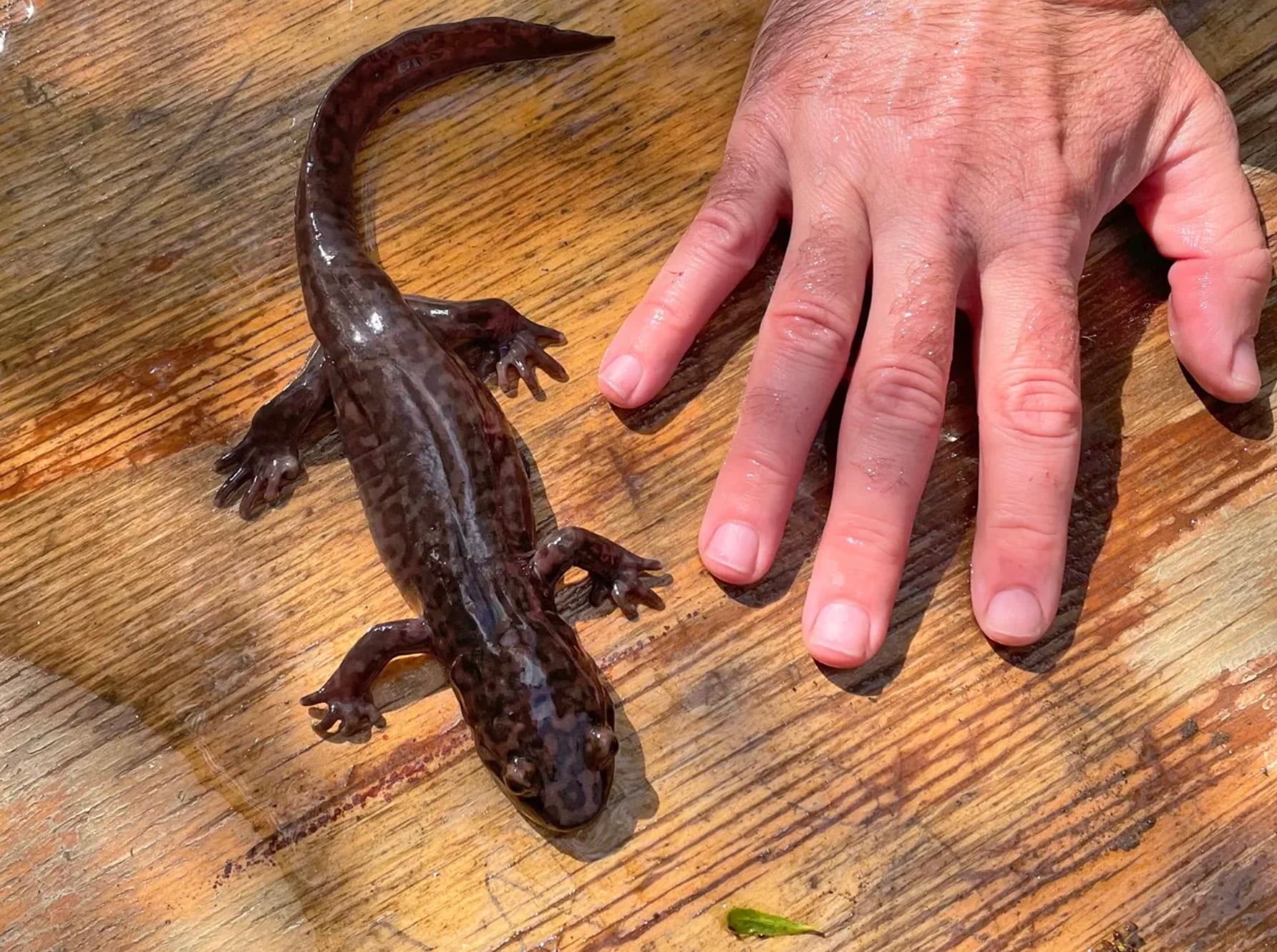
California giant salamanders grow up to a foot long, making them one of North America’s largest terrestrial salamander species, yet they are remarkably difficult to study. They rarely appear in the traps or under the survey boards that scientists typically use to monitor amphibians. The species is listed as a species of special concern in California and near threatened globally.
Prior to this sighting, scientific literature contained no recorded observations of wild, recently hatched larvae of this species. Only a handful of records had ever documented either giant salamander species near eggs or nests at all.
Researchers believe the photo and Reichmuth’s observational notes will help close critical gaps in understanding giant salamander nesting habitat and larval development timing, both essential for conservation planning.
