

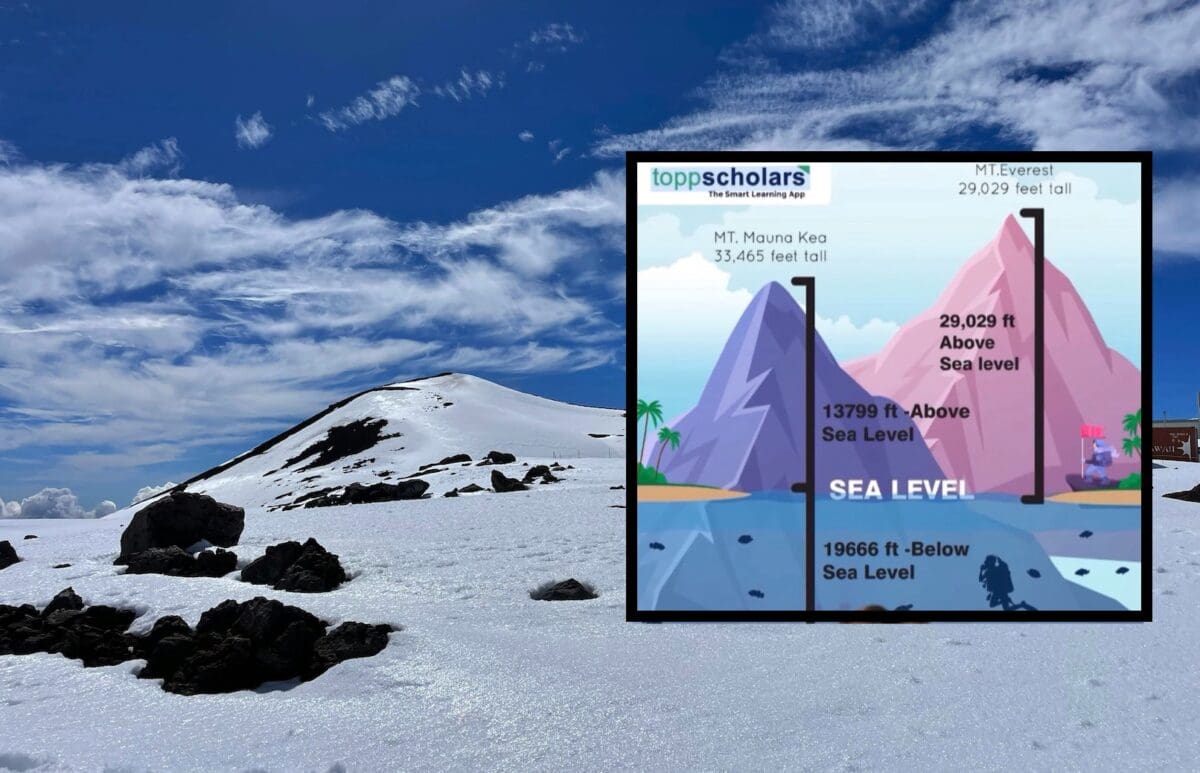
Is Mauna Kea, a shield volcano in Hawaii, is the tallest mountain on Earth, surpassing even the mighty Mount Everest. This intriguing claim has sparked debates across social media, including a thought-provoking Instagram post by @mountainfacts1. The post challenges the idea that Mauna Kea’s height from its ocean floor base makes it taller than Everest. In our exploration of Mauna Kea vs Mount Everest, we will delve into this fascinating geographical puzzle and examine the science behind measuring mountains.
The Mauna Kea vs. Mount Everest Debate The Instagram post by @mountainfacts1 dives into a popular argument: Mauna Kea, measured from its base on the ocean floor to its summit, is said to be taller than Mount Everest. At first glance, the numbers seem compelling—Mauna Kea’s base-to-summit height is often cited as around 33,000 feet, compared to Everest’s elevation of 29,032 feet above sea level. But is this a fair comparison? As @mountainfacts1 points out, the answer isn’t so simple.
Why Measuring Mountain Height Is Tricky The core issue lies in defining a mountain’s “base.” For Mauna Kea, a shield volcano on the island of Hawaii, the base is often placed on the ocean floor. But where exactly? The ocean floor isn’t a flat surface, and choosing different spots can alter Mauna Kea’s height by up to 15,000 feet! Plus, Hawaii’s Big Island comprises five volcanoes, making it hard to pinpoint where Mauna Kea’s base begins and another volcano’s ends.

Visual: A cross-sectional diagram showing Mauna Kea rising from the ocean floor to its summit (13,803 feet above sea level, ~33,000 feet from the ocean floor). The diagram highlights the ambiguity of the “base” with question marks at various ocean floor depths.
Mount Everest: A Different Beast. Now, let’s turn to Mount Everest. Unlike Mauna Kea, Everest isn’t an island volcano, so defining its base is even more complex. Should we measure from the nearest valley (making Everest ~10,000 feet tall)? Or from the lowest point on Earth, Challenger Deep, which would give Everest a staggering height of 65,000 feet? Some even argue Everest’s base could be the tectonic plate beneath the Himalayas, over 100 miles underground. As @mountainfacts1 notes, there’s no universal standard for a mountain’s base, making direct comparisons between Mauna Kea and Everest like comparing apples to oranges.
Is Mauna Kea’s “Tallest” Claim Just Hype? @mountainfacts1 argues that claiming Mauna Kea is taller than Everest is more of a “marketing ploy” than scientific fact. The post highlights how these comparisons often cherry-pick Mauna Kea’s base-to-summit height while only using Everest’s above-sea-level elevation. This selective framing creates a compelling but misleading narrative. In reality, without a consistent definition of “base,” such comparisons lack scientific rigor. Both mountains are awe-inspiring in their own right—Mauna Kea for its gentle, sprawling volcanic structure and Everest for its towering presence in the Himalayas.
Why This Debate Matters This debate isn’t just about bragging rights—it’s a reminder of how geography challenges our assumptions. Mountains like Mauna Kea and Everest are more than measurements; they’re cultural and natural wonders. Mauna Kea is sacred to Native Hawaiians, hosting world-class observatories, while Everest is a global symbol of human endurance. Understanding how we measure them deepens our appreciation for their unique stories.

Conclusion The Instagram post by @mountainfacts1 shines a light on a fascinating geography debate: Is Mauna Kea taller than Mount Everest? While the claim makes for great headlines, the lack of a standardized “base” measurement reveals it’s more hype than fact. Both mountains are extraordinary, each telling a unique story of Earth’s geological wonders. What do you think—does Mauna Kea deserve the “tallest” title, or is Everest still king? Drop your thoughts in the comments and share this post to keep the conversation going
