

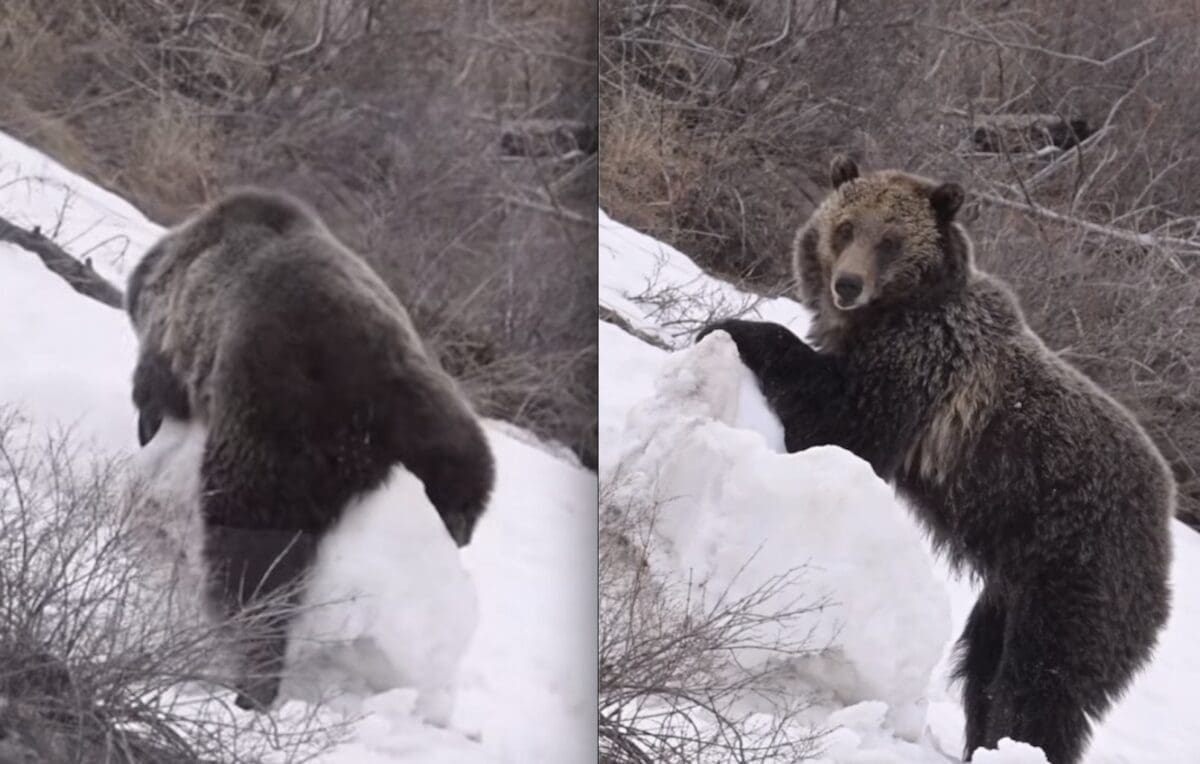
With spring in the air, the grizzly bears of Yellowstone National Park are emerging from their winter dens and shaking off the physiological changes undergone during hibernation. Depending on weather and food availability, Yellowstone grizzlies typically hibernate for 4 to 7 months each year. During hibernation grizzly bears metabolic rate decreases by as much as 75% to conserve precious energy as they go months without eating or drinking, relying solely on their fat reserves for sustenance.
When grizzlies finally emerge from hibernation, they experience a transitional period called “walking hibernation” that lasts about two to three weeks. During this time, their bodies gradually ramp up as they return to normal levels of activity. Grizzlies tend to eat and drink minimally and often appear lethargic as they adapt to being awake and active again.
Yesterday a female grizzly bear nicknamed Jam (daughter of Raspberry) woke up from her long winter nap and was filmed during the initial stages of walking hibernation. Jam spent the day clumsily somersaulting in a snow patch and using a giant snowball as a scratching post as she readjusted to her waking state.
The grizzly bears of Yellowstone may appear drowsy and sluggish for days after waking up from hibernation but they are still extremely dangerous and unpredictable no matter how docile they appear. Yellowstone requires visitors to remain at least 100 yards away from grizzly bears at all times and relies on guests to abide by the parks rules and regulations to keep themselves safe as they explore its 2.2 million acres. Learn more about Yellowstone National Park grizzly bear safety below.

Yellowstone National Park Bear Safety Guidelines:
All of Yellowstone is bear country, from the trails in the park’s backcountry to the boardwalks and parking lots around Old Faithful. Your safety cannot be guaranteed, but you can play an active role in protecting yourself and the bears people come here to enjoy.
- Give bears space. Keep at least 100 yards (93 meters) from bears at all times and never approach a bear to take a photo.
- Carry bear spray and know how to use it. We recommend each person carry one can of bear spray in a readily accessible location like a quick-draw holster (not stowed away in your backpack).
- Hike in groups and make noise. Since 1970,91% of the people injured by bears in Yellowstone were hiking alone or with only one hiking partner. Only 9% of the people injured by bears were in groups of three or more people. While hiking on a trail, periodically yell “Hey bear!” to alert bears of your presence. Learn more about backcountry safety.
- Respect closures. Observe all closures and restrictions in active bear management areas.
- Never feed bears. Bears that become dependent on human food may become aggressive toward people and will be killed.
- Stay with your stuff. Do not leave packs or bags containing food unattended, even for a few minutes, as bears learn new food sources quickly.
- If a bear approaches or touches your car, honk your horn and drive away. We want to discourage this behavior for the bears’ safety and yours.