

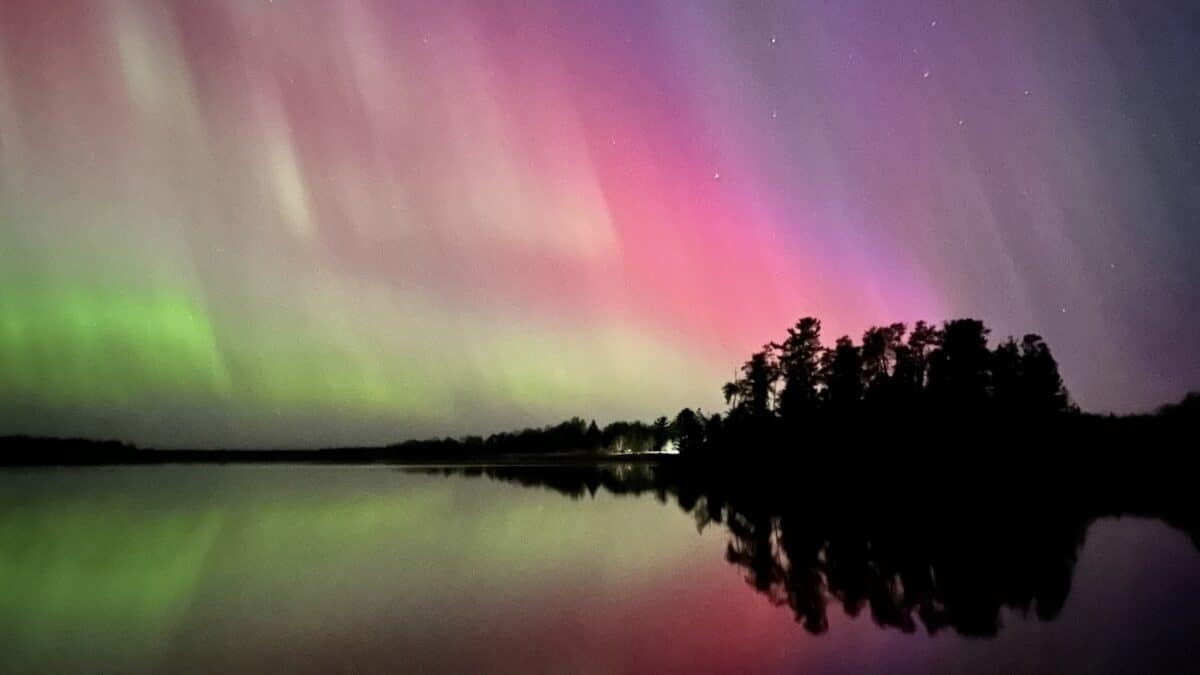
Voyageurs National Park in northern Minnesota has received international recognition for its efforts to preserve natural night skies, earning the title of 2026 International Dark Sky Place of the Year.
The award was presented by DarkSky International as part of its annual DarkSky Awards, which recognize individuals, organizations and destinations making significant contributions to protecting the nighttime environment. Voyageurs was selected for its ongoing efforts to educate visitors, expand astronomy programming and work with surrounding communities to combat light pollution.
Protecting One of Minnesota’s Best Night Skies
Voyageurs National Park was first certified as an International Dark Sky Park in 2020. Since then, the National Park Service and Voyageurs Conservancy, the park’s official philanthropic partner, have continued expanding opportunities for visitors to experience the night sky.
Programs include virtual educational presentations, guided constellation tours and telescope viewings. Two major annual events have also helped attract thousands of visitors, including the August Star Party and February’s Boreal Stargazing Week.
Boreal Stargazing Week brings together several regional organizations and agencies, including the Bell Museum, Superior National Forest, Friends of the Boundary Waters Canoe Area and Starry Skies North. The events feature daytime and nighttime astronomy activities both in person and virtually.
“Park employees and guests have long known that Voyageurs’ night skies are stunning, and we are pleased to see the hard work of our staff, local community members, and the Voyageurs Conservancy, recognized. Protecting dark skies doesn’t stop at the park boundary and Voyageurs National Park looks forward to continued work with the community to preserve our remarkable night skies.” – Voyageurs National Park Superintendent Jennifer Onufer.
A Community Effort Beyond Park Boundaries
Preserving natural darkness requires more than protecting the land within national park boundaries. Businesses, volunteers and community organizations in Minnesota communities like International Falls, Kabetogama, Orr, Ash River and Crane Lake, along with Fort Frances in Ontario, have contributed to regional conservation efforts.
The National Park Service encourages communities to reduce unnecessary outdoor lighting, install properly shielded fixtures and choose lighting that minimizes impacts on the nighttime environment.
Light pollution is an increasingly significant environmental concern. Artificial lighting can disrupt wildlife behavior, interfere with natural biological cycles and diminish opportunities to experience unobstructed views of the stars.
Protecting dark skies also means preserving a connection to the region’s history. The park takes its name from the French-Canadian fur traders and canoe travelers who navigated its waterways for more than 200 years. Its remarkably dark skies offer visitors an opportunity to experience the landscape much as Indigenous people and voyageurs would have seen it centuries ago.