

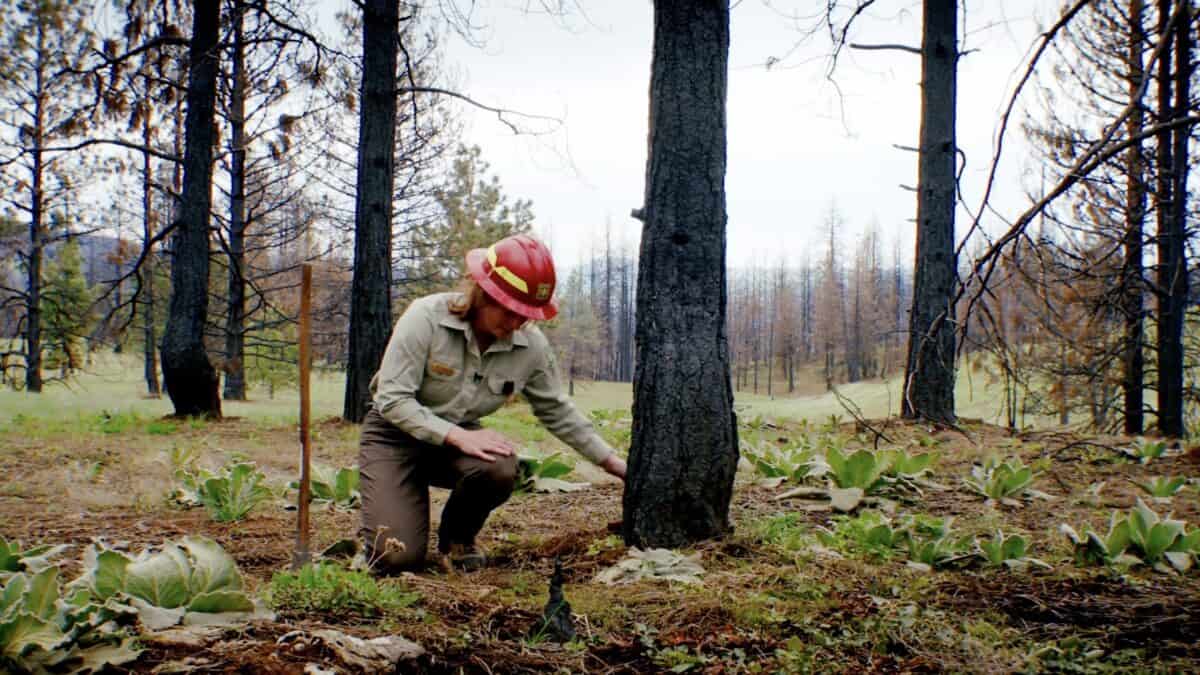
Rebuilding a forest after a wildfire is a process that takes years, decades, and sometimes even centuries. In Idaho’s Boise National Forest, the U.S. Forest Service is working to give burned landscapes a fresh start by planting approximately 385,000 new trees across areas impacted by the 2024 wildfire season.
The massive reforestation effort involves months of planning, specialized planting crews, and careful decisions about which trees are best suited to the landscape.
Rebuilding a Forest Starts With the Right Trees
According to the Forest Service, not every area burned by wildfire needs human intervention. Many forests can regenerate naturally as seeds spread from surviving trees. However, areas that experienced particularly intense fire activity and are far from living trees may struggle to recover without assistance.
That’s where silviculture technicians like Maddy Schwarzbach come in. Working on the Boise National Forest, Schwarzbach helps determine where replanting is necessary, which species should return, and which genetic seed sources are best suited to individual locations.
For this particular project, crews selected Douglas-fir and ponderosa pine seedlings. Even within the same tree species, genetic differences can determine how well a tree grows at different elevations and under varying environmental conditions.
Nearly 400,000 Trees Headed Into the Ground
Once the planning is complete, planting crews get to work. Using specialized tools called hodads, workers clear away competing vegetation, dig planting holes, position seedlings, and firmly pack soil around their roots.
The Forest Service works with private planting companies to complete the enormous undertaking, with personnel inspecting the work to ensure proper planting techniques are followed.
The crews are expected to plant approximately 24,000 seedlings per day. By the time the project is finished, roughly 385,000 trees will have been planted across portions of the Boise National Forest.
A Forest That Will Take Generations to Grow
The Forest Service will return in the coming years to monitor seedling survival and evaluate the project’s success. However, Schwarzbach says the real payoff won’t be visible anytime soon.
Some of these seedlings could eventually grow more than 100 feet tall and remain part of the landscape for centuries.
It’s a reminder that wildfire recovery doesn’t happen overnight. The work being done today is intended to restore forests that future generations of wildlife and people will enjoy long after the planting crews have left.